
American Cotto Salami
Also known as Salami Cotto, Cotto Salami, Cooked Salami
United States
Overview
American Cotto Salami is a cured, smoked and cooked sausage packed into a broad casing. Despite the salami name, it is not fermented and dried. The developed version combines beef, pork and firm back fat in a fine-to-medium grain, seasoned with cracked black pepper, garlic, nutmeg and cardamom. The slice is rosy, firm and moist with small pale fat particles, closer in keeping quality to bologna than to a dry salame.
Where it's from
The cut
Identity and terminology
Cotto is Italian for cooked, and American processors used the phrase to distinguish the product from dry salami. Federal sausage rules explicitly recognise cotto salami among cooked sausage products and control added water and permitted ingredients. That regulatory treatment supports a distinct American entry. It should not be merged into German Kochsalami merely because both names mean cooked salami, and it should not inherit the cultural or legal identity of a specific Italian salame.
Composition and characteristics
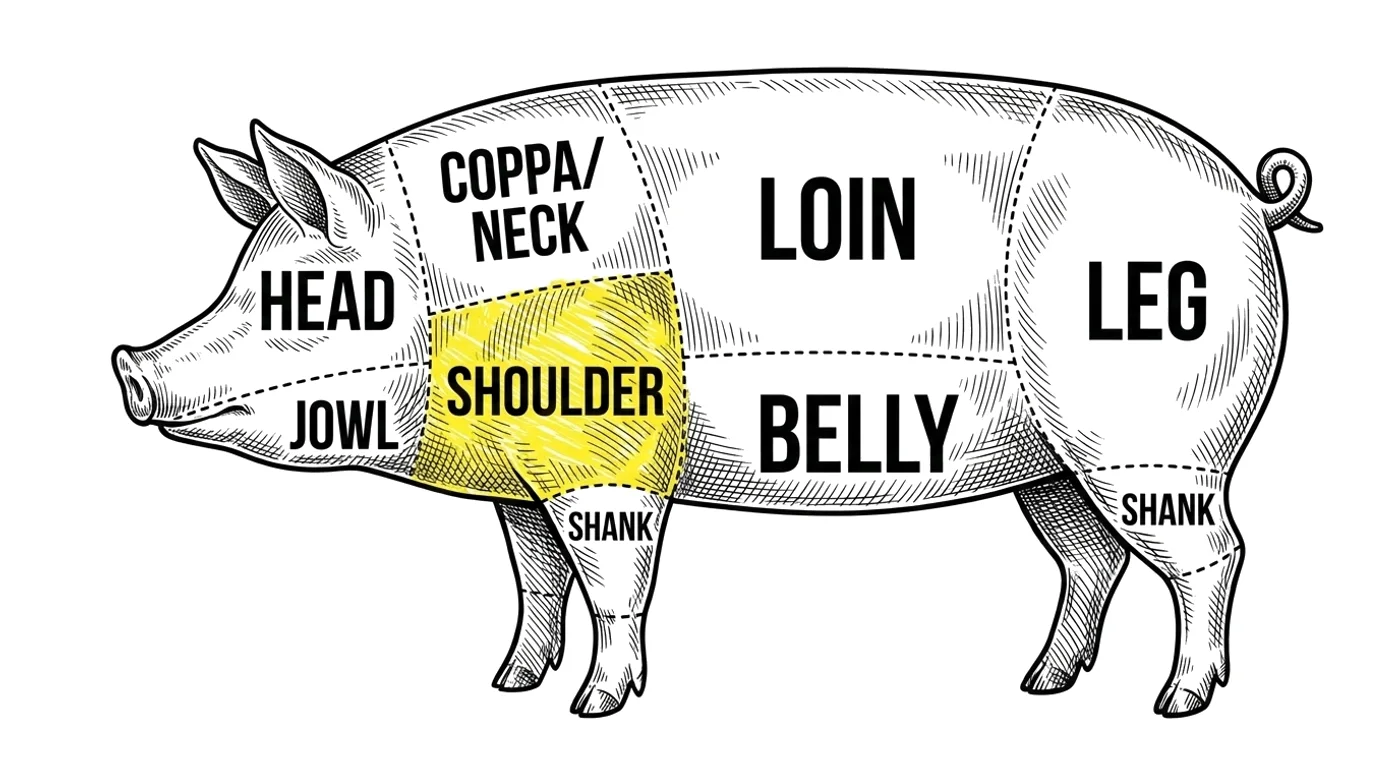
Lean beef gives colour, flavour and a strong protein bind, while pork softens the texture and back fat supplies the visible mosaic. Non-fat dry milk improves water holding and sliceability and makes milk an allergen. Sugar moderates salt and smoke rather than driving fermentation. Cracked pepper should remain recognisable in the cut face. Commercial recipes may use different binders, coarser particles or extra water, but the cooked large-chub architecture stays central.
Production and process
Beef is ground more coarsely than pork and fat. The lean meats are worked first with salt, curing salt, milk powder, sugar and spices until tacky, then cold fat is folded through without smearing. The chub is filled tightly, cured under refrigeration, dried and smoked at moderate temperature before poaching to a measured cold point. Large diameter makes careful probing and staged chilling essential because the centre heats and cools slowly.
History and regional forms
Cooked salami developed within North American deli and industrial sausage practice, where familiar European names were adapted to domestic processing, regulation and sandwich service. The result kept pepper, garlic, smoke and a salami-like slice while replacing fermentation and long maturation with heat treatment. That history is one of adaptation rather than imitation of a single Italian regional product. The Atlas records the American identity and retains Salami Cotto as a common alias.
Use, storage and related products
Slice Cotto Salami cold for sandwiches, crackers, cheese boards and chopped salads, or brown thicker pieces briefly. Keep it refrigerated before and after opening and avoid leaving a large chub unrefrigerated during service. Declare milk wherever dry milk is used. A cured colour, smoky aroma and salami name do not make the product shelf stable, and the cooked branch should not be displayed as a fermented dry salami.
The recipe for this product is in preparation and will be published once it has been verified.
Safety. Declare milk, calculate cure on the animal block, probe the broad cold point, chill on schedule and never claim fermentation or shelf stability.