
Overview
Arbatinė is a Lithuanian cooked and smoked beef-and-pork sausage. Its name literally relates to tea, and the product belongs to the Baltic tradition of mild cooked sausages served sliced with bread and hot drinks.
Where it's from
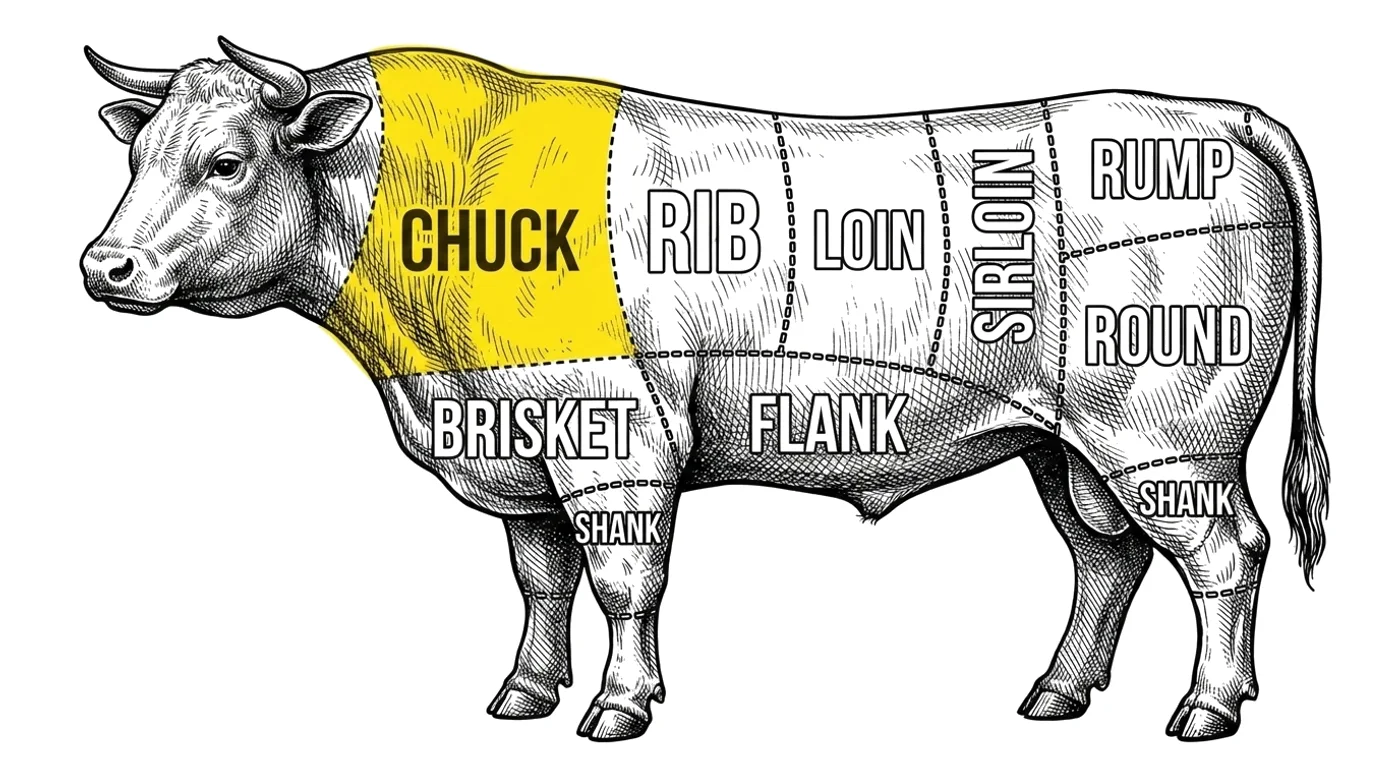
The cut
Identity and terminology
The accented Lithuanian spelling Arbatinė should be used. The unaccented source form Arbatine is retained as an alias. It is not a protected geographical name.
Composition and characteristics
Beef and pork form a fine cured matrix containing small cubes of firm pork fat. Potato starch and water support the springy texture, while pepper, garlic or nutmeg provide mild seasoning.
Production and process
The meats are finely minced and mixed under cold conditions, fat cubes are folded in, and the sausage is stuffed, smoked, cooked and cooled. The visible fat pattern separates it from a fully emulsified frankfurter.
History and regional forms
Lithuanian meat processing absorbed central European and Soviet-era cooked-sausage technology while maintaining local names and serving customs. Arbatinė belongs to the class of everyday sliced sausages rather than festive dry salami.
Use, storage and related products
It is served cold on bread, in sandwiches or lightly reheated. It differs from Lithuanian skilandis, which is a matured protected product, and from German tea sausage, which is spreadable and fermented.
Recipe and cure
This is not a finished recipe. It is a window into how this meat is traditionally cured. Before you follow any process, run it through one of our curing calculators so the salt, cure and timings are right and safe for your own batch.
Make this — the measured Curesmith version →“Make this” opens the same cure as a measured recipe, scaled to your batch.
- Meat
- Beef chuck
- Cut
- Beef chuck
- Salt (%)
- 2
- Curing salt
- Cure #1 as specified in the recipe
- Fermented
- No
- Smoked
- Yes
- Maturation
- Cooked sausage 0–4°C for up to 7 days; freeze for longer storage
- Basis
- per 1,000 g beef chuck
- Style
- Cooked and warm-smoked Lithuanian beef-and-pork sausage
Ingredients
- Beef chuck100% · 1000 g
- Pork shoulder30% · 300 g
- Pork back fat, 6 mm cubes10% · 100 g
- Potato starch2% · 28.5 g
- Ice-cold water25.5% · 357 g
- Fine salt2% · 28.5 g
- Cure #1, 6.25% nitrite0.21% · 3 g
- Ground black pepper0.21% · 3 g
- Ground coriander seed0.1% · 1.5 g
- Granulated sugar0.21% · 3 g
- Fresh garlic, crushed0.31% · 4.5 g
Method
- Cube partially frozen back fat to 6 mm and refrigerate. Chill meats and water to 0–3°C.
- Grind beef and pork through 2–3 mm.
- Dissolve salt, Cure #1, pepper, coriander, sugar, garlic and starch in the measured water.
- Mix beef with seasoning solution until tacky, then add pork and finally fat cubes.
- Stuff into 24–30 mm casings and form long links.
- Refrigerate 12–24 hours at 2–4°C.
Safety. Cooked and smoked, but still refrigerated. Do not confuse the name with shelf-stable German Teewurst.