
Beijing Guan Chang
Also known as Guanchang, Guan Chang, Fried filled sausage, 炸灌肠
Beijing, China
Overview
Beijing guanchang is a local fried snack whose sausage-like form can be misleading in translation. Beijing cultural sources list it among the city's characteristic foods, and the official tourism account describes a flour or starch paste seasoned, enclosed, cooked, sliced and fried with garlic sauce. Earlier red forms could include meat or blood, while later white starch forms became common. The source page uses seventy per cent pork and thirty per cent flour, so this batch preserves that formula as a meat-heavy adaptation rather than presenting it as the only traditional composition.
Where it's from
The cut
Identity and terminology
The characters 灌肠 literally suggest filling an intestine, which explains translations such as filled sausage. Yet the modern dish is defined as much by starch, slicing and frying as by casing. Guan Chang is therefore not a synonym for Lap Cheong, Chinese liver sausage or Western fresh pork sausage. The name carries Beijing because the evidence ties this snack to the capital's street-food culture. There is no protected geographical designation asserted, and spelling variants are treated as transliterations rather than separate products.
Composition and characteristics
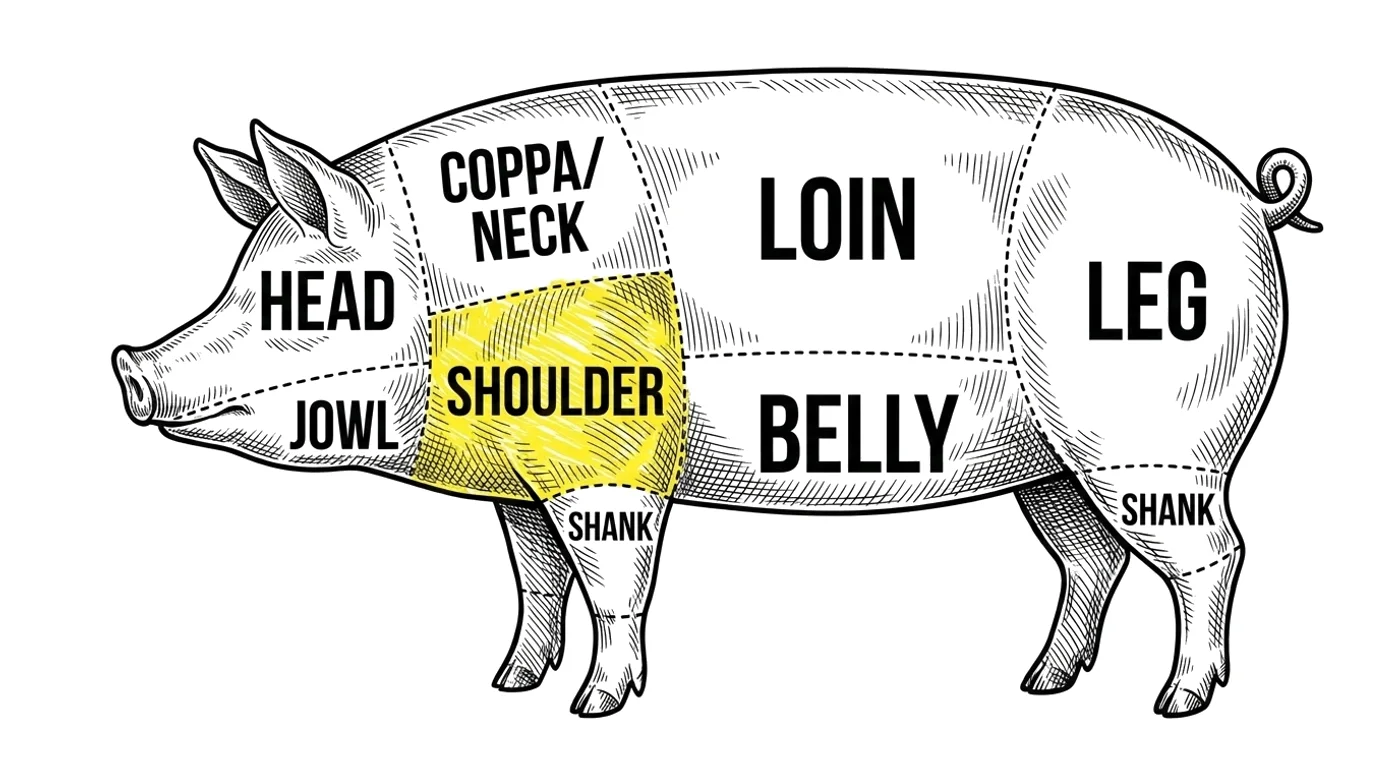
The source-derived branch combines pork shoulder and back fat with wheat flour, soy sauce, rice wine, garlic, ginger, nutmeg and white pepper. The published formula omits water even though dry flour cannot form a practical stuffing batter, so the Curesmith version adds a measured hydration quantity. This creates a firm cooked link that can be chilled, cut into cubes or slices and fried crisp. It remains more meaty and more heavily seasoned than many present-day starch-led Beijing examples, a difference stated directly in the recipe title and status.
Production and process
Pork is ground through a medium plate and mixed with salt and sugar until it binds. Flour is hydrated separately before the seasoned liquids are incorporated, preventing dry pockets. The casing is filled moderately because starch expands during cooking. Gentle poaching continues to a 71°C cold point, followed by full chilling. Only then is the sausage cut and pan-fried for service. Garlic sauce is served alongside rather than hidden in the production formula, preserving the contrast between crisp exterior, soft starch-meat centre and fresh pungency.
History and regional forms
Official Beijing material places guanchang among the foods through which residents recognise the city's everyday character. Tourism records trace the snack to the Ming period and describe the historical use of prepared pork intestine filled with seasoned flour or starch. Other municipal cultural discussion notes the evolution from red meat-containing forms towards white starch versions. These accounts support continuity and change, not one frozen formula. The historical frame and the exact recipe are two different things, and the recipe is one version within a wider tradition.
Use, storage and related products
Fried guanchang is served hot, usually with crushed-garlic sauce. Small crisp pieces suit informal snack service rather than cold charcuterie slicing. The cooked base must stay refrigerated and should be fried in portions, since pan-frying does not make the remainder shelf stable. Wheat and soy require allergen declarations. Compared with haggis or European cereal sausages, guanchang uses starch to create a fryable Beijing snack texture; compared with a frankfurter, it lacks an emulsified meat identity and is completed by slicing and frying.
Recipe and cure
This is not a finished recipe. It is a window into how this meat is traditionally cured. Before you follow any process, run it through one of our curing calculators so the salt, cure and timings are right and safe for your own batch.
Make this — the measured Curesmith version →“Make this” opens the same cure as a measured recipe, scaled to your batch.
- Meat
- Pork shoulder
- Cut
- Pork shoulder
- Salt (%)
- 1.7
- Curing salt
- None
- Fermented
- No
- Starter or mould
- None; this product is not fermented
- Smoked
- No
- Maturation
- Refrigerate at 0–4°C; use within 4 days or freeze promptly
- Basis
- per 1,000 g pork shoulder
- Style
- cooked Beijing-inspired pork-and-starch sausage for frying
Ingredients
- Pork shoulder100% · 1000 g
- Pork back fat25% · 250 g
- Wheat flour43.3% · 545.5 g
- Ice water17.3% · 218 g
- Fine salt1.7% · 22 g
- White sugar2.2% · 27.5 g
- White pepper0.14% · 2 g
- Ground nutmeg0.07% · 0.9 g
- Ground ginger0.07% · 0.9 g
- Fresh garlic, crushed0.51% · 6.5 g
- Naturally brewed soy sauce0.9% · 9 g
- Chinese rice wine2.2% · 27.5 g
Method
- Chill pork, fat, water and equipment; whisk the flour with ice water to a lump-free slurry.
- Grind pork shoulder and back fat through 6 mm.
- Mix meat with salt and sugar until tacky, then add seasonings, sauces and hydrated flour.
- Fill 32 mm hog casings moderately and tie short lengths.
- Poach in 78–80°C water until the cold point reaches 71°C.
- Complete controlled chilling before slicing.
Safety. Hydrate starch fully, leave expansion space, cook pork-containing versions to 71°C, chill before slicing and declare wheat and soy.