
Belgian Cabbage Pork Sausage (Soucisse de Choux)
Also known as saucisse de choux belge
Belgium
Overview
Belgian Cabbage Pork Sausage is a cabbage-and-pork fresh sausage formula associated with Belgian domestic and butcher practice. It uses cooked cabbage as a substantial part of the filling, giving a softer texture and vegetable sweetness uncommon in ordinary pork sausage.
Where it's from
The cut
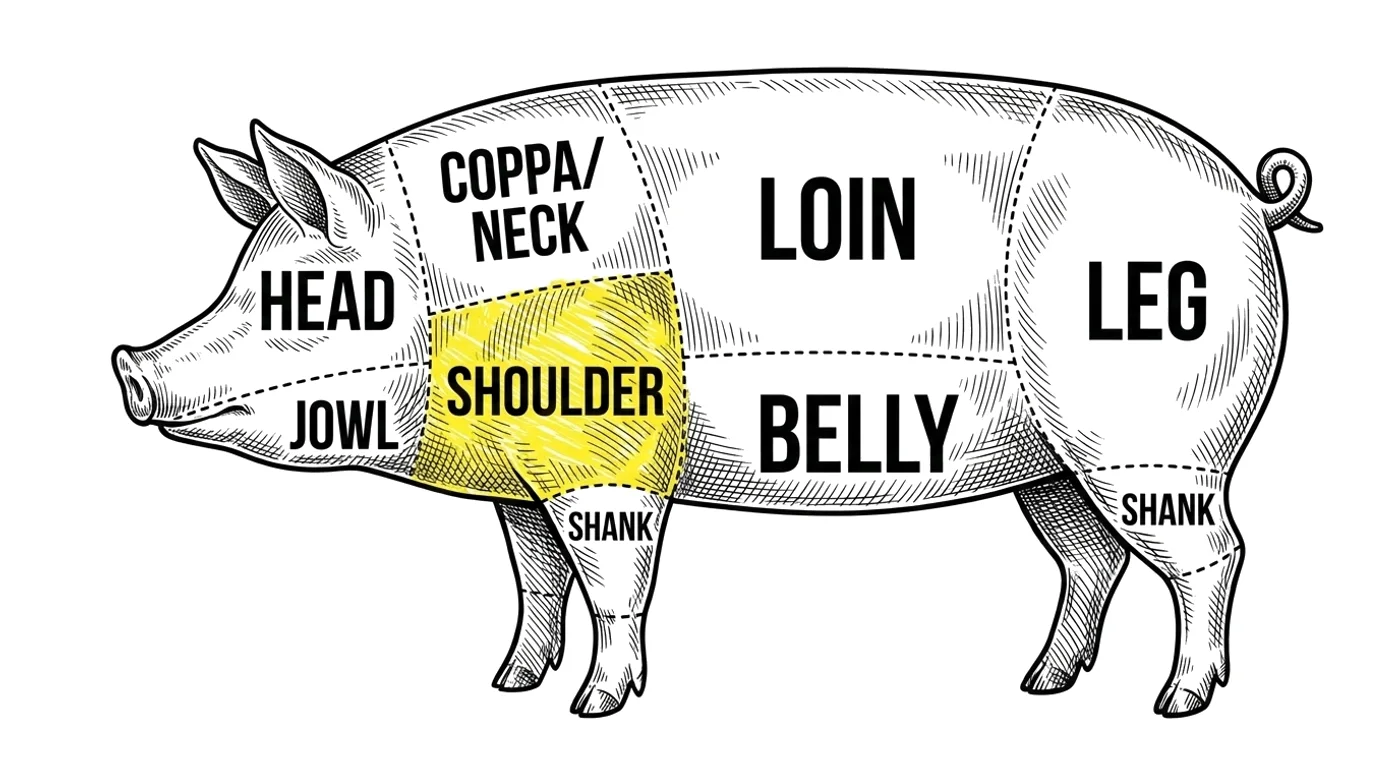
Identity and terminology
The French description saucisse de choux means cabbage sausage, but this record is not the Swiss Saucisse aux choux vaudoise IGP. The Belgian title must therefore remain generic and must not borrow the protected Swiss name or specification.
Composition and characteristics
Pork, fat and well-drained cabbage form the body of the sausage. Pepper, nutmeg, onion or garlic may support the mild brassica flavour. The filling is paler, softer and more open than an all-meat sausage, with visible cabbage fragments.
Production and process
The cabbage is cooked and squeezed to remove excess water before being mixed with minced pork and fat. Moisture control is important because wet cabbage weakens the bind and shortens keeping quality. The stuffed sausage is sold fresh for cooking.
History and regional forms
Cabbage sausages belong to the frugal northern European tradition of combining slaughter-day pork with winter vegetables. Related forms occur in Belgium, northern France and Switzerland, but their names and protected status differ.
Use, storage and related products
It is fried or poached and served with potatoes, mustard or additional cabbage. It should be distinguished from Vaud's protected sausage, from liver-and-cabbage sausages and from ordinary pork sausage flavoured only with cabbage.
Recipe and cure
This is not a finished recipe. It is a window into how this meat is traditionally cured. Before you follow any process, run it through one of our curing calculators so the salt, cure and timings are right and safe for your own batch.
Make this — the measured Curesmith version →“Make this” opens the same cure as a measured recipe, scaled to your batch.
- Meat
- Pork shoulder
- Cut
- Pork shoulder
- Salt (%)
- 2.6
- Curing salt
- None
- Fermented
- No
- Smoked
- No
- Maturation
- Raw sausage ≤4°C for up to 2 days; freeze for longer storage
- Basis
- per 1,000 g pork shoulder
- Style
- Fresh pork and cooked-cabbage sausage; cook before eating
Ingredients
- Pork shoulder100% · 1000 g
- Pork back fat15% · 150 g
- Green cabbage, blanched, chilled and firmly squeezed50% · 500 g
- Fresh onion6.1% · 100 g
- Fine salt1.8% · 30 g
- Granulated sugar0.5% · 8.5 g
- Ground black pepper0.2% · 3.5 g
- Dried marjoram0.2% · 3.5 g
Method
- Quarter and core fresh cabbage. Blanch or simmer until tender.
- Drain and cool the cabbage promptly in ice water, then drain again.
- Squeeze the cold cabbage firmly in a clean cloth until it no longer releases free water. Weigh exactly 300 g.
- Chill shoulder, back fat, onion and prepared cabbage to 0–4°C.
- Cube pork and fat. Combine them with onion, cabbage, salt, sugar, pepper and marjoram.
- Pass the complete mixture once through 6 mm.
Safety. Cooked cabbage does not preserve the raw meat mixture. Keep refrigerated and cook thoroughly.