
Kiełbasa Bieszczadzka
Also known as Bieszczadzka, kiełbasa bieszczadzka
Bieszczady-associated name, Poland
Overview
Kiełbasa Bieszczadzka is a Polish cured, smoked and cooked sausage represented in the surviving formula as an unusually beef-forward product. Large pieces of lean beef are held in a fine beef matrix with a modest amount of hard fat, then seasoned simply with pepper and garlic. The result is firm, dark and visibly meaty rather than finely emulsified.
Where it's from
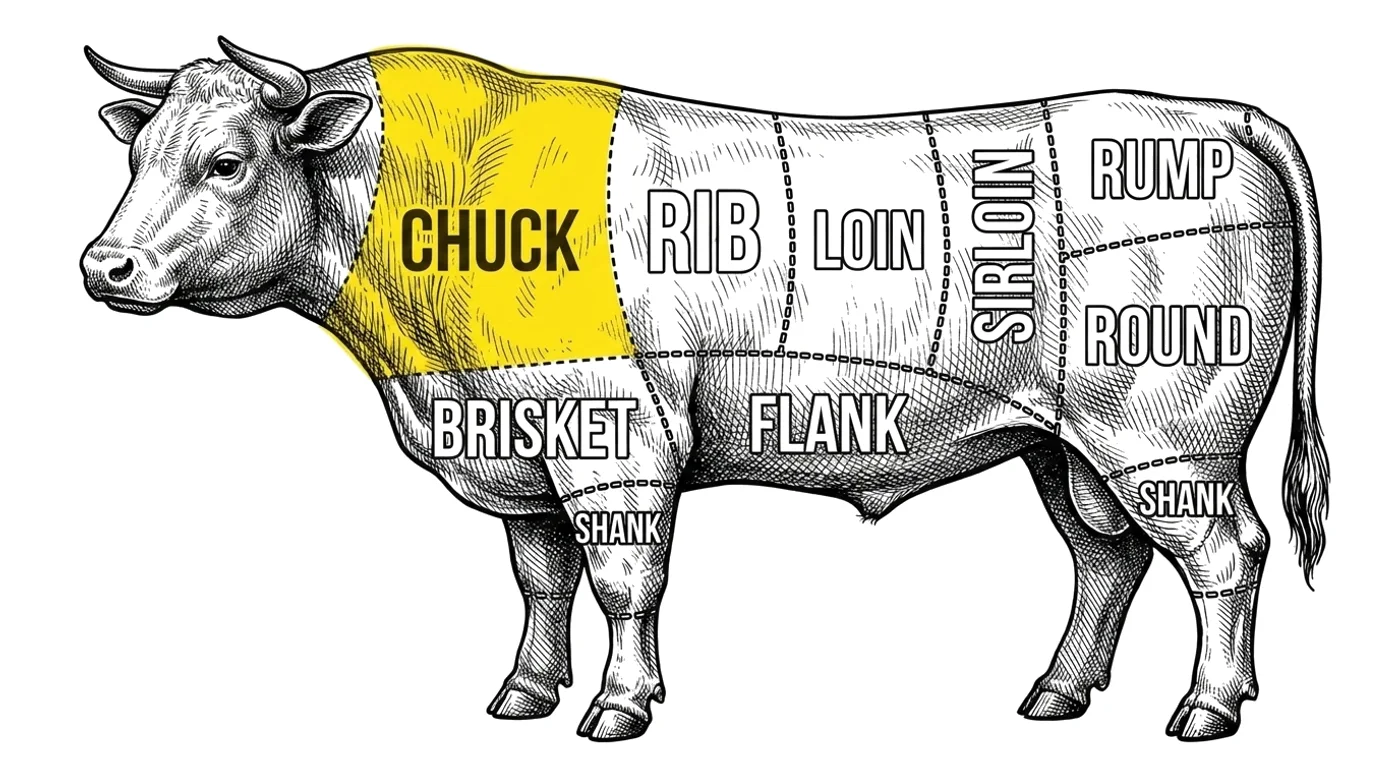
The cut
Identity and terminology
Bieszczadzka is the feminine adjectival form referring to the Bieszczady, the mountain region in south-eastern Poland. The name appears in a 1964 Polish ministerial schedule that grouped named sausage products for national trade and pricing. That documentary occurrence establishes a historical standardised product name, but it does not establish present-day geographical exclusivity, a protected recipe or continuous manufacture by one regional community.
Composition and characteristics
The documented branch uses mostly lean beef, with connective-tissue-rich beef processed into the binding matrix and only a small proportion of firm fat. Coarse red beef pieces should remain visible in the cut face. Pepper and garlic are restrained, leaving cured beef and smoke dominant. This structure differentiates the sausage from pork-led Polish kiełbasy and from homogeneous beef emulsions.
Production and process
The lean beef is cut into large pieces and cured cold before final cubing. A fine matrix is made from connective beef and chilled water, then mixed with the cured beef pieces and coarse fat. The sausage is filled into rounds or ring casings, surface-dried, hot-smoked and poached. Because it is not fermented or dried to a measured water activity, the cooked product remains refrigerated.
History and regional forms
The archival ministerial listing is the strongest dated evidence for the product in this record. It places Bieszczadzka within the twentieth-century Polish system of named processed-meat standards. The mountain name may have supplied regional imagery or an original association, but the available official evidence does not justify a medieval origin story, a single inventor or a claim that every later formula was made only inside the Bieszczady.
Use, storage and related products
Bieszczadzka is suited to cold slicing, sandwiches and platters where its beef texture and smoke remain prominent. It can be distinguished from Bielska by its larger lean-beef inclusions, lower jowl character and more austere seasoning. The fully cooked sausage should be refrigerated and is not a semi-dry or shelf-stable product unless a separate validated process supplies those release criteria.
Recipe and cure
This is not a finished recipe. It is a window into how this meat is traditionally cured. Before you follow any process, run it through one of our curing calculators so the salt, cure and timings are right and safe for your own batch.
Make this — the measured Curesmith version →“Make this” opens the same cure as a measured recipe, scaled to your batch.
- Meat
- Lean beef, 20 mm cubes
- Cut
- Lean beef, 20 mm cubes
- Salt (%)
- 1.8
- Curing salt
- Cure #1 as specified in the recipe
- Fermented
- No
- Smoked
- Yes
- Maturation
- Cooked sausage 0–4°C for up to 7 days; freeze for longer storage
- Basis
- per 1,000 g lean beef, 20 mm cubes
- Style
- Polish cured smoked and cooked beef sausage
Ingredients
- Lean beef, 20 mm cubes100% · 1000 g
- Beef shank or trim20% · 200 g
- Beef or pork fat15% · 150 g
- Fine salt1.8% · 24 g
- Cure #1, 6.25% nitrite0.24% · 3.5 g
- Ground black pepper0.2% · 2.5 g
- Fresh garlic, crushed0.2% · 2.5 g
- Ice-cold water7.4% · 100 g
Method
- Mix the 20 mm lean-beef cubes with salt and Cure #1; cover and refrigerate 48–72 hours.
- Grind connective beef through 3 mm and fat through 8 mm; keep all components very cold.
- Process the 3 mm beef with water, pepper and garlic until sticky, then fold in the cured beef cubes and fat.
- Stuff tightly into 36–40 mm casing and form rings; remove visible air pockets.
- Dry the casing in a controlled warm chamber, then hot-smoke until evenly brown-red.
- Poach in 72–75°C water until the cold point reaches 71°C.
Safety. This is a cooked refrigerated branch. Neither the regional name nor smoking supplies a pH or water-activity release.