
Overview
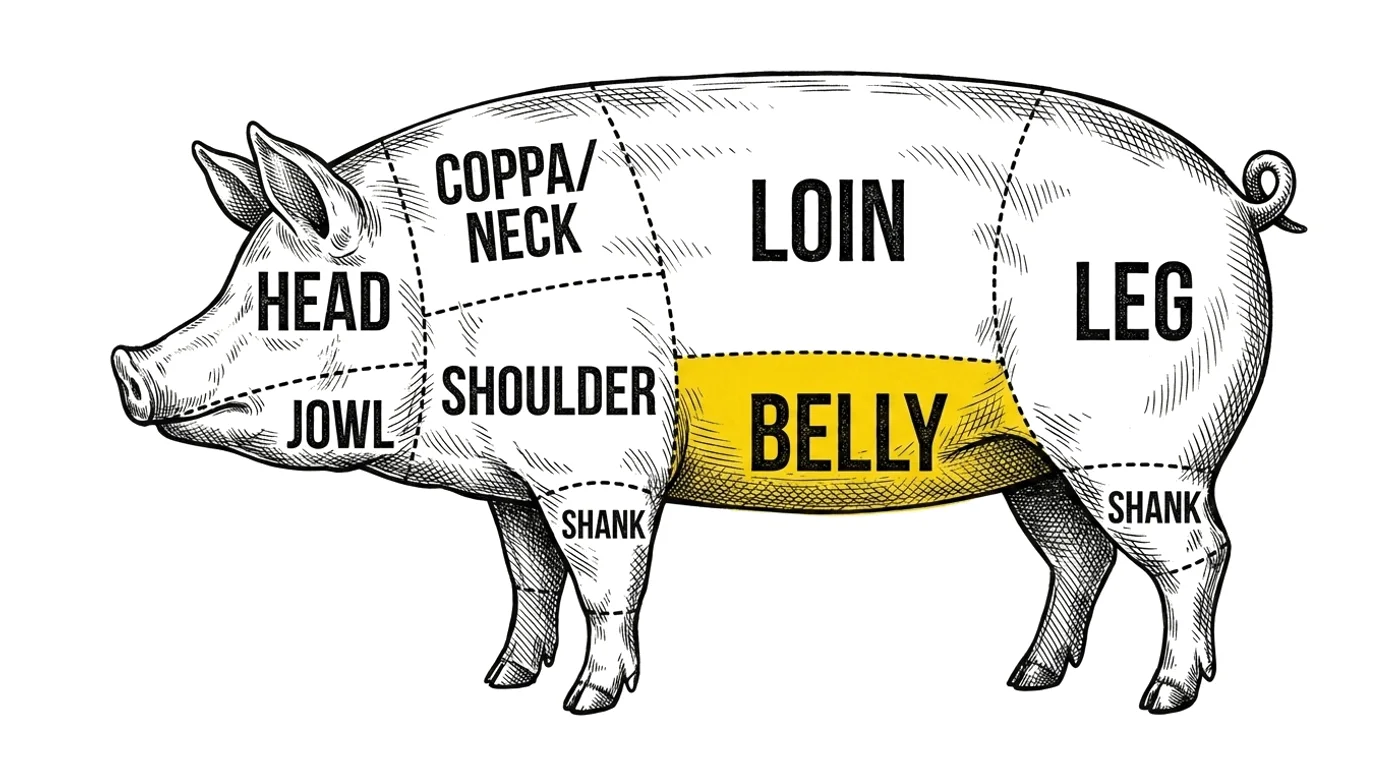
Blancos are short eastern Spanish white cooked sausages made here from lean pork, cooked head meat and a generous share of belly. Egg binds the mixture, while white pepper, pimentón, cinnamon and aniseed give a mild but recognisable Levantine seasoning. The plural source title is retained because blanco also functions as a broader descriptive family name.
Where it's from
The cut
Identity and terminology
Spanish blanco and Valencian/Catalan blanc both mean white. In sausage use, the word distinguishes pale, usually non-blood cooked products from red or black relatives; it does not identify one national standard formula. Regional technical material from Murcia recognises traditional cooked products including blanco, while Spain's current geographical-indication list does not register the bare name Blancos as a protected designation.
Composition and characteristics
Cooked head meat contributes gelatin and savoury depth, belly provides richness and lean pork gives structure. A whole egg reinforces binding and must be declared as an allergen. White pepper and aniseed keep the flavour aromatic; a small amount of pimentón seasons the mixture without turning it into a red paprika sausage. The slice is pale, moist and moderately coarse.
Production and process
The head is cleaned, gently cooked and boned before chilling. Head meat, raw lean pork and belly are ground together, then mixed with weighed egg and seasonings. A refrigerated rest allows even seasoning but is not fermentation. The mixture is stuffed into short links and poached until the centre reaches 74°C, followed by rapid chilling. Historical room or oil storage is not part of the controlled Curesmith branch.
History and regional forms
Blanco belongs to the pork-slaughter traditions of Spain's Mediterranean east, where cooked sausages make productive use of head meat and fatty cuts. The family extends across Murcia, Valencia and the Balearic Islands under related names, but formulas vary materially: some omit egg, some use different offal and some add pine nuts. The available evidence supports a regional family, not a single unchanged recipe or protected origin.
Use, storage and related products
Blancos can be eaten cold after cooking, reheated, fried or used in stews and rice dishes. This egg-bound head-meat branch differs from Blanco de Alicante's simpler lean-pork-and-dewlap formula and from Blanquet de Baleares with pine nuts. It should be labelled for egg and stored refrigerated; immersion in oil does not make the sausage shelf stable.
Recipe and cure
This is not a finished recipe. It is a window into how this meat is traditionally cured. Before you follow any process, run it through one of our curing calculators so the salt, cure and timings are right and safe for your own batch.
Make this — the measured Curesmith version →“Make this” opens the same cure as a measured recipe, scaled to your batch.
- Meat
- Skinless pork belly
- Cut
- Skinless pork belly
- Salt (%)
- 1.8
- Curing salt
- None
- Fermented
- No
- Smoked
- No
- Maturation
- Cooked sausage 0–4°C for up to 5 days; freeze for longer storage
- Basis
- per 1,000 g skinless pork belly
- Style
- Eastern Spanish cooked white pork sausage with egg
Ingredients
- Lean pork shoulder50% · 500 g
- Cooked pork head meat, boned50% · 500 g
- Skinless pork belly100% · 1000 g
- Whole hen egg, beaten5% · 100 g
- Fine salt1.8% · 36 g
- Ground white pepper0.2% · 4 g
- Sweet pimentón0.4% · 8 g
- Ground cinnamon0.05% · 1 g
- Ground aniseed0.03% · 0.6 g
Method
- Split and clean the pork head, then simmer at about 90–95°C until the meat separates readily; bone carefully.
- Chill cooked head meat, lean pork and belly to 4°C or below, then grind through 8 mm.
- Mix with weighed egg, salt, white pepper, pimentón, cinnamon and aniseed until cohesive.
- Cover and refrigerate the mixture up to 24 hours.
- Stuff into 30–40 mm casing and link at 5–6 cm.
- Poach in 78–80°C water until the cold point reaches 72°C.
Safety. Declare egg. Refrigerated rest is not fermentation, and oil or room-temperature storage is not an approved preservation step.