
Blanquet Valencià
Also known as Blanquet, Blanquet valenciano, Botifarro-Blanquet
Valencian Community, Spain
Overview
Blanquet Valencià is a pale cooked pork sausage from eastern Spain, especially associated with Alicante and the wider Valencian food culture. The developed branch combines lean pork and softened skin with egg, pine nuts, white pepper, pimentón and warm sweet spices. The result is light in colour but not bland, with a firm tender set and visible nut pieces.
Where it's from
The cut
Name and identity
Blanquet is a diminutive of blanc, white, referring to the sausage's pale appearance. The term belongs to a wider eastern Iberian white-sausage vocabulary that also includes blanco and botifarra blanca. The source compound Botifarro-Blanquet is retained as evidence, but it should not collapse the Valencian product into Balearic botifarró or the separate Blanquet de Baleares branch.
Regional context
Official Spanish food writing identifies blanquet as a characteristic Alicante sausage and places it in rice dishes with beans, turnips and other products of the pig slaughter. Its seasoning sits within the Levantine pattern of cinnamon, clove, pepper and pimentón. The exact name is not presented as a registered geographical indication in the current national list checked for this batch.
Composition and production
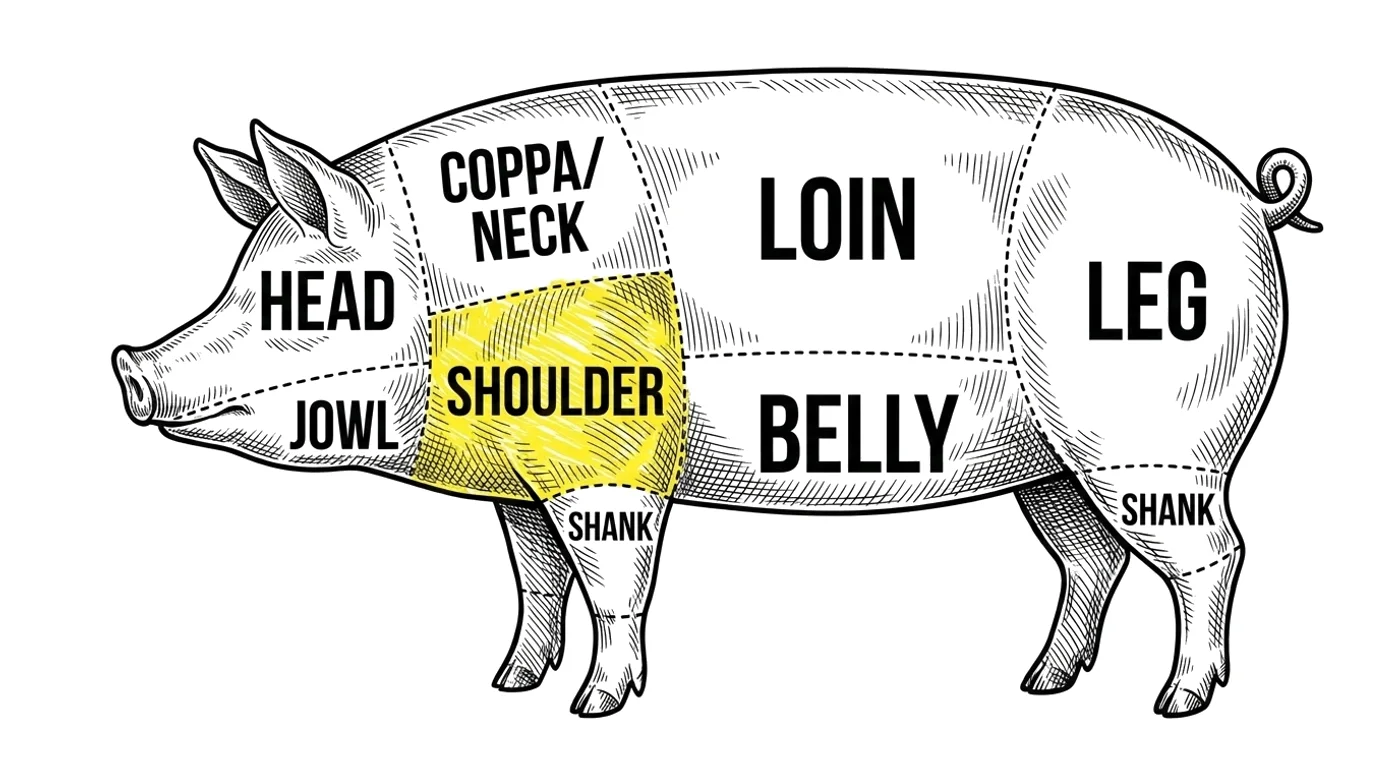
Lean shoulder provides the meat structure while thoroughly softened pork skin adds gelatin and a clean slice. Egg reinforces the bind, pine nuts bring sweetness and texture, and the spices remain measured so the filling stays recognisably pork-led. The mixture is stuffed into medium casing, gently cooked, cooled quickly and stored refrigerated.
Serving and culinary use
Blanquet may be eaten cold, gently browned or cooked into rice, bean and vegetable dishes where its gelatin-rich filling enriches the broth. Pine nut and egg declarations should follow the market's allergen rules and good consumer communication. Pale colour is not evidence of doneness, so the production cook must be measured.
How to recognise it
The cooked slice is ivory to pale pink with small red-gold spice tones and visible pine nuts. Texture is cohesive and slightly springy from skin gelatin and egg, but should not be rubbery. It differs from Blanco de Alicante's simpler lean-and-dewlap structure and from the Balearic branch, whose formula and island identity are recorded separately.
Recipe and cure
This is not a finished recipe. It is a window into how this meat is traditionally cured. Before you follow any process, run it through one of our curing calculators so the salt, cure and timings are right and safe for your own batch.
Make this — the measured Curesmith version →“Make this” opens the same cure as a measured recipe, scaled to your batch.
- Meat
- Lean pork shoulder
- Cut
- Lean pork shoulder
- Salt (%)
- 2
- Curing salt
- None
- Fermented
- No
- Smoked
- No
- Maturation
- 0–4°C; consume within 5 days or freeze
- Basis
- per 1,000 g lean pork shoulder
- Style
- Valencian cooked white pork sausage with skin, egg and pine nuts
Ingredients
- Lean pork shoulder100% · 1000 g
- Pork skin, scraped and cleaned45% · 450 g
- Whole hen egg, beaten9.6% · 143 g
- Pine nuts4% · 40 g
- Fine salt1.9% · 28.5 g
- Ground white pepper0.38% · 5.5 g
- Sweet pimentón0.58% · 8.5 g
- Ground cinnamon0.09% · 1.5 g
- Ground cloves0.03% · 0.4 g
Method
- Scrape and rinse pork skin thoroughly, then simmer until a finger or skewer penetrates without resistance.
- Drain and chill the tender skin and pork shoulder to 4°C or below.
- Grind shoulder through 6 mm and skin through 4.5–6 mm.
- Mix meat, skin, weighed egg, pine nuts, salt and spices until cohesive.
- Stuff into casing and form 15 cm links, leaving enough expansion room for cooking.
- Poach in 78–80°C water until the cold point reaches 72°C.
Safety. Pork skin must be cleaned and cooked until fully tender. The filled sausage needs a measured cook, rapid cooling and refrigeration; egg must be declared and pine nuts should be communicated clearly.