
Boudin Blanc
Also known as French white sausage, White boudin
France
Overview
Boudin Blanc is the French family of pale cooked sausages made without blood. A white meat or pork base is blended with fat and a softening liquid such as milk or cream; egg, onion and a small panade may contribute body. The texture ranges from lightly granular to very fine, but the defining impression is delicate, moist and gently seasoned.
Where it's from
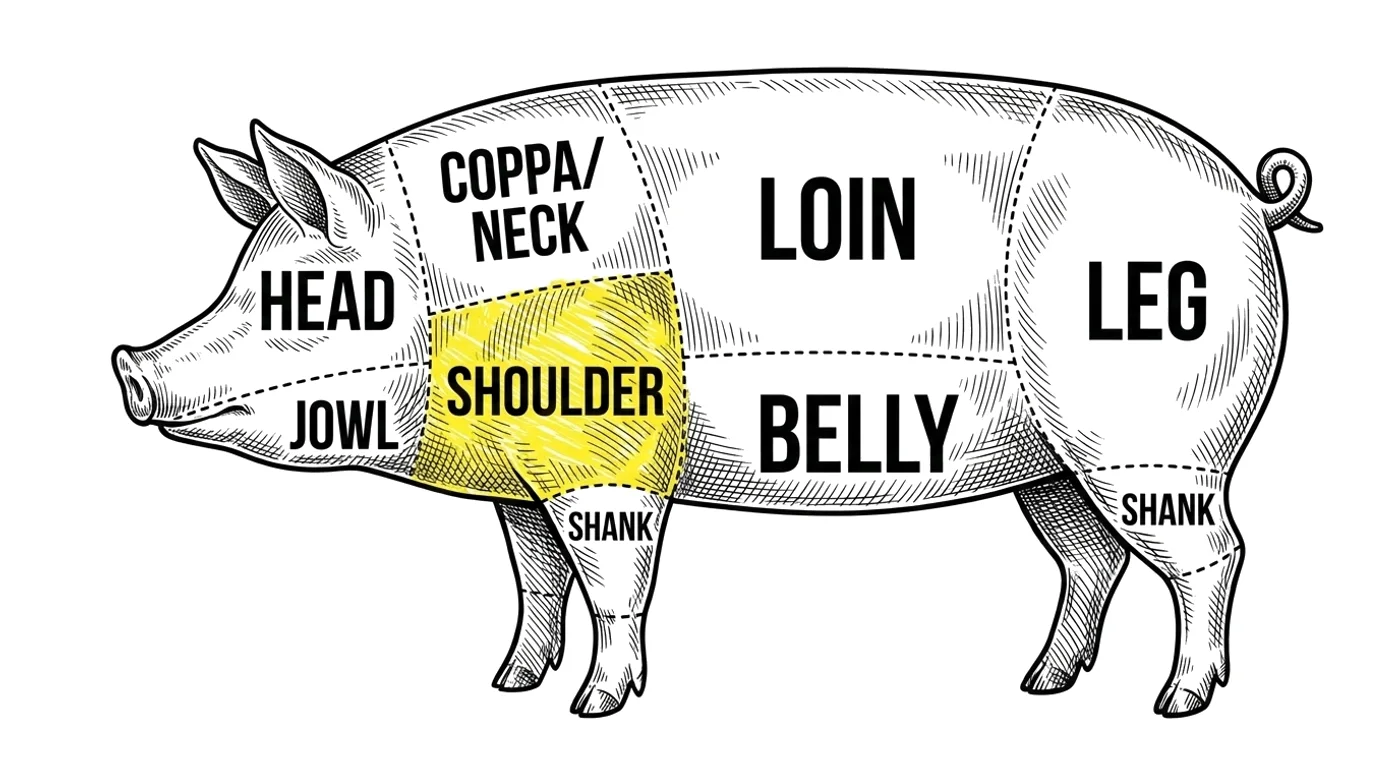
The cut
Name and family boundaries
Boudin once referred broadly to a sausage or stuffed pudding. Blanc, white, marks the absence of blood and distinguishes the family from boudin noir. The term does not indicate one fixed regional formula: pork, veal and poultry versions coexist, as do recipes with or without bread. The Toulouse-labelled branch uses poultry, duck liver, cream and bread, while a traditional-style branch perfumes milk with onion, shallot and carrot before binding pork and fat. Neither branch is a protected geographical identity.
History
French culinary records place recognisable white boudins in early modern cookery, where poultry, pork fat, onion, milk and spice were combined for refined service. Later accounts linked the sausage with the older Christmas custom of serving a hot milk-and-bread preparation before the festive meal. Whatever the precise route, Boudin Blanc became strongly associated with winter celebrations and especially Christmas.
Composition and production
The family is made by chilling and finely reducing the meat and fat, preparing any onion or panade, and incorporating milk, cream or egg without breaking the emulsion. The soft paste is stuffed gently because it expands during cooking. Poaching or steaming sets the sausage, after which it is cooled rapidly and kept refrigerated.
Legal and protected forms
French professional usage defines ordinary and superior boudin blanc categories, while the Label Rouge specification for Boudin blanc supérieur nature imposes a narrower quality scheme. Boudin blanc de Rethel and Boudin blanc de Liège are protected geographical children with different mandatory compositions and places of production. A generic recipe must not borrow either protected name.
Serving and related styles
Boudin Blanc is commonly reheated in butter, browned in a pan or grilled gently so the casing does not split. Apples, mushrooms, potatoes and cream sauces are familiar companions. The Paris poultry, Toulouse poultry-and-liver and aromatic milk-infusion branches remain recipe styles under this family. Rethel and Liège retain their own articles because legal protection and mandatory composition make them distinct identities.
Recipe and cure
This is not a finished recipe. It is a window into how this meat is traditionally cured. Before you follow any process, run it through one of our curing calculators so the salt, cure and timings are right and safe for your own batch.
Make this — the measured Curesmith version →“Make this” opens the same cure as a measured recipe, scaled to your batch.
- Meat
- Lean pork shoulder
- Cut
- Lean pork shoulder
- Salt (%)
- 2.5
- Curing salt
- None
- Fermented
- No
- Smoked
- No
- Maturation
- 0–4°C; consume within 5 days or freeze
- Basis
- per 1,000 g lean pork shoulder
- Style
- French uncured white cooked pork sausage
Ingredients
- Lean pork shoulder100% · 1000 g
- Pork back fat40% · 400 g
- Pasteurised whole milk53.4% · 750 g
- Onion, finely diced26.7% · 375 g
- Unsalted butter5% · 70 g
- Fine salt2.5% · 35 g
- Ground white pepper0.36% · 5 g
- Quatre épices0.5% · 5 g
Method
- Cook onion gently in butter until translucent without browning; cool to 4°C or below.
- Chill pork and fat until firm. Grind with the cooled onion through 5 mm, rechill and grind again.
- Mix in salt, white pepper and optional quatre épices, then add cold milk gradually to form a soft cohesive paste.
- Stuff softly into hog casings and form 15 cm links without overfilling.
- Poach in 78–80°C water until the cold point reaches 72°C.
- Cold-water cool immediately and transfer to refrigeration.
Safety. The soft high-moisture filling is vulnerable to emulsion breakage and post-cook contamination. Keep ingredients cold, verify the cold-point cook, cool rapidly, avoid recontamination and refrigerate.