
Overview
Bündnerfleisch is a protected Swiss air-dried beef product from Graubünden, also known as viande des Grisons or Grisons meat. It is made from specified lean hindquarter muscles, salted, dried and repeatedly pressed into its characteristic rectangular form. It is never smoked. The registered specification controls the product’s identity, geography and measurable release characteristics.
Where it's from
The cut
Protected identity
The protected name applies only to compliant production in Graubünden using eligible beef cuts and the specified process. Generic dried beef, bresaola and Alpine-style products made elsewhere remain separate. Multilingual names should be recorded as official equivalents rather than treated as unrelated products. Geographic processing, not merely a Swiss seasoning profile, anchors the indication.
Composition and characteristics
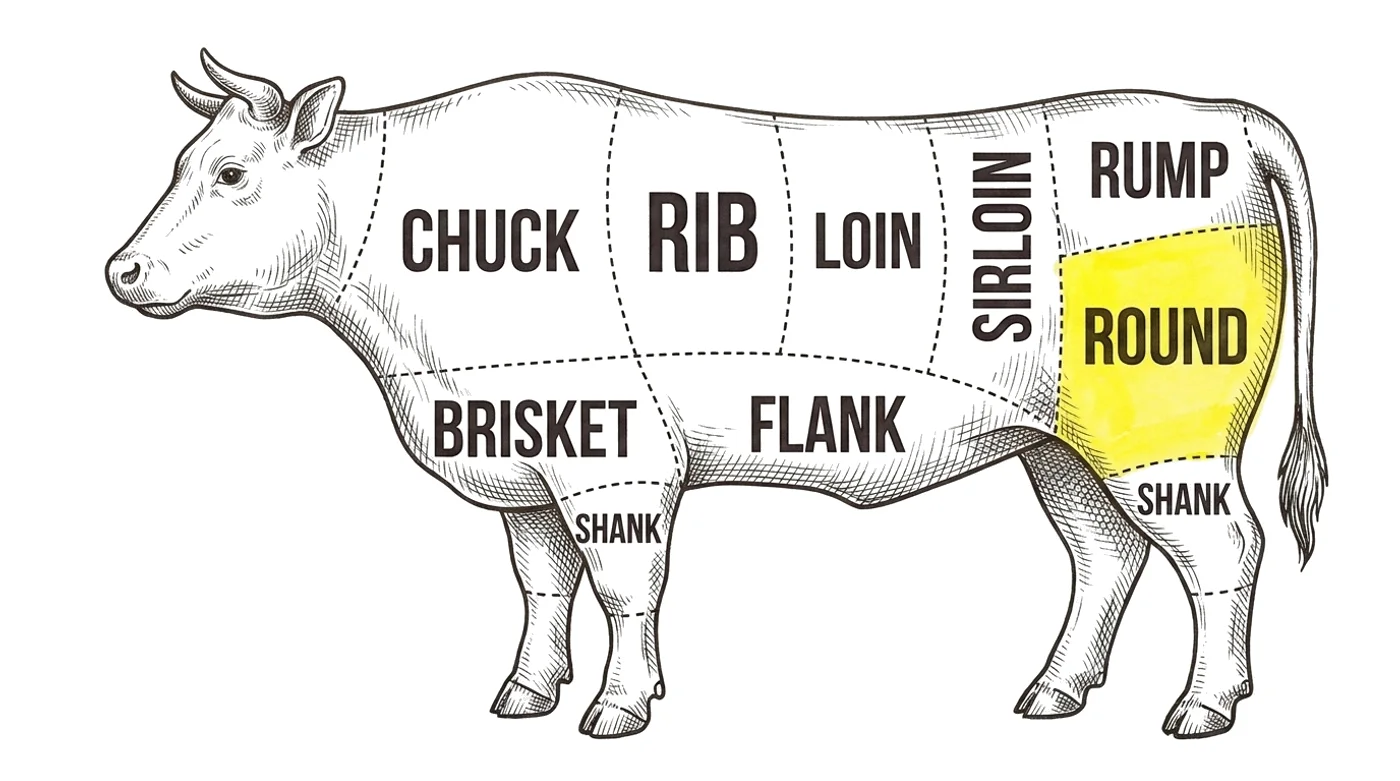
Trimmed beef muscles form the core, with salt, authorised curing ingredients and a producer-specific spice mixture. The product is very lean, dense and dark red, with a dry surface and regular compressed shape. Thin slices are tender enough to eat without cooking, yet markedly concentrated. Heavy visible fat, smoke aroma or a sausage-like grind would contradict the identity.
Production method
Eligible muscles are selected within the raw-material pH range specified by the standard, trimmed, salted and cured, then dried in Graubünden. Repeated pressing stages shape the pieces and support even moisture removal. The finished product loses substantial weight and must meet the specified water-activity ceiling. Drying and pressing, rather than smoking, create its texture and stability.
History and cultural context
Air-drying beef suited Graubünden’s mountain climate, cattle economy and need for compact winter food. Pressing created a practical shape for storage and slicing while concentrating flavour. The product became a symbol of the canton and a major Swiss speciality. Protection formalised the relationship between raw-material selection, Alpine processing knowledge and regional reputation.
Culinary use and relationships
Bündnerfleisch is served in very thin slices as an appetiser, snack or part of a cold platter, often with bread, cheese, pickles or wine. It may garnish salads and warm dishes but is normally valued uncooked. Related entries include bresaola and other dried beef, which are comparable products but carry no Graubünden protection.
Recipe and cure
This is not a finished recipe. It is a window into how this meat is traditionally cured. Before you follow any process, run it through one of our curing calculators so the salt, cure and timings are right and safe for your own batch.
Make this — the measured Curesmith version →“Make this” opens the same cure as a measured recipe, scaled to your batch.
- Meat
- Beef eye round
- Cut
- Beef eye round
- Salt (%)
- 2.5
- Curing salt
- Cure #1/#2 as specified
- Fermented
- No
- Smoked
- No
- Basis
- per 1,000 g beef eye round
- Style
- Pressed air-dried beef; not Bündnerfleisch IGP.
Ingredients
- Beef eye round100% · 1000 g
- Fine salt2.5% · 25 g
- Cure #2 containing 6.25% sodium nitrite0.25% · 2.5 g
- Sugar0.5% · 5 g
- Black pepper0.2% · 2 g
- Crushed juniper berries0.15% · 1.5 g
- Ground coriander0.1% · 1 g
- Dry red wine2% · 20 g
Safety. Follow the protected specification for eligible cuts, curing, drying, pressing and release. Verify water activity rather than relying on weight loss or surface dryness alone, control mould and environmental hygiene and protect the ready-to-eat product during slicing and packaging. Smoking or non-Graubünden production falls outside the protected identity.