
Burenwurst
Also known as Burenhäutl, Haße, Klobasse
Vienna, Austria
Where it's from
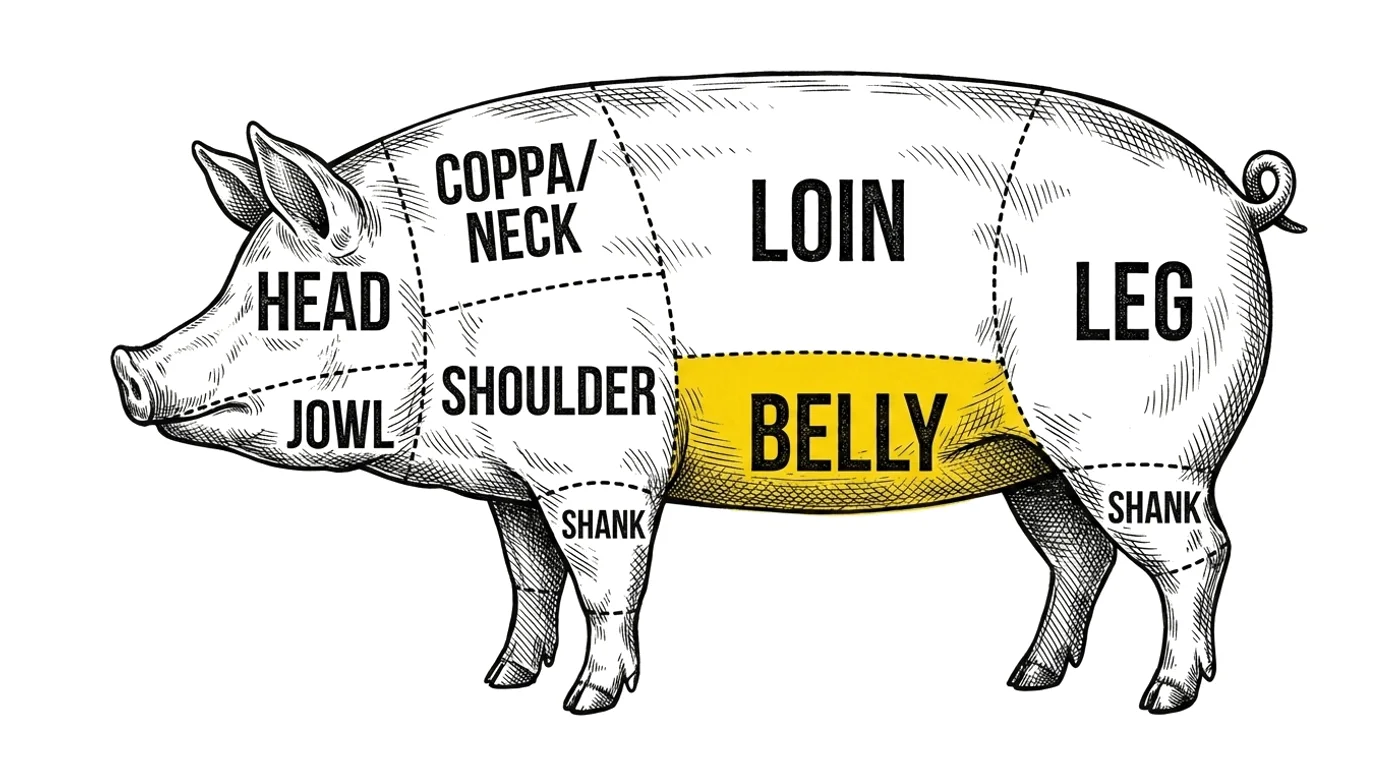
The cut
Identity and name
Burenwurst is a coarse, relatively fatty Austrian Brühwurst made from beef and/or pork, bacon, a finely comminuted binding component, water and potato starch. It is associated most strongly with Vienna and its sausage stands. Austrian usage also includes colloquial names such as Burenhäutl and Haße, while the technical family relationship is with Klobasse-type cooked sausages.
Historical development
Austria's Traditional Foods register dates the sausage's public visibility to the Second Boer War of 1899–1902, when Vienna's Würstelstände expanded beyond Frankfurters. The register records several explanations for the name but does not endorse one as proven: sympathy with the Boers, a returning butcher, and transmission by Dutch soldiers all appear as traditions rather than settled etymology.
Composition and character
The Austrian Codex places Burenwurst among cooked fine-batter sausages with a coarse, fatty character. The registered model uses second-quality beef and/or pork, bacon, Salzstoß, water and up to three parts potato starch per hundred parts sausage mass. Pepper, paprika, coriander and garlic give the source branch a warmer and more aromatic profile than a plain Vienna sausage.
Production
Part of the lean and collagen-rich meat is worked with salt, cure, starch and water to form a binding batter. Coarser belly or bacon is folded through it so the cut surface remains visibly granular. The sausage is filled into hog casing, surface-dried, hot-smoked and poached. It is a refrigerated cooked product, not a fermented or dry sausage.
Culinary role
Burenwurst is a classic hot order at the Viennese Würstelstand. It is heated in water and served with mustard and bread, often with a hot oil-preserved pepper. The relatively high fat and coarse matrix make it juicy and substantial, with enough structure to remain distinct from the softer emulsified sausages sold alongside it.
Boundaries and related products
A Burenwurst is not a Frankfurter, whose fine homogeneous emulsion and slender casing produce a different bite. It is also separate from Käsekrainer, which contains visible cheese, and from German or American Braunschweiger liver sausages. Its name refers to an Austrian cooked-sausage identity, not to South African boerewors.
Variations
Named formulas within this product rather than separate ones. Quantities are per 1000 g of the meat block.
Klobasse - Austrian Coarse Paired Branch
- Lean beef chuck350 g
- Pork shoulder350 g
- Firm pork back fat150 g
- Pork jowl and skin-rich trim150 g
- Ice water150 g
- Potato starch20 g
- Fine salt18 g
- Cure #1, 6.25% sodium nitrite2.5 g
- Black pepper2 g
- Sweet paprika3 g
- Ground coriander1 g
- Fresh garlic3 g
Recipe and cure
This is not a finished recipe. It is a window into how this meat is traditionally cured. Before you follow any process, run it through one of our curing calculators so the salt, cure and timings are right and safe for your own batch.
Make this — the measured Curesmith version →“Make this” opens the same cure as a measured recipe, scaled to your batch.
- Meat
- Skinless pork belly
- Cut
- Skinless pork belly
- Salt (%)
- 1.8
- Curing salt
- Cure #1 as specified in the recipe
- Fermented
- No
- Smoked
- Yes
- Maturation
- Refrigerate at 0–4°C; use within 4 days or freeze
- Basis
- per 1,000 g skinless pork belly
- Style
- Austrian coarse cured, smoked and cooked pork-beef sausage
Ingredients
- Pork shoulder, 20–25% visible fat80% · 800 g
- Lean beef chuck70% · 700 g
- Skinless pork belly100% · 1000 g
- Pork cheek and collagen-rich shoulder trimmings80% · 800 g
- Ice water21.8% · 720 g
- Fine salt1.8% · 59 g
- Cure #1, 6.25% sodium nitrite0.25% · 8 g
- Potato starch2.4% · 80 g
- Black pepper0.24% · 8 g
- Sweet paprika0.24% · 8 g
- Ground coriander0.12% · 4 g
- Fresh garlic0.36% · 12 g
Method
- Trim, dice and chill all meat and fat to 0–2°C; chill grinder parts.
- Grind beef, shoulder and cheek through 3–5 mm and belly through 8 mm.
- Mix beef, shoulder and cheek with salt, Cure #1, spices, starch and ice water to a sticky fine bind; fold in the coarser belly without smearing.
- Stuff into natural hog casing, 30–34 mm; remove air pockets and form the specified links.
- Rest the stuffed links for 8–12 hours.
- Dry at 45–50°C, then hot-smoke at 55–60°C for about 60 minutes.
Safety. Use Cure #1 only by weight on the meat block, poach to a verified 71°C cold point, cool rapidly and keep refrigerated.