
Cacholeira Branca de Portalegre PGI
Also known as Cacholeira branca de Portalegre
Portalegre district, Alentejo, Portugal
Overview
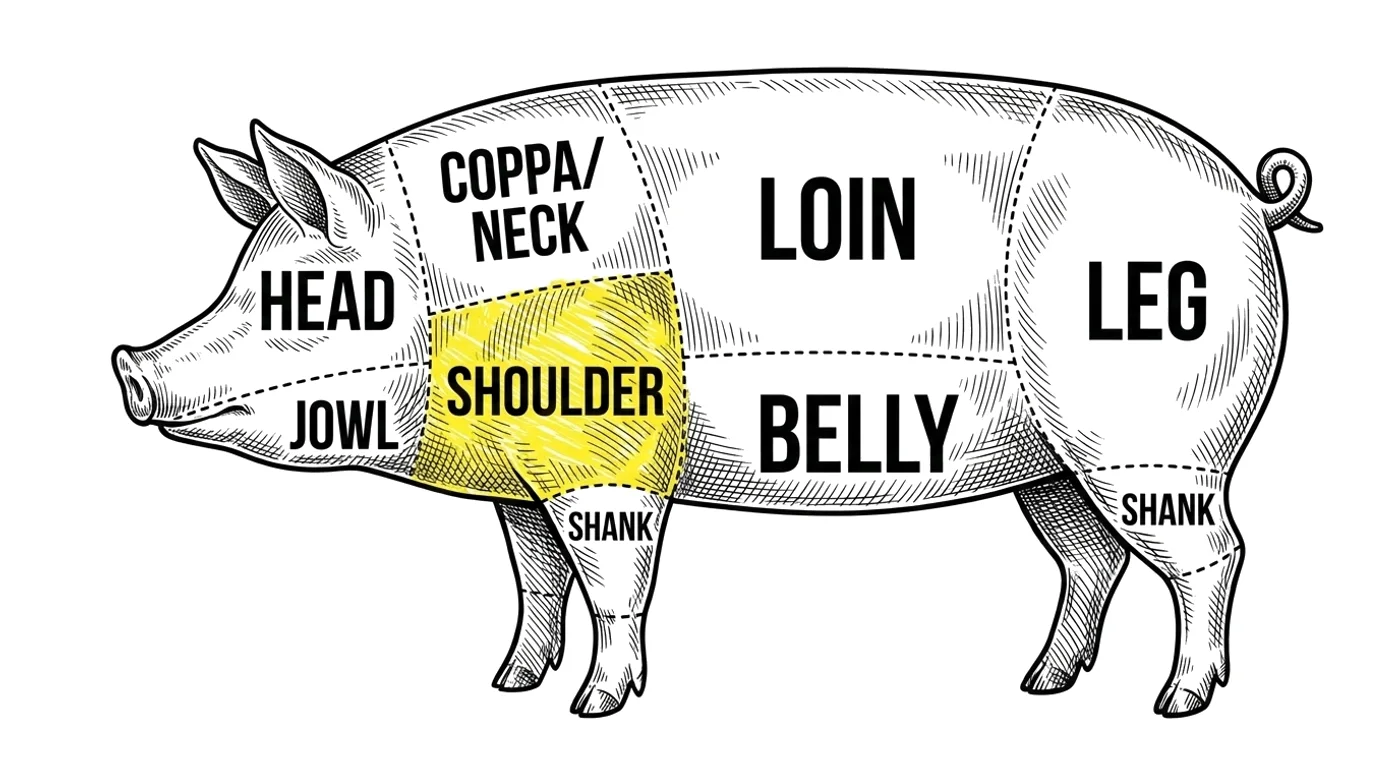
Cacholeira Branca de Portalegre is a protected Portuguese cooked sausage made principally from liver, fat and other internal organs of Alentejano pigs. Its character comes from traditional cutting, restrained seasoning, stuffing, boiling and drying. The finished product belongs to the cooked-meat culture of the Portalegre district rather than to the spreadable German liver-sausage family.
Where it's from
The cut
Identity and terminology
The entire name is protected as a geographical indication. Branca, meaning white, distinguishes it within the regional family of darker blood sausages and smoked products. The designation cannot be reduced to a generic label for any pale offal ring. A similar home sausage made outside the area must use a descriptive Portalegre-style title and avoid the protected name in trade.
Composition and characteristics
The registered description centres on salted liver, other internal organs and fat from Alentejano pigs reared under the specified regional system. This raw-material link is part of the identity, not a decorative origin story. The official description does not support treating any formula that adds unrelated materials or unidentified pork as automatically equivalent to the PGI.
Production and process
Within the protected process, the organs and fat are cut in the traditional manner, seasoned, stuffed, boiled and dried under local conditions. Production is limited to authorised premises in the defined municipalities, with traceability and inspection. Home execution can imitate broad sensory features, but it cannot reproduce legal compliance merely by copying a secondary formula.
History and regional development
Portalegre developed an important preserved-meat tradition around Alentejano pigs and the district's cold, dry winter climate. The official application records documentary evidence for regional cooked meats reaching back to the eighteenth century. Registration protects the accumulated reputation, local method, raw material and geographical link rather than one isolated modern recipe.
Use, storage and related products
Serve the sausage in slices as part of an Alentejo table with bread and other regional charcuterie. Its boiled offal character separates it from smoked chouriço and blood-rich morcela. Certified products should follow their producer's label; opened or home-made cooked sausage requires careful refrigeration, clean slicing and prompt consumption.
The recipe for this product is in preparation and will be published once it has been verified.
Safety. The PGI is a cooked perishable offal product. Non-certified home formulas must withhold the protected name and still require inspected offal, verified heating, rapid cooling and refrigeration.