
Cambridge Sausage (alternative 1)
Also known as Cambridge rice and rusk sausage, Cambridge Sausage with Rice and Rusk
Cambridgeshire, United Kingdom
Overview
Cambridge Sausage with Rice and Rusk is a second historical Cambridge formula, using cooked rice together with hydrated rusk. It gives a particularly tender and moisture-retentive filling.
Where it's from
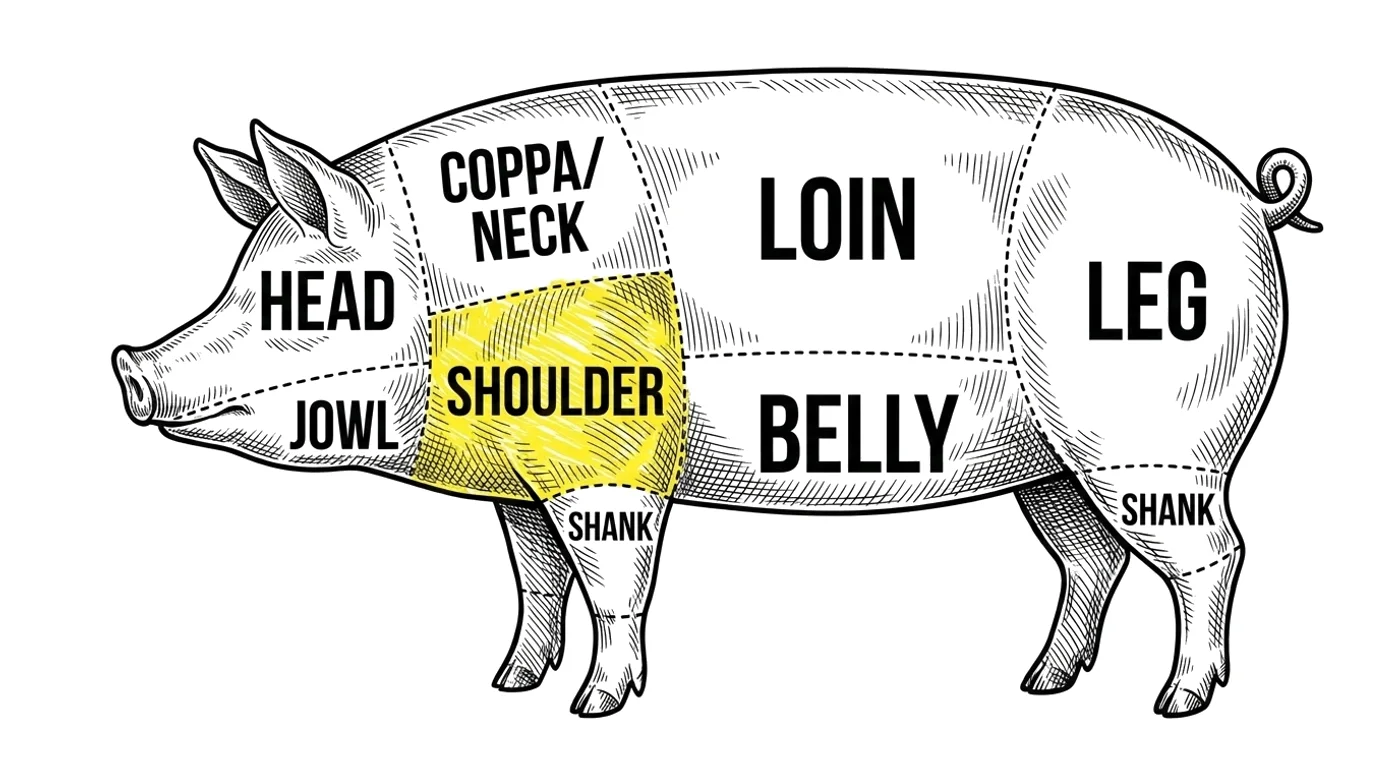
The cut
Identity and terminology
It is one documented formula variation. Rice and rusk do not define every Cambridge sausage. The city name reflects British trade nomenclature, while the ingredient subtitle provides the actual identity.
Composition and characteristics
Rice softens the cut face and rusk absorbs water and meat juices. Pork, fat, pepper and mild herbs or sweet spices provide the traditional British sausage character. The filling is cohesive but not emulsified.
Production and process
Cooked rice is cooled before use, rusk is hydrated to the specified consistency, and both are mixed with chilled minced meat. The sausage is stuffed into links and remains raw until cooking.
History and regional forms
The formula belongs to the era when butcher manuals offered named sausages with carefully engineered cereal systems. Rice reduced cost and changed texture, while rusk became a dependable industrial binder.
Use, storage and related products
It is suitable for frying, grilling and breakfast service. Its closest relatives are the other Cambridge variants in this tranche, not rice sausages from Louisiana or Asia, which have different histories and flavour structures.
Recipe and cure
This is not a finished recipe. It is a window into how this meat is traditionally cured. Before you follow any process, run it through one of our curing calculators so the salt, cure and timings are right and safe for your own batch.
Make this — the measured Curesmith version →“Make this” opens the same cure as a measured recipe, scaled to your batch.
- Meat
- Pork shoulder
- Cut
- Pork shoulder
- Salt (%)
- 1.9
- Curing salt
- None
- Fermented
- No
- Smoked
- No
- Maturation
- Raw sausage ≤4°C for up to 2 days; freeze for longer storage
- Basis
- per 1,000 g pork shoulder
- Style
- Fresh extended pork sausage; cook before eating
Ingredients
- Pork shoulder100% · 1000 g
- Skinless pork belly40% · 400 g
- Pork back fat20% · 200 g
- Cooked long-grain rice, fully chilled18.7% · 300 g
- Fine rusk6.2% · 100 g
- Ice-cold water3.7% · 60 g
- Fine salt1.9% · 30 g
- Ground white pepper1% · 16 g
- Ground nutmeg0.12% · 2 g
- Ground mace0.12% · 2 g
- Rubbed sage0.2% · 2 g
- Ground allspice0.12% · 2 g
- Ground ginger0.06% · 1 g
- Cayenne pepper0.03% · 0.5 g
Method
- Cook, rapidly cool and refrigerate the rice. Weigh exactly 150 g cold cooked rice.
- Chill meats, fat, rice, water and equipment to 0–4°C.
- Grind shoulder through 5 mm and belly/back fat through 6 mm.
- Transfer the ground meat and fat to a food processor. Add salt, spices and the measured water and pulse until cohesive but not emulsified.
- Fold in the chilled rice and rusk until evenly distributed.
- Stuff into 32 mm hog casings and form links.
Safety. The sausage contains cooked rice and raw meat and must be chilled continuously and cooked throughout.