
Cervelat
Also known as servelat, cervelas
Switzerland, Switzerland, France and Germany (regional variants)
Overview
Cervelat is a short, thick, slightly curved sausage with a fine pale-pink interior, light smoke and a juicy elastic bite. it should not have the acid tang or dry texture of fermented cervelat-type sausages from other countries. A short, thick, slightly curved sausage with a fine pale-pink interior, light smoke and a juicy elastic bite. It should not have the acid tang or dry texture of fermented cervelat-type sausages from other countries. The Codex treats it as a complete production system, not merely a familiar name. Raw material, cut or particle size, casing, smoke, fermentation, cooking and maturation all contribute to the identity. The current status is Swiss national cooked-sausage tradition : no generic EU GI. The protected or traditional reference and the Curesmith home method remain separate.
Where it's from
The cut
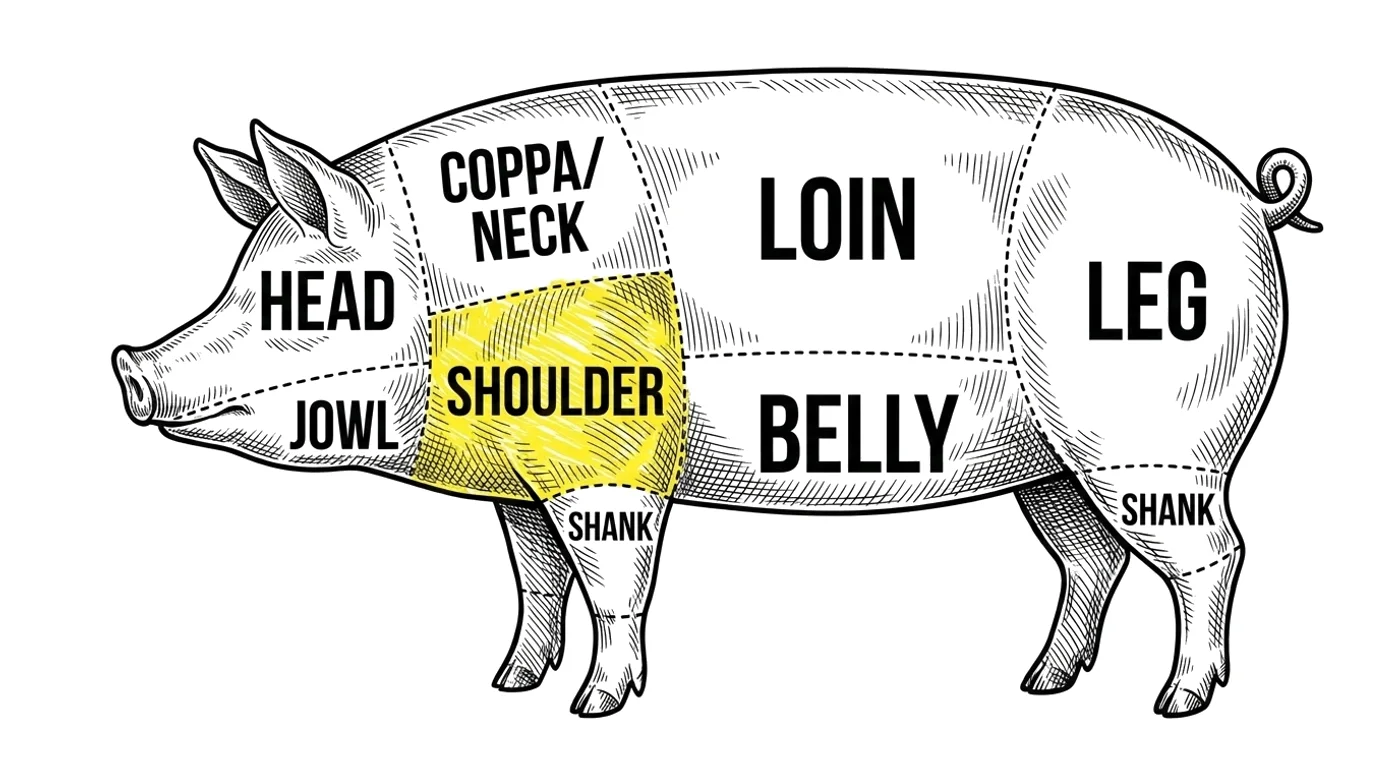
How to recognise it
A short, thick, slightly curved sausage with a fine pale-pink interior, light smoke and a juicy elastic bite. It should not have the acid tang or dry texture of fermented cervelat-type sausages from other countries. A raw or grey centre, split emulsion, greasy purge, sourness or broken refrigeration is unacceptable.
Origins and history
Older European cookbooks used names related to cervelas for several sausages, but the modern Swiss Cervelat took shape in the nineteenth century. Mechanical mincing, central slaughterhouses and urban factory work encouraged a fine, inexpensive cooked sausage that could be eaten cold, grilled or carried on an outing. Swiss writers later called it the worker's steak because it supplied affordable meat to industrial households. Its popularity crossed the country's language regions and made it a rare shared national food. The familiar practice of cutting the ends before grilling, so that they open into decorative wings, belongs to modern Swiss everyday culture rather than to a protected regional specification.
Serving and cultural significance
Eat it cold in Wurstsalat, split and grill it over a fire, or simmer it gently with potatoes. The sausage is already cooked, but reheating should be thorough and the cut ends should not be left warm for extended service.
Recipe and cure
This is not a finished recipe. It is a window into how this meat is traditionally cured. Before you follow any process, run it through one of our curing calculators so the salt, cure and timings are right and safe for your own batch.
Make this — the measured Curesmith version →The cure below is the traditional reference. “Make this” opens the measured Curesmith home recipe, scaled to your batch.
Traditional or protected production
Modern Swiss Cervelat is a cooked sausage rather than a dry ferment. Pork, beef, fat and often cooked rind are finely comminuted with ice or water and seasoning, stuffed into a suitable casing, smoked and fully cooked. Rapid cooling protects the emulsion and refrigerated quality. Regional manufacturers vary the exact blend, but the fine texture, curved form, smoke and cooked ready-to-eat status remain characteristic.
- Meat
- beef and pork (with bacon in the Swiss cooked form)
- Cut
- minced
- Salt (%)
- 2.2 to 2.5%
- Curing salt
- Cure #1 (semi-dry) or Cure #2 (dry forms)
- Other agents
- dextrose; pepper, mace, other regional spices
- Fermented
- Yes
- Target pH
- ~4.9 (fermented forms)
- Starter or mould
- lactic acid bacteria starter (fermented forms)
- Smoked
- often lightly smoked
- Target aW or weight loss
- modest for semi-dry
- Temperature (°C)
- ferment then dry 12 to 14
- Humidity (%)
- 72 to 75
- Maturation
- days to weeks
- Basis
- percentage of meat weight
- Style
- minced, fermented or cooked by region
Ingredients
- beef
- pork
- salt
- dextrose
- pepper
- mace
Notes
- Cervelat is a family, not one recipe. The fermented and semi-dry forms take the house ferment; the Swiss national Cervelat is a cooked (scalded) sausage and follows the cooked-charcuterie rules instead.
- Nitrite at 156 ppm ingoing for the cured forms.
Safety. Follow the dry-sausage rules for the fermented forms and the cooked-charcuterie rules for the scalded Swiss form; they are different safety paths.
In the Codex
What this product teaches, and where to read more.
Temple. Roof, pH