
Fermented Chorizo Antioqueño
Also known as Chorizo Antioqueño, Dry-Fermented
Antioquia, Colombia
Overview
Chorizo Antioqueño is the fresh pork chorizo associated with Antioquia and paisa cuisine in north-western Colombia. It is cooked rather than eaten as a matured Spanish chorizo and is a characteristic component of the bandeja paisa.
Where it's from
The cut
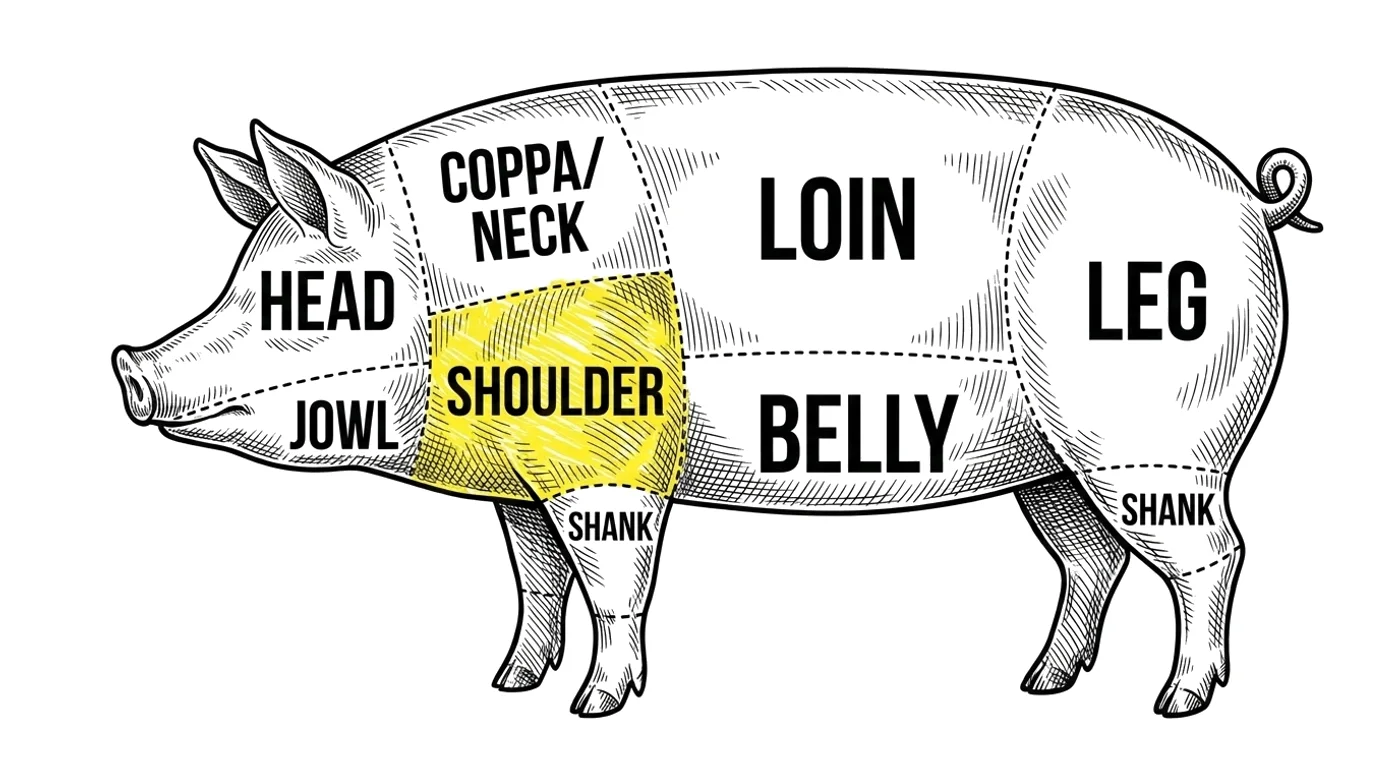
Identity and terminology
Antioqueño means from Antioquia. The name should be reserved for the regional Colombian style and not used as a synonym for all Colombian chorizo. The recipe file contains more than one developed branch, but both belong to the same product article.
Composition and characteristics
Typical versions use pork and pork fat with garlic, cumin, pepper, oregano and local aromatic variation. The sausage is usually less paprika-dominated than Spanish chorizo and has a juicy coarse cut face.
Production and process
The seasoned pork is minced, stuffed into natural casing and kept fresh or briefly cured according to the producer. It is fried, grilled or roasted before eating. Any drying in a source formula must not be treated as proof of shelf stability.
History and regional forms
Paisa food history links chorizo, morcilla and chicharrón to the pork traditions that developed after Spanish settlement. Antioquian butchers and roadside cooks made the sausage a regional emblem, and it became fixed in the twentieth-century presentation of bandeja paisa.
Use, storage and related products
It is served with arepas, beans, potatoes or in bandeja paisa. It differs from broader Chorizo Criollo Colombiano, from Spanish dry chorizo and from Colombian longaniza.
Recipe and cure
This is not a finished recipe. It is a window into how this meat is traditionally cured. Before you follow any process, run it through one of our curing calculators so the salt, cure and timings are right and safe for your own batch.
Make this — the measured Curesmith version →“Make this” opens the same cure as a measured recipe, scaled to your batch.
- Meat
- Pork shoulder
- Cut
- Pork shoulder
- Salt (%)
- 2.5
- Curing salt
- Cure #2 as specified in the recipe
- Fermented
- Yes
- Starter or mould
- Flora Italia LC 0.25 g/kg or manufacturer dose
- Smoked
- No
- Maturation
- ≤4°C after maturation
- Basis
- per 1,000 g pork shoulder
- Style
- Dry-fermented pork sausage; refrigerated finished product
Ingredients
- Pork shoulder100% · 1000 g
- Pork back fat45% · 450 g
- Fine salt2.5% · 35.5 g
- Cure #2, 6.25%0.25% · 3.5 g
- Dextrose (or sugar)0.3% · 4.5 g, or sugar 0.2% · 3 g
- Black pepper0.2% · 3 g
- Sweet paprika1.2% · 17 g
- Hot paprika0.2% · 3 g
- Cumin0.2% · 3 g
- Oregano0.2% · 3 g
- Garlic, minced0.34% · 5 g
- Non-chlorinated water3% · 43 g
- Flora Italia LC0% · 0.4 g
Method
- Weigh and label every link after stuffing.
- Chill to 0–3°C and grind through 10 mm.
- Mix meat, fat, cure, salt, sugars, spices, garlic and 10 g water; refrigerate 8–12 h.
- Rehydrate culture in 20 g water for 15 min and mix in immediately before stuffing.
- Stuff firmly and prick visible air pockets.
- 22–24°C, 90–95% RH until pH ≤5.2, normally 24–48 h.
Safety. Treat as a raw refrigerated sausage and cook thoroughly before service unless a separately validated cooked or ready-to-eat branch is documented.