
Overview
Argentine fresh chorizo is a raw sausage made for cooking, most closely associated with the parrilla and the choripán sandwich. It is commonly pork-based or made from pork and beef, with regional and butcher-specific seasoning. Its identity is fresh, juicy and grill-oriented rather than fermented, dried or ready to eat.
Where it's from
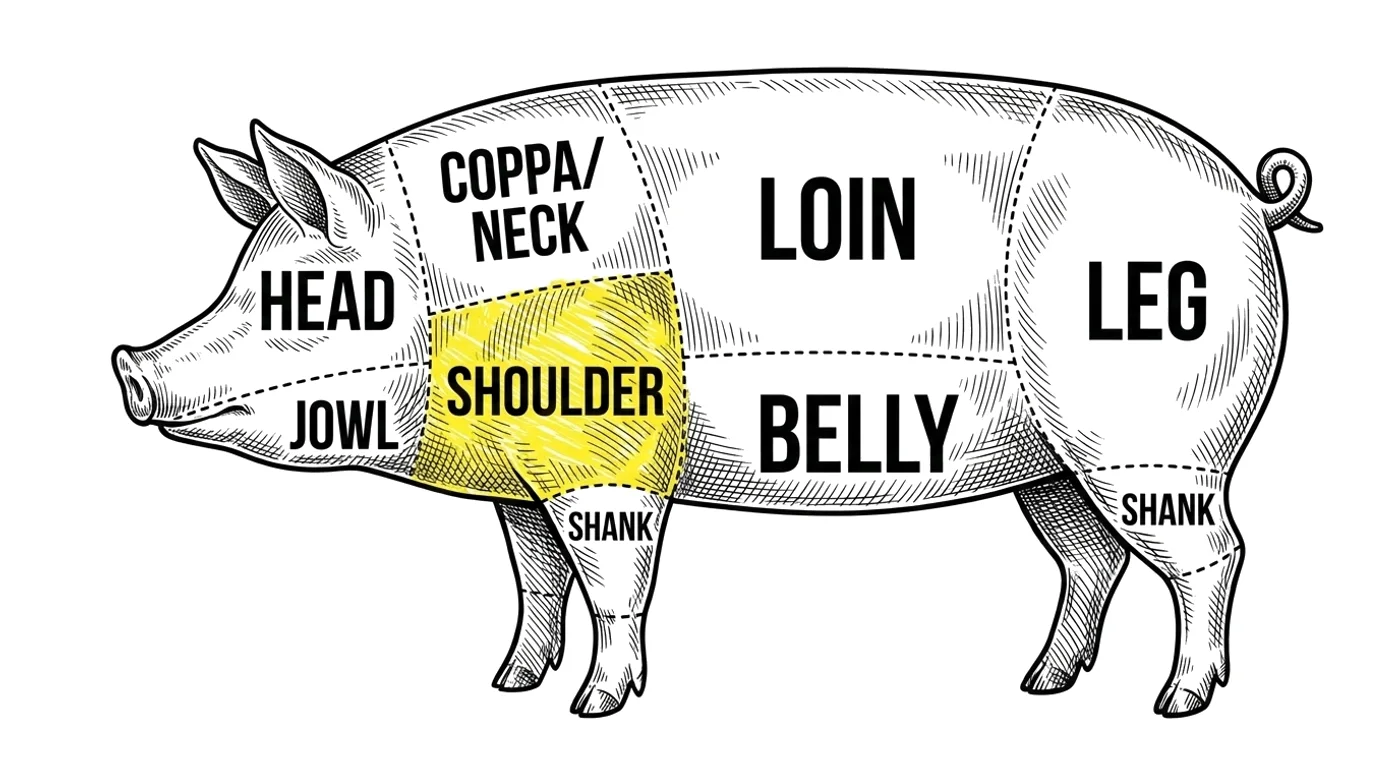
The cut
Identity and terminology
In Argentina, chorizo fresco identifies the fresh legal class, while chorizo parrillero describes its strong culinary association with grilling. The term chorizo alone spans many countries and processes, so the national qualifier matters. Argentine salame and Spanish dry chorizos are separate fermented or dried products and must not be merged with this entry.
Composition and characteristics
The sausage usually contains coarsely or moderately ground meat, visible fat, salt, garlic, pepper, paprika or other restrained seasonings. Pork, beef and mixed versions occur and should be labelled accurately. Links are plump, moist and pale red before cooking, then browned outside and juicy within. A dry, tangy salami texture is not characteristic.
Production branches
The product is mixed cold, stuffed into casing and held under refrigeration until cooked. It may be sold as pork, beef or mixed chorizo, with parrillero treated as a service and style branch. Because it is fresh, the production architecture does not rely on fermentation, drying or smoke for preservation; complete cooking is the decisive safety step.
History and cultural context
European sausage traditions arrived with migration and were adapted to Argentine livestock, butchery and open-fire cooking. Chorizo became a standard opening course at the asado and a widely available street and stadium food in choripán. Its importance lies as much in social grilling culture as in a fixed spice formula.
Culinary use and relationships
Links are grilled slowly over embers, cooked whole or butterfly-cut, and served in bread with chimichurri or salsa criolla. They also appear in mixed grills, stews and baked dishes. Related entries include generic Chorizo, Spanish chorizo, salame and fresh sausage, but Argentine fresh chorizo remains a distinct national cooking sausage.
Recipe and cure
This is not a finished recipe. It is a window into how this meat is traditionally cured. Before you follow any process, run it through one of our curing calculators so the salt, cure and timings are right and safe for your own batch.
Make this — the measured Curesmith version →“Make this” opens the same cure as a measured recipe, scaled to your batch.
- Meat
- Pork shoulder
- Cut
- Pork shoulder
- Curing salt
- None
- Fermented
- No
- Smoked
- No
- Basis
- per 1,000 g pork shoulder
- Style
- Fresh parrillero-style pork sausage; cook before eating.
Ingredients
- Pork shoulder100% · 1000 g
- Pork back fat35% · 350 g
- Fine salt1.8% · 24 g
- Sweet paprika0.79% · 10.5 g
- Garlic0.59% · 8 g
- Dried oregano0.2% · 2.5 g
- Black pepper0.2% · 2.5 g
- Ground cumin0.1% · 1.5 g
- Dry red wine4.9% · 66.5 g
Safety. This sausage is raw and must remain refrigerated until fully cooked. Species and allergen declarations must match the actual batch. Grilling colour is not proof of internal lethality, especially in thick links, so cooking must reach a safe internal endpoint while preventing cross-contamination from raw meat and utensils.