
Chorizo Criollo Colombiano
Also known as Colombian criollo chorizo, chorizo colombiano
Colombia
Overview
Chorizo Criollo Colombiano is a Colombian fresh chorizo rather than a Spanish-style dry-cured sausage. Criollo in this context signals a locally developed Colombian form descended from Iberian sausage traditions but adapted to Colombian ingredients, cooking methods and regional foodways. The family is not governed by one national recipe. Pork versions are common, while some formulas combine pork and beef. The sausage is normally cooked by frying, grilling or roasting and appears both as a stand-alone street or grill food and as a component of larger regional dishes.
Where it's from
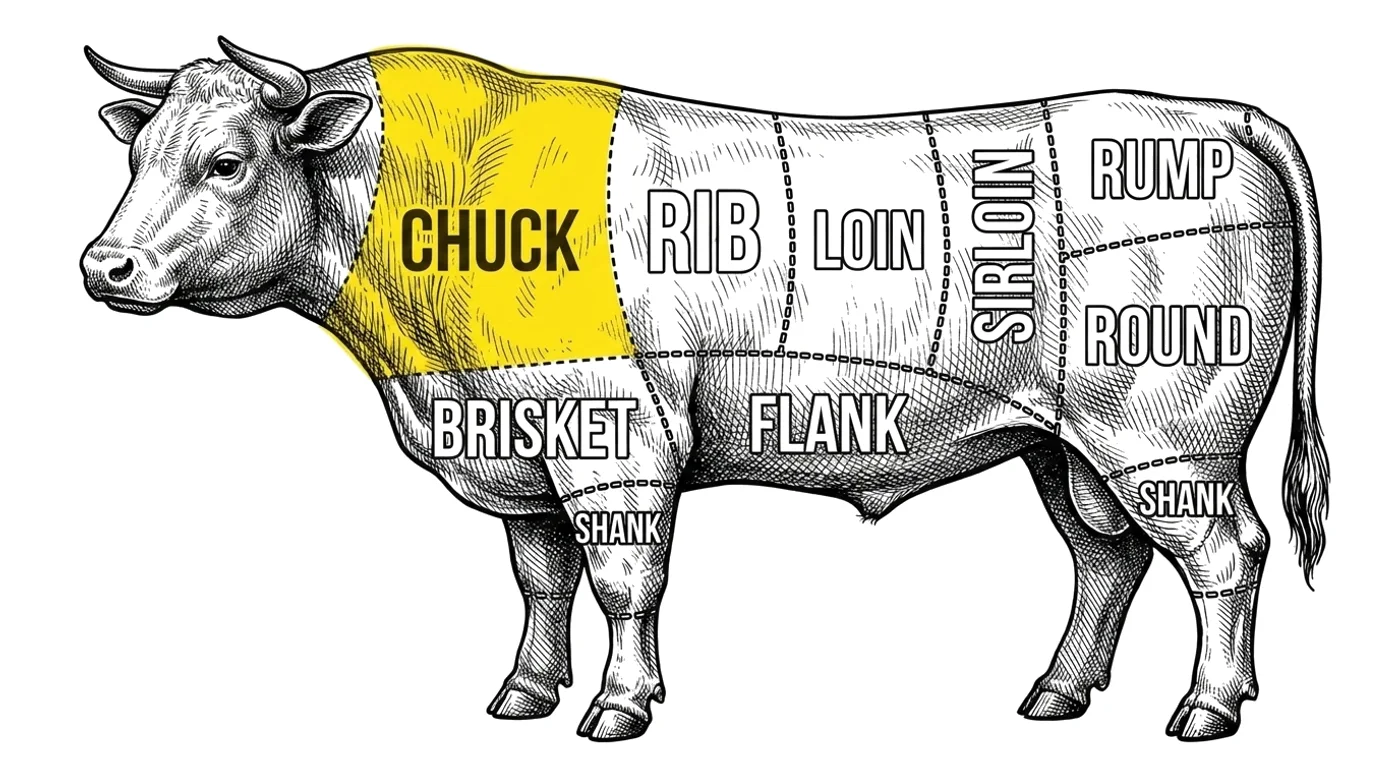
The cut
Identity and terminology
Colombian law groups chorizo fresco and longaniza among raw, fresh processed meat products placed in natural casings. That legal category separates them from raw matured products such as salami. Chorizo Criollo Colombiano should therefore be understood as a fresh regional family, not as a shelf-stable cured chorizo. It is also broader than Chorizo Antioqueño. The Antioquian branch is closely tied to paisa cookery and is commonly pork-based, whereas the Curesmith criollo formula represents a mixed beef-and-pork branch. The terms should remain separate in the Atlas.
Composition and characteristics
Colombian fresh chorizos are generally coarser and juicier than fermented Spanish chorizo and are intended to be cooked before eating. Regional formulas may use pork alone or combine pork with beef, with garlic, cumin, oregano, pepper, onion and other local seasonings. The developed criollo branch is distinguished by separate meat textures, with finer beef supporting coarser pork and fat, and by a bright aromatic profile that includes onion, garlic, oregano, citrus and wine. The raw filling is reddish-brown rather than the intense paprika red of many Spanish chorizos, and the cooked cut face remains visibly minced.
Production and process
Fresh criollo chorizo is made from chilled meat and fat, minced to the texture required by the regional style, mixed with salt, aromatics and seasoning, and stuffed into natural casing. It is sold raw or prepared soon after manufacture. Colombian regulation historically classifies fresh chorizo as a product of limited keeping quality and requires it to be consumed after cooking. Household and market versions are frequently fried or grilled, while restaurants may cook links over charcoal. Smoking, drying or hanging does not convert a fresh formula into a validated matured sausage.
History and regional forms
Sausage making entered Colombian cookery through Spanish colonial food traditions and was subsequently localised. The University of Antioquia's account of paisa foodways identifies chorizo, morcilla and chicharrón among the pork foods associated with Spanish settlement in the region. Colombian chorizo then developed through local butchers, household slaughter and market cooking into multiple regional forms. In Antioquia it became a defining element of paisa eating and of the bandeja paisa. Other branches appear in the Santanderes, the Caribbean, the Pacific and central Colombia, where seasoning, link size, meat species and service differ. The word criollo appropriately describes this Colombian diversification rather than one fixed historical formula.
Use, storage and related products
Chorizo Criollo Colombiano may be grilled or fried and served with arepas, potatoes, cassava, maize preparations or beans. Chorizo is included in the classic bandeja paisa alongside beans, rice, chicharrón, ground meat, egg, plantain, avocado and arepa. It may also be crumbled into stews, rice dishes, fillings and snacks. The sausage is raw and perishable, and must remain refrigerated or frozen according to the applicable production and distribution system. It is related to longaniza and regional Colombian chorizos, but is distinct from Spanish fermented chorizo and from the specifically Antioquian all-pork branch.
Recipe and cure
This is not a finished recipe. It is a window into how this meat is traditionally cured. Before you follow any process, run it through one of our curing calculators so the salt, cure and timings are right and safe for your own batch.
Make this — the measured Curesmith version →“Make this” opens the same cure as a measured recipe, scaled to your batch.
- Meat
- Beef chuck
- Cut
- Beef chuck
- Salt (%)
- 1.8
- Curing salt
- None
- Fermented
- No
- Smoked
- No
- Maturation
- Raw sausage ≤4°C for up to 2 days; freeze for longer storage
- Basis
- per 1,000 g beef chuck
- Style
- Fresh Colombian beef-and-pork chorizo
Ingredients
- Beef chuck100% · 1000 g
- Pork shoulder100% · 1000 g
- Pork back fat50% · 500 g
- Fine salt1.7% · 45 g
- Ground black pepper0.19% · 5 g
- Fresh onion, finely chopped2.9% · 75 g
- Rubbed oregano0.1% · 2.5 g
- Finely crushed dried bay leaf0.02% · 0.5 g
- Ground nutmeg0.1% · 2.5 g
- Fresh garlic, crushed0.68% · 17.5 g
- Fresh lime juice7.5% · 75 g
- Dry red wine1.5% · 37.5 g
- Ice-cold water2.9% · 75 g
Method
- Chill meats, fat, liquids and equipment to 0–3°C.
- Grind pork shoulder and back fat through 10 mm; grind beef chuck through 3 mm.
- Mix beef and pork shoulder with salt and water until tacky.
- Add pepper, onion, oregano, bay, nutmeg, garlic, lime juice and wine and mix evenly.
- Fold in the ground back fat without smearing.
- Stuff into 36 mm hog casings and form 20 cm links.
Safety. Colombian fresh chorizo is a raw processed meat product intended for cooking. It is not made shelf stable by citrus, wine, seasoning, smoke or brief hanging.