
Chorizo
cho-REE-thoh
Also known as xoriço (Catalan)
Protected versions: Chorizo Riojano IGP, Chorizo de Cantimpalos IGP, Nationwide, Spain
Smoky, garlicky and paprika-red, from mellow-sweet to fiery by region.
Overview
Spanish dry chorizo is a pork sausage defined by pimentón, garlic and curing. It ranges from narrow cooking links to broad slicing sausages and from sweet to fiercely hot, but the modern red identity depends on paprika introduced after contact with the Americas. The generic name is not one PGI.
Where it's from
Climate. Made across Spain in many regional styles.
Altitude. Nationwide
The cut
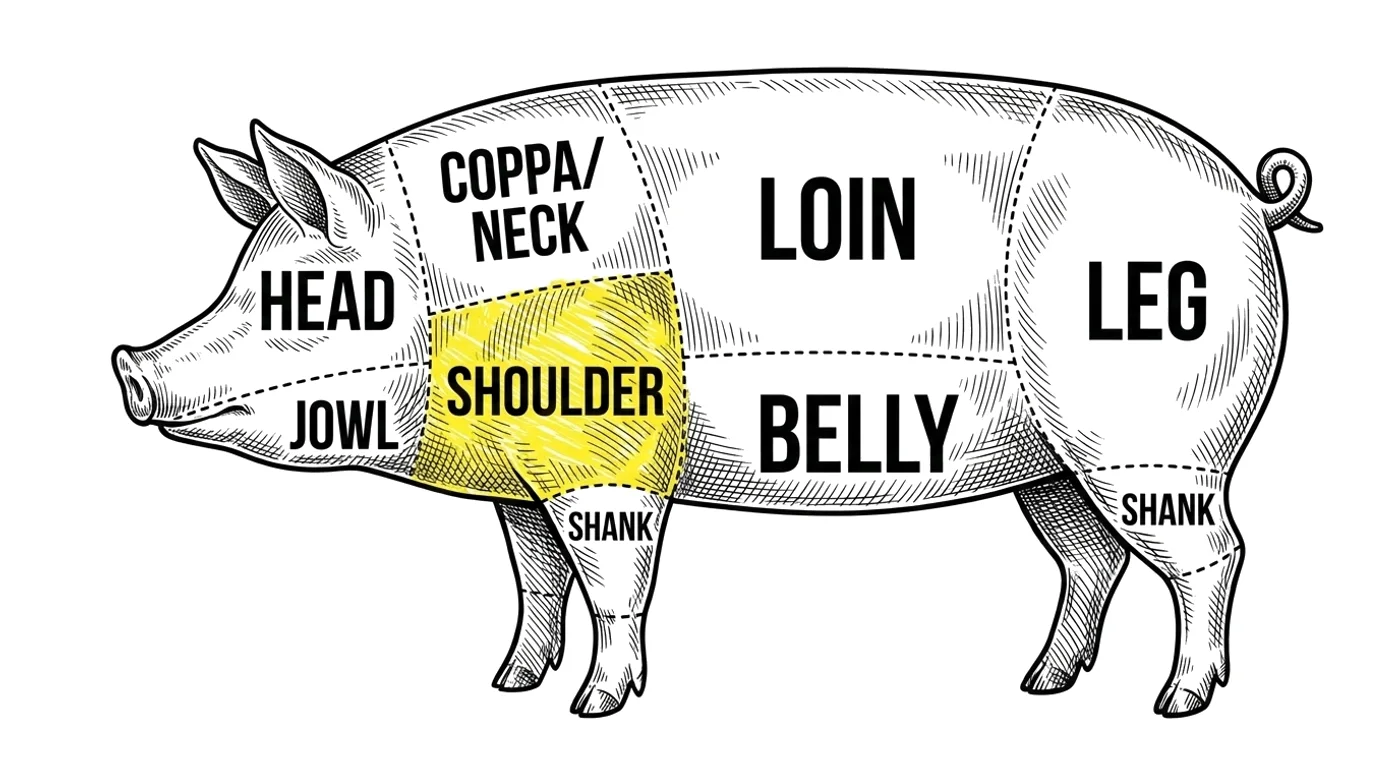
How to recognise it
A dry chorizo has a red to deep garnet slice with clearly defined white fat and a paprika-stained casing. Garlic and pimentón should lead, with smoke only where the regional style requires it. The filling must be cohesive without grease smear. A wet centre, hollow pockets, sourness, rancidity or black uncontrolled mould are faults.
- Shape and size
- Links, horseshoe (sarta) or straight (vela/cular)
- Lean colour
- Deep red-orange
- Fat and marbling
- Flecked white through red
- Casing
- Hog casing, 32 to 36 mm (wider for cular formats)
- Surface bloom
- Style dependent
Origins and history
Iberian households made sausages long before paprika reached Europe, but those earlier products were pale, dark or blood-coloured rather than the familiar red. Peppers from the Americas were cultivated and dried in Spain during the early modern period, and by the seventeenth century pimentón had transformed the sausage's colour, flavour and keeping qualities. Chorizo became central to the matanza because it converted shoulder meat, belly and fat into links that could be eaten fresh, cooked or dried for later. Every region developed its own balance of smoke, heat, oregano, wine and casing. That diversity explains why the generic word cannot be assigned one official formula. Chorizo Riojano, Chorizo de Cantimpalos and other regional products have separate protected specifications.
Name. Chorizo's origin is debated, often linked to the Latin salsicium or Iberian roots.
- Production today
- Made nationwide; protected versions include Chorizo Riojano IGP and Chorizo de Cantimpalos IGP.
- Protection
- Regional IGPs exist; the general name is unprotected.
- Tradition vs modern
- Cured (raw-eaten) and cooking styles both exist; sweet or hot by the paprika used.
- Seasonality
- Made year-round; some tied to the winter matanza.
Compare with. Salchichón, Sobrasada de Mallorca
Serving and cultural significance
Slice dry chorizo for tapas, bread and cheese boards, or cut it into beans, lentils, potatoes and rice. The fat carries pimentón into the dish, so a small quantity can season an entire pot. This entry should not be used as the formula for fresh grilling chorizo.
Recipe and cure
This is not a finished recipe. It is a window into how this meat is traditionally cured. Before you follow any process, please run it through one of our curing calculators, so the salt, cure and timings are right and safe for your own batch.
Make this — the measured Curesmith version →The cure below is the traditional reference. “Make this” opens the measured Curesmith home recipe, scaled to your batch.
Traditional or protected production
Generic dry chorizo has no single protected specification. Pork and firm fat are mixed with salt, pimentón, garlic and regional seasoning, then stuffed, fermented, sometimes smoked and dried. Fresh Chorizo Fresco and protected regional chorizos are separate products and should not inherit the method of this generic dry version.
- Meat
- pork
- Cut
- minced pork and fat
- Salt (%)
- 2.5
- Curing salt
- Cure #2
- Other agents
- pimenton (smoked paprika), garlic, salt
- Fermented
- Yes
- Target pH
- 4.9
- Starter or mould
- Style dependent
- Smoked
- No
- Target aW or weight loss
- ~30% weight loss
- Temperature (°C)
- ferment 22 to 24, then dry 13 to 15
- Humidity (%)
- ferment ~90, then 75 to 80
- Maturation
- 3 to 5 weeks
- Basis
- per 1000 g of lean pork (main meat); back fat and spices are added as a percentage of the lean
- Style
- Traditional fermented and dried sausage
Ingredients
- lean pork (base)100% · 1000 g/kg
- back fat33.33% · 333 g/kg
- smoked paprika (pimenton dulce)2.8% · 28 g/kg
- hot paprika (pimenton picante)0.5% · 5 g/kg
- oregano, ground0.2% · 2 g/kg
- garlic0.35% · 3.5 g/kg
Method
- Mix minced pork and fat with pimenton, garlic and the rest to green weight.
- Stuff into casing.
- Ferment to the target pH.
- Dry to the target loss (cured, raw-eaten style).
Notes
- This traditional recipe uses no nitrite. For safety we recommend adding Cure #2: in a low-oxygen, slow-dried product nitrite is the specific guard against Clostridium botulinum, while salt, acidity and drying control Salmonella, E. coli, Listeria and Staphylococcus.
Safety. Cured, raw-eaten style shown here. Ferment to pH before drying. Cooking styles are a separate process. Verify before serving.
In the Codex
What this product teaches, and where to read more.
Temple. Roof, Water Activity