
Overview
Cooked ham is a cured pork leg or qualifying whole-muscle cut that is cooked before sale or service. It includes products described as boiled, baked or cooked cured ham, with or without smoke. The family is broad, but its centre is an intact-muscle ham identity supported by controlled curing, thermal processing, chilling and ready-to-eat handling.
Where it's from
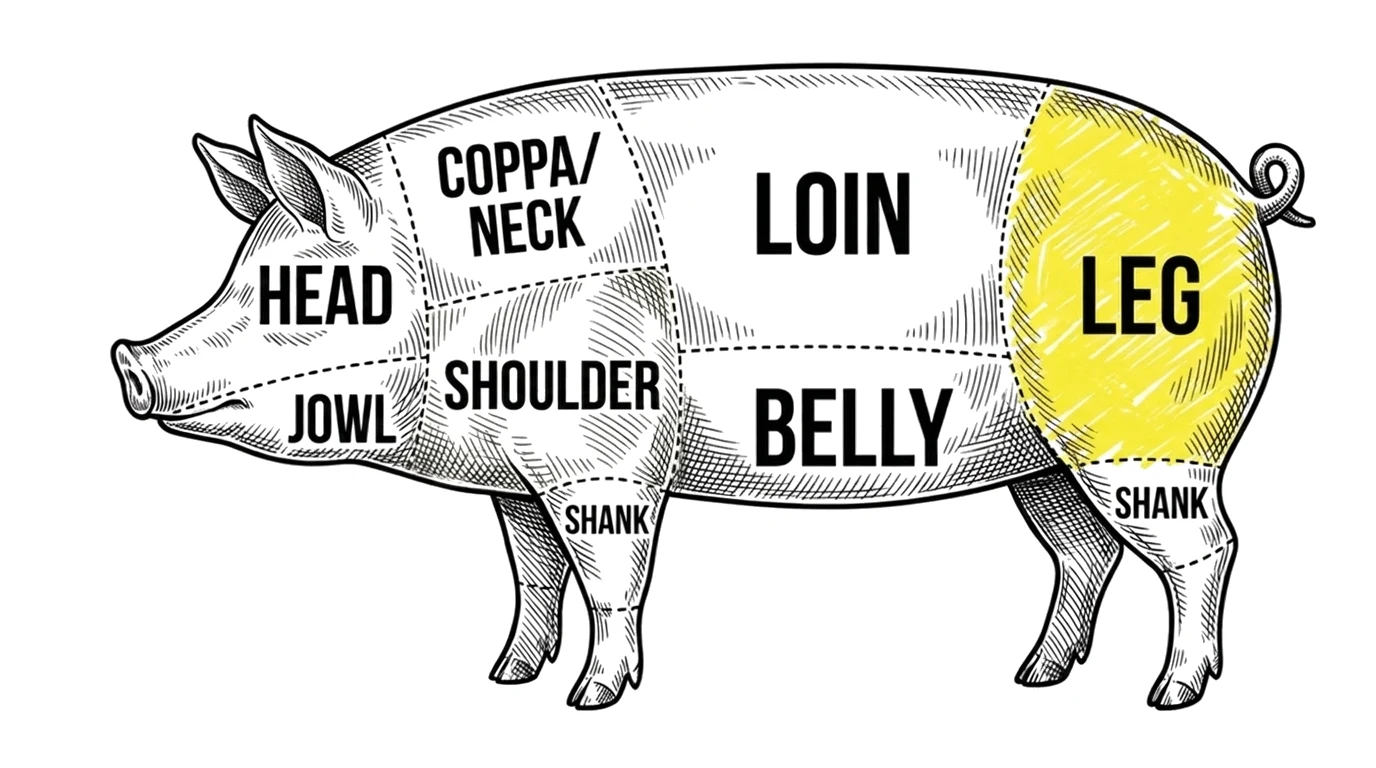
The cut
Identity and regulatory branches
Regulatory systems distinguish unqualified cooked ham from ham with natural juices, ham water added and ham-and-water products according to composition and added solution. Cooked shoulder, chopped or pressed ham, restructured loaves, dry-cured ham and protected regional hams remain separate. A marketing name must not conceal whether the product is whole-muscle, formed or water-added.
Composition and characteristics
The raw material is pork leg or another specifically permitted ham cut, trimmed and cured with salt and authorised curing ingredients. Sugar, phosphates, spices and smoke may be used depending on the product and jurisdiction. The slice should be cohesive, moist and recognisably muscular, with added water, protein and texture consistent with its declared regulatory class.
Production method
Commercial routes may use immersion, injection, tumbling or combinations to distribute brine, followed by moulding or netting where permitted, resting, cooking, rapid chilling and packaging. The cure and added solution must be calculated across the complete meat system. Cooking must bring the centre to 71°C without excessive purge, while post-cook slicing and packaging require strict hygiene.
History and cultural context
Heating cured pork is ancient, but modern cooked ham expanded with mechanical brine distribution, refrigeration, metal moulds and sliced retail packaging. It became a major delicatessen product across Europe and the Americas. National standards developed partly to distinguish genuine ham muscle from increasingly diluted, formed or compositionally different products sold under similar names.
Culinary use and relationships
Cooked ham is eaten cold in sandwiches, salads and charcuterie plates, or heated in breakfasts, pastries, gratins and main dishes. It should link to smoked ham, picnic shoulder, pressed ham and dry-cured ham while explaining their differences. Protected products retain their own specifications and cannot be represented by this generic regulatory family.
Recipe and cure
This is not a finished recipe. It is a window into how this meat is traditionally cured. Before you follow any process, run it through one of our curing calculators so the salt, cure and timings are right and safe for your own batch.
Make this — the measured Curesmith version →“Make this” opens the same cure as a measured recipe, scaled to your batch.
- Meat
- Boneless pork leg
- Cut
- Boneless pork leg
- Curing salt
- None
- Fermented
- No
- Smoked
- Yes
- Basis
- per 1,000 g boneless pork leg
- Style
- Injected whole-muscle cooked ham with declared 10% brine addition.
Ingredients
- Boneless pork leg100% · 1000 g
- Water10% · 100 g
- Fine salt2% · 20 g
- Cure #1 containing 6.25% sodium nitrite0.25% · 2.5 g
- Sugar1% · 10 g
- White pepper0.1% · 1 g
Safety. Account for cure and injected solution across the full batch, validate thermal lethality at the coldest point, chill rapidly and control post-lethality contamination during peeling, slicing and packaging. Cooked ham is a refrigerated ready-to-eat food unless a separate validated shelf-stable process applies.