
Coppa de Corse / Coppa de Corse – Coppa di Corsica
KOP-pah duh kors
Also known as Coppa di Corsica, Coppa de Corse, Coppa de Corse – Coppa di Corsica
Corsica (regional), Corsica, France
Dark, sweet and mountain-scented, richly marbled from free-ranging pigs.
Overview
Coppa de Corse is the protected neck cure of the island's Nustrale pig. A single well-marbled neck muscle is salted, peppered, cased and matured until the slice becomes deep red, sweet and distinctly nutty. Its identity depends as much on the pig's extensive outdoor life and chestnut-and-acorn landscape as on the curing room.
Where it's from
Climate. The Corsican mountains, where island pigs range and the air is clean and dry.
Altitude. Corsican mountains
The cut
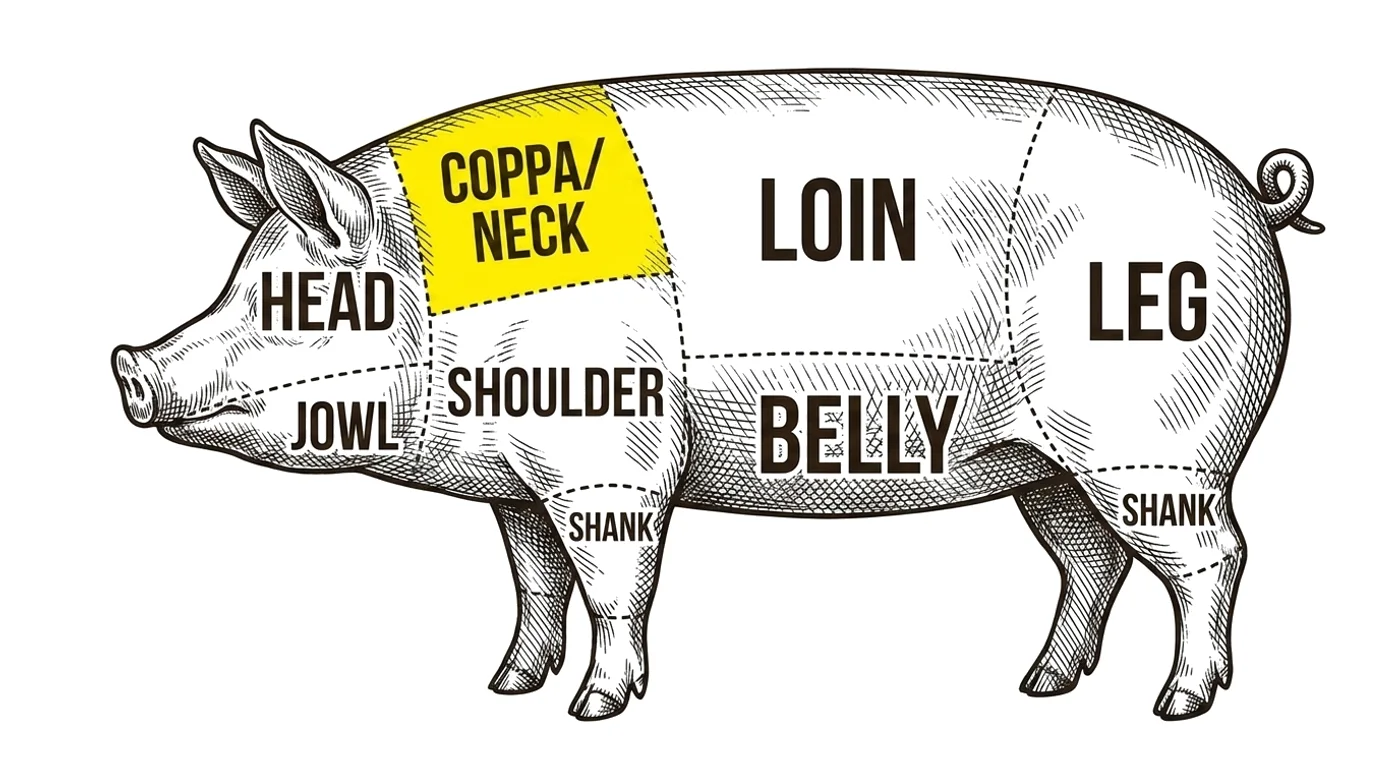
How to recognise it
The whole coppa is compact and cylindrical or slightly tapered, enclosed in a natural casing and tied or netted. The slice is ruby to dark red with fine, irregular seams of soft white fat. Pepper is clear but restrained, and the pork may show hazelnut, chestnut and woodland notes. A grey centre, hard dry rim, rancid fat, trapped air or aggressive sourness indicates poor curing.
- Shape and size
- Cylindrical cured muscle, marbled slices
- Lean colour
- Deep red
- Fat and marbling
- Well-marbled
- Casing
- Natural pork gut, or a wrap of pig back fat, tied with string or a net
- Surface bloom
- Possible natural mould
Origins and history
Corsican charcuterie grew from a mountain and woodland economy in which pigs ranged through maquis, oak and chestnut country. Families slaughtered in winter and divided the carcass into pieces that could mature at different speeds. The neck, rich in intramuscular fat but compact enough to dry safely, became coppa. The local Nustrale breed survived because its small frame, dark coat and foraging ability suited steep terrain and seasonal mast. During the twentieth century, imported pigs and industrial imitations threatened both breed and name. Breeders and curers rebuilt the production chain around traceable island pigs, and Coppa de Corse received French AOC recognition followed by European PDO registration in 2014.
Name. Coppa refers to the neck muscle it is cut from.
- Production today
- Corsican AOP producers.
- Protection
- AOP; from island pigs, part of the trio with Prisuttu and Lonzu.
- Tradition vs modern
- Built on free-ranging island pigs and altitude, a very old island practice.
- Seasonality
- Tied to the winter slaughter.
Compare with. Coppa di Parma, Jambon sec de Corse / Jambon sec de Corse – Prisuttu
Serving and cultural significance
Slice it thinly enough for the fat to soften but thick enough to show the marbling. Serve with Corsican bread, mild sheep or goat cheese, chestnuts, figs and a restrained island red wine. It also works in a simple sandwich where bitter leaves or pickled vegetables balance the sweet fat.
Recipe and cure
This is not a finished recipe. It is a window into how this meat is traditionally cured. Before you follow any process, please run it through one of our curing calculators, so the salt, cure and timings are right and safe for your own batch.
Curesmith home adaptation — not designation-compliant
Make this — the measured Curesmith version →The cure below is the traditional reference. “Make this” opens the measured Curesmith home recipe, scaled to your batch.
Traditional or protected production
The PDO product is made from the neck of a qualifying Corsican-breed pig raised within the protected system. The muscle is trimmed, dry salted, peppered, cased and matured in Corsica. Breed, husbandry, slaughter weight, feed, geographical area and minimum process are controlled. The official product does not become compliant merely because a neck is seasoned in a Corsican style.
- Meat
- pork (Corsican Nustrale pigs)
- Cut
- neck and collar (chine) muscle
- Salt (%)
- 3
- Curing salt
- Sea salt and pepper (AOP)
- Other agents
- salt, pepper
- Fermented
- No
- Starter or mould
- Possible natural mould
- Smoked
- Yes
- Target aW or weight loss
- ~ weight loss
- Temperature (°C)
- 12 to 15
- Humidity (%)
- 75 to 80
- Maturation
- several months
- Basis
- percentage of green meat weight
- Style
- Traditional dry salting, cased
Ingredients
- sea salt3% · 30 g/kg
- black pepper0.4% · 4 g/kg
Method
- Rub the island-pig neck muscle with salt and pepper and rest cold.
- Rinse and rest.
- Case and tie.
- Age in mountain air to the target loss.
Notes
- The official protected specification controls the named product. Any Curesmith EQ, starter-culture, curing-salt or home-scale adaptation is a separate method and must not be presented as designation-compliant.
- A more efficient way of curing this product is using the EQ Method. No more than 2.5% salt to meat weight is required. To follow the EQ method, please use our whole-muscle EQ curing calculator to work out proper ratios and curing times.
Safety. Island whole muscle, mountain-aged. Verify before serving.
In the Codex
What this product teaches, and where to read more.
Temple. Roof, Microclimate