
Culatta
Also known as Culaccia, Culaccia® (trademark context only)
Bassa Parmense, Emilia-Romagna, Italy
Rich and sweet, a rind-on whole-muscle cure, culatello's more forgiving relative.
Overview
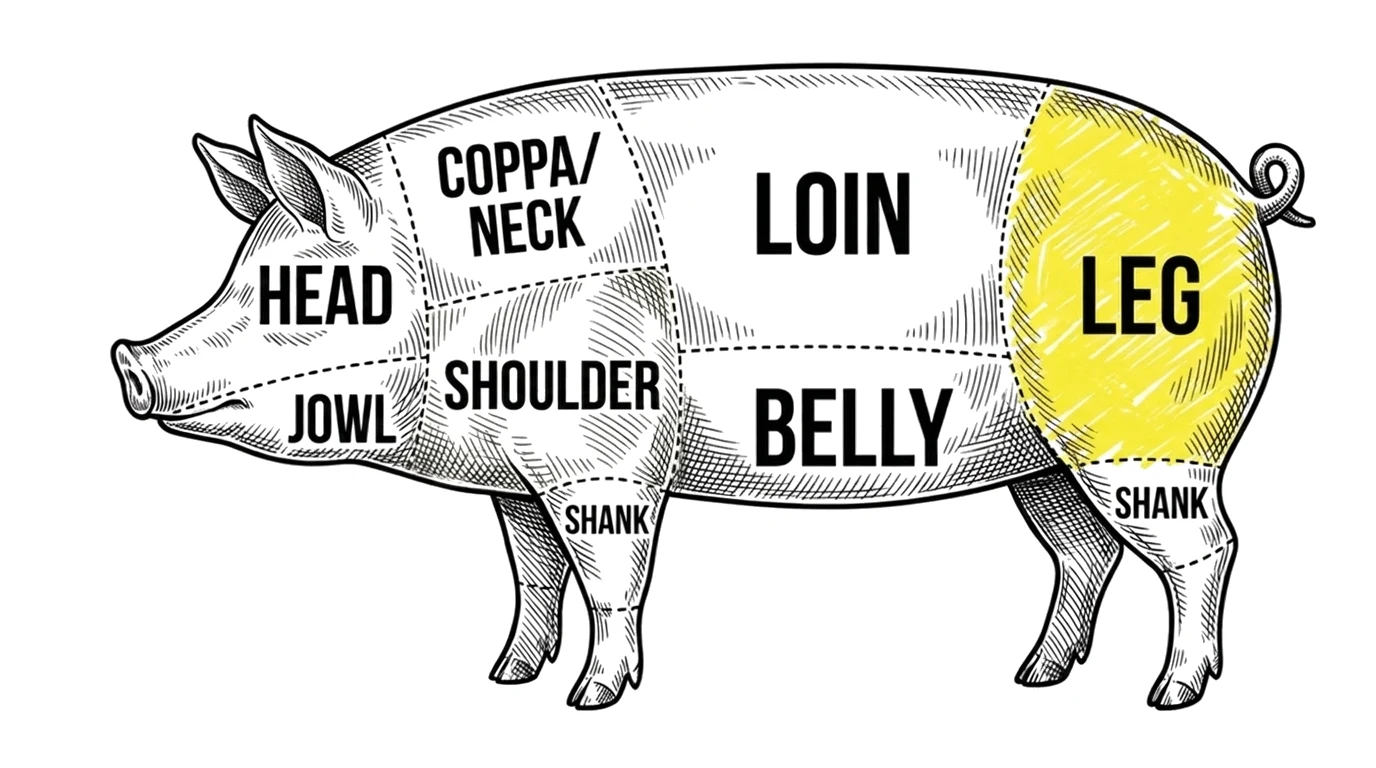
Culaccia is rich and sweet, a rind-on whole-muscle cure, culatello's more forgiving relative. A broad boneless rump with rind on one side, deep pink-red lean and a generous soft fat edge. The slice should be sweet, supple and easier to handle than a bladder-aged Culatello.
Where it's from
Climate. The Bassa Parmense along the Po.
Altitude. Po river plain
The cut
How to recognise it
A broad boneless rump with rind on one side, deep pink-red lean and a generous soft fat edge. The slice should be sweet, supple and easier to handle than a bladder-aged Culatello. Shape and size: Whole leg muscle, rind on. Lean colour: Deep red. Fat and marbling: Marbled. Casing or exterior: Own rind. Surface: Cellar mould. The form is whole leg muscle, rind on. the lean is deep red. the fat or marbling is marbled. and the exterior uses own rind. A hard dry rim, wet grey centre, rancid fat, sourness or air beneath a casing indicates an uneven or contaminated cure.
- Shape and size
- Whole leg muscle, rind on
- Lean colour
- Deep red
- Fat and marbling
- Marbled
- Casing
- Own rind
- Surface bloom
- Cellar mould
Origins and history
Culaccia occupies a different historical category from the older Parma salumi. Salumificio Rossi states that Riccardo Rossi developed the named Culaccia® product while working with Culatello and registered the name as a trademark. The concept keeps the prized boneless rump while retaining rind over part of the surface, reducing waste and moderating moisture loss. Its adoption by other consumers and retailers has made the word look traditional, but the Atlas should not convert a modern commercial invention into an ancient protected regional designation.
Name. Culaccia, from culo/culatta, the rump, like culatello.
- Production today
- Producers of the Bassa Parmense.
- Protection
- Not EU-protected as a general name.
- Tradition vs modern
- Rind-on ageing, more forgiving than bladder-cased culatello.
- Seasonality
- Winter slaughter.
Compare with. Culatello di Zibello, Fiocchetto
Serving and cultural significance
Sliced thin, rich and sweet. Include the soft rind-side fat in the slice and allow it to warm briefly, which brings the product closer to the sweetness promised by its commercial identity. Serve it with plain bread, figs or mild cheese and avoid acidic garnish that overwhelms its sweet commercial style.
Recipe and cure
This is not a finished recipe. It is a window into how this meat is traditionally cured. Before you follow any process, please run it through one of our curing calculators, so the salt, cure and timings are right and safe for your own batch.
Make this — the measured Curesmith version →The cure below is the traditional reference. “Make this” opens the measured Curesmith home recipe, scaled to your batch.
Traditional or protected production
Culaccia or Culatta is made from the large posterior portion of the pork leg, boned while retaining rind and often the small hip bone. It is salted and matured more like a ham than bladder-cased Culatello. The rind reduces moisture loss and makes the cure more forgiving.
The reference process can be summarised as follows: Remove the femur and unwanted sections while preserving the rump muscle and protective rind, dry salt, rest, shape and mature slowly for approximately twelve to fourteen months.
Sea salt, black pepper and a little wine, salt-box method; no fixed percentage. Cured with the rind on.
- Meat
- pork
- Salt (%)
- traditional, no fixed %
- Curing salt
- Sea salt with pepper; rind left on
- Fermented
- No
- Starter or mould
- Cellar mould
- Smoked
- No
- Target aW or weight loss
- ~ weight loss
- Temperature (°C)
- cold salting, then 12 to 15
- Humidity (%)
- 75 to 80
- Maturation
- 10 months and up
- Basis
- percentage of green meat weight
- Style
- Traditional dry salting (salt-box)
Method
- Salt and season by the traditional method and rest cold.
- Case or hang as the style requires.
- Age in the cellar air.
- Age to the target loss.
Notes
- A more efficient way of curing this product is using the EQ Method. No more than 2.5% salt to meat weight is required. To follow the EQ method, please use our whole-muscle EQ curing calculator to work out proper ratios and curing times.
In the Codex
What this product teaches, and where to read more.
Temple. Pillar, Meat Quality