
Debreceni Páros Kolbász
Also known as Debreceni kolbász, Debrecen double sausage, Debrecener
Hajdú-Bihar, Hungary
Overview
Debreceni Páros Kolbász is a paprika-seasoned smoked sausage from Debrecen in eastern Hungary, formed as two short links. The Hungarian name literally means Debrecen paired sausage. It is recognised in the Hungarikum collection as a national value and is one of the city's best-known food emblems.
Where it's from
The cut
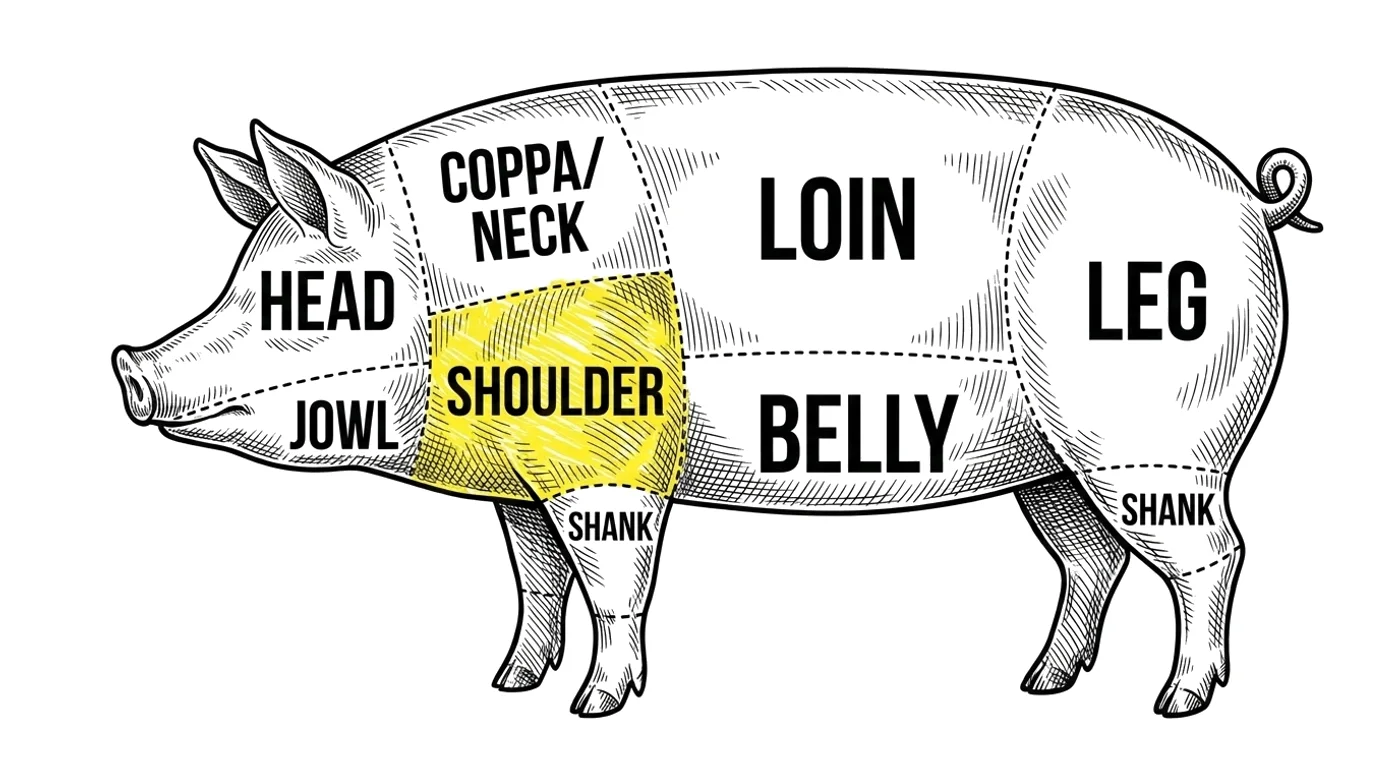
Identity and terminology
Debreceni identifies origin in Debrecen, páros means paired and kolbász means sausage. International spellings include Debrecener, Debreziner and Debreciner, but those names also cover Austrian and German descendants with their own national composition rules. The Hungarian paired product and the Austrian Debreziner are separate things.
Composition and characteristics
The Hungarikum record recognises four authentic branches: an original all-beef form, a kosher beef or lamb form, a mixed beef-and-pork or Mangalitsa form, and an all-pork or Mangalitsa form. Bacon or firm fat and paprika contribute the characteristic reddish-orange appearance. The paired links are plump, smoky and coarser than a uniform frankfurter.
Production and process
Meat and fat are chopped or ground, seasoned with paprika and other spices, stuffed into small natural casings, paired, smoked and cooked. The mixture may be finely bound while retaining visible fat pieces. The all-pork Curesmith branch represents one recognised family form, not the only authentic composition.
History and regional forms
Debrecen's cattle trade, fairs and civic food culture shaped the sausage. Historical accounts describe early beef forms and later pork and Mangalitsa versions as livestock and market conditions changed. The product spread through the Austro-Hungarian world, where its name and paprika profile were adapted into related Debreziner sausages.
Use, storage and related products
The paired sausages are heated gently and served with bread, mustard, horseradish or pickles, and may appear in soups and stews. Debreceni Páros is distinguished by its Debrecen cultural identity and paired form. Hungarikum status is not equivalent to EU geographical-indication protection and should be described accurately.
Recipe and cure
This is not a finished recipe. It is a window into how this meat is traditionally cured. Before you follow any process, run it through one of our curing calculators so the salt, cure and timings are right and safe for your own batch.
Make this — the measured Curesmith version →“Make this” opens the same cure as a measured recipe, scaled to your batch.
- Meat
- Pork shoulder
- Cut
- Pork shoulder
- Salt (%)
- 1.8
- Curing salt
- Cure #1 as specified in the recipe
- Fermented
- No
- Starter or mould
- None; this product is not fermented
- Smoked
- Yes
- Maturation
- Refrigerate at 0–4°C; use within 4 days or freeze promptly
- Basis
- per 1,000 g pork shoulder
- Style
- Hungarian cured, paprika-seasoned, smoked and cooked paired sausage
Ingredients
- Pork shoulder100% · 1000 g
- Pork belly with firm fat45% · 450 g
- Ice water1.5% · 21.5 g
- Fine salt1.8% · 25.5 g
- Cure #1, 6.25% sodium nitrite0.25% · 3.5 g
- Sweet Hungarian paprika0.59% · 8.5 g
- Fresh garlic, crushed0.79% · 11.5 g
- Black pepper0.2% · 3 g
Method
- Chill pork and equipment to 0–2°C, then grind shoulder through 10 mm and belly through 5 mm.
- Mix shoulder with salt, Cure #1 and ice water to a tacky bind; add paprika, garlic, pepper and belly.
- Stuff into hog casings and twist or tie into paired 120–140 mm links.
- Refrigerate the paired links for 8–12 hours.
- Dry the casing, then apply warm smoke until the surface is reddish orange and evenly set.
- Poach at 78–80°C until the cold point reaches 71°C.
Safety. The cooked branch remains refrigerated. Confirm whether a product is raw, smoked-only or fully cooked before service, and do not infer shelf stability from Hungarikum status.