
Eichsfelder Feldgieker / Eichsfelder Feldkieker
Also known as Feldkieker, Eichsfelder Feldgieker, Eichsfelder Feldkieker
Eichsfeld, Germany
Overview
Feldkieker is a broad pear-shaped, bladder-shaped or long sausage with a dry natural exterior, deep red pork and visible firm fat. the aroma is peppery, lightly caraway-scented and mature. A broad pear-shaped, bladder-shaped or long sausage with a dry natural exterior, deep red pork and visible firm fat. The aroma is peppery, lightly caraway-scented and mature. The Codex treats it as a complete production system, not merely a familiar name. Raw material, cut or particle size, casing, smoke, fermentation, cooking and maturation all contribute to the identity. The current status is IGP / PGI : Eichsfelder Feldgieker / Eichsfelder Feldkieker. The protected or traditional reference and the Curesmith home method remain separate.
Where it's from
The cut
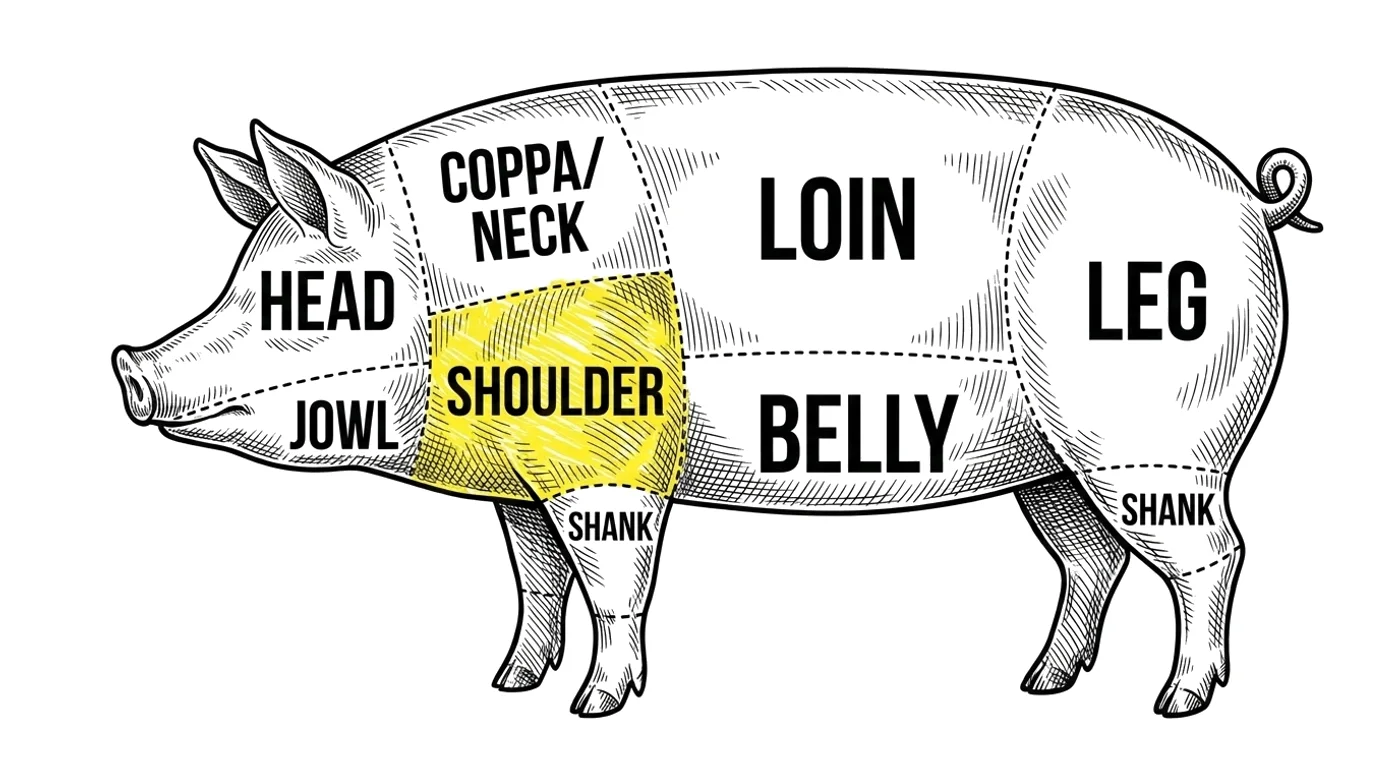
How to recognise it
A broad pear-shaped, bladder-shaped or long sausage with a dry natural exterior, deep red pork and visible firm fat. The aroma is peppery, lightly caraway-scented and mature. Grease smear, hollow pockets, case hardening, a wet centre, rancidity or uncontrolled dark mould is a production fault.
Origins and history
Eichsfelder Feldgieker or Feldkieker grew from the winter slaughter culture of the Eichsfeld, where high-quality warm pork was seasoned, packed into a bladder or caecum and hung for many months. Its swollen, flask-like form gave rise to naming explanations connected with a field bottle or the way the sausage seemed to look out from storage, although these accounts remain regional interpretation rather than certain etymology. A mature Feldgieker was valuable enough to reserve for weddings, harvest meals and honoured guests. European PGI registration in 2013 protected both spellings and the Eichsfeld production area. The traditional protected process relies on local raw material practice and long maturation, not on the starter culture added to the Curesmith home adaptation.
Serving and cultural significance
Cut mature Feldkieker into thin slices and serve with bread, pickles and beer or wine. The traditional large sausage is a celebration food rather than a cooking ingredient, and the cut face should be protected from drying.
Recipe and cure
This is not a finished recipe. It is a window into how this meat is traditionally cured. Before you follow any process, run it through one of our curing calculators so the salt, cure and timings are right and safe for your own batch.
Make this — the measured Curesmith version →The cure below is the traditional reference. “Make this” opens the measured Curesmith home recipe, scaled to your batch.
Traditional or protected production
The PGI protects Eichsfelder Feldgieker and Eichsfelder Feldkieker as two spellings of one Eichsfeld product. The protected sausage is made and matured in the defined area using the specified pork raw material, seasoning, broad natural casing and long drying process. Its flask-like or swollen form and dense mature slice are characteristic. The selected starter culture used in the Curesmith version is an adaptation rather than part of the protected traditional identity.
- Meat
- pork
- Cut
- minced
- Salt (%)
- 2.2 to 2.5%
- Curing salt
- Cure #1
- Other agents
- dextrose; black pepper, garlic, caraway
- Fermented
- Yes
- Target pH
- ~4.9
- Starter or mould
- lactic acid bacteria starter
- Smoked
- No
- Target aW or weight loss
- heavy loss over many months
- Temperature (°C)
- ferment then dry 12 to 14
- Humidity (%)
- 72 to 75
- Maturation
- weeks
- Basis
- percentage of meat weight
- Style
- minced, cured, fermented and dried
Ingredients
- pork
- salt
- dextrose
- black pepper
- garlic
- caraway
- Cure #1
Notes
- Nitrite at 156 ppm ingoing.
- Target roughly pH 4.9 through a prompt, clean ferment.
- Convert any volume spice measures to weight as a percentage of the meat.
- Stuffed into a bladder or bung and matured six to twelve months or more, one of the longest-aged sausages.
- The long maturation is the whole character; time is doing the work.
Safety. A fermented sausage: the acid drop and drying carry the safety. Ferment promptly to close the early Staphylococcus aureus window.
In the Codex
What this product teaches, and where to read more.
Temple. Foundation