
Fen Chang Starch-Meat Sausage
Also known as Fen Chang, Fen chang sausage, 肉粉肠, Starch-meat sausage
China
Overview
Fen Chang in English-language sausage literature describes a cooked Chinese pork sausage extended with a large proportion of bean starch. The starch gelatinises during poaching and creates a springy, cohesive slice that differs from both dry Chinese lap cheong and European emulsified sausage. A representative formula combines coarse pork, mung bean starch, scallion, garlic, sesame oil, soy sauce, vinegar and warm spices. The product is cooked, chilled and eaten fresh rather than dried to shelf stability.
Where it's from
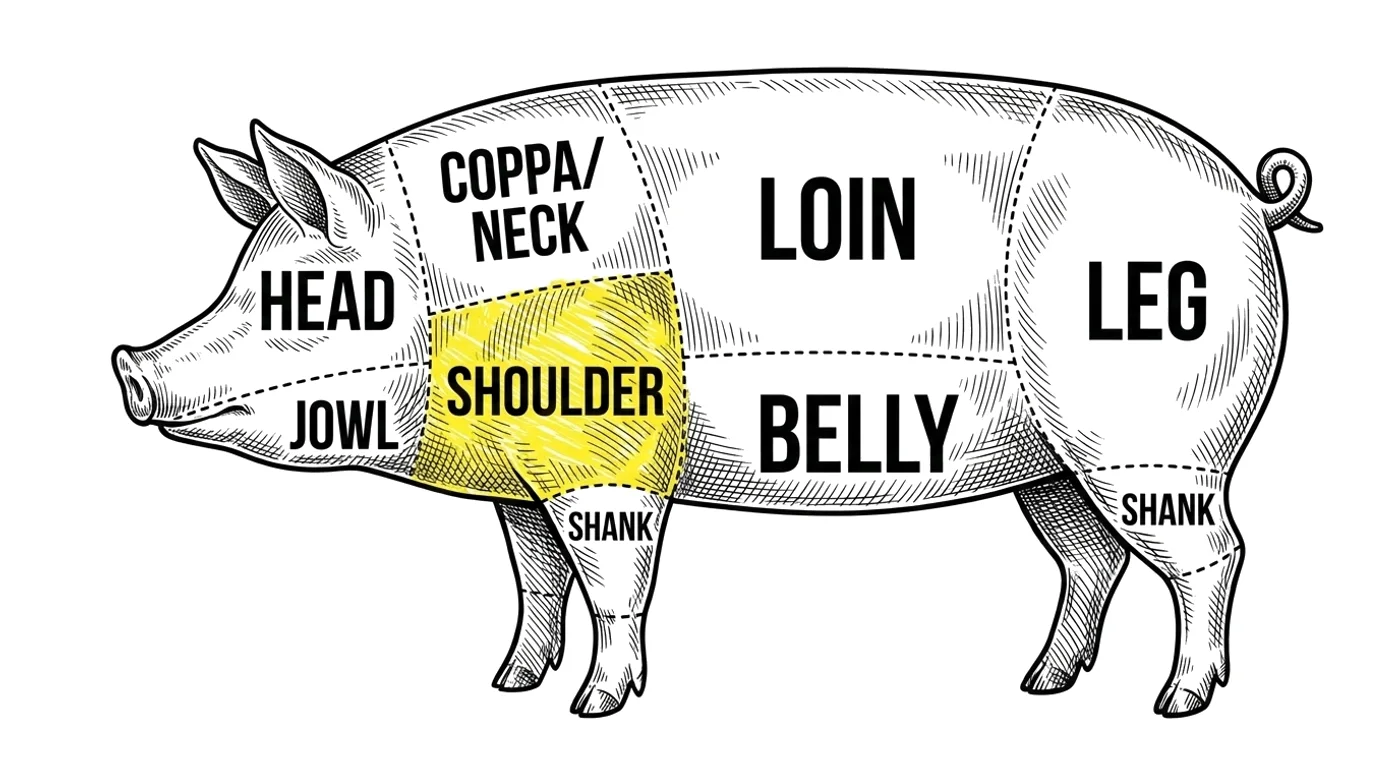
The cut
Identity and terminology
The romanisation is difficult because fen chang can point to different Chinese words and foods. In Cantonese contexts, 粉腸 commonly refers to a section of pork small intestine and dishes made from it, not necessarily to a stuffed starch sausage. Chinese technical and enterprise standards also use 肉粉肠 for starch-meat sausage products, especially outside Guangdong. The source page's claim of a Guangdong origin is therefore retained as attribution but not promoted to a settled legal identity. The canonical English title adds Starch-Meat Sausage to prevent confusion.
Composition and characteristics
Pork supplies meat flavour and protein while mung bean or other bean starch may approach thirty percent of the stated base. Water is essential because starch must hydrate and gelatinise; a formula that says sufficient water without a quantity is not executable. Scallion, garlic, soy sauce, sesame oil and vinegar produce savoury depth, while cinnamon, cardamom, amomum, angelica and clove give a warm medicinal-spice register. The cooked cut face should be cohesive and moist, not chalky, gummy or surrounded by free liquid.
Production and process
The pork is ground moderately coarse and mixed to extract a bind. A smooth starch slurry is prepared separately with measured chilled water, then incorporated with aromatics, oil and liquid seasoning. The mixture is stuffed into hog casing and poached gently so the starch gelatinises without splitting the casing. A centre-temperature endpoint is required because a fixed thirty-five-minute time cannot account for diameter and starting temperature. Rapid cooling sets the gel and controls bacterial growth. The uncured sausage remains refrigerated.
History and regional forms
Evidence for this exact English-language identity is thinner than for protected European sausages. Chinese product standards and research clearly document starch-meat sausage as a technical category and study how water addition and cooking affect gelatinisation, emulsion stability, hardness and acceptability. Those sources support the process architecture, but they do not by themselves prove that every product called Fen Chang belongs to Guangdong. The source tradition is recorded here along with the limits of the evidence, rather than a regional history that cannot be supported.
Use, storage and related products
Fen Chang starch-meat sausage can be sliced and served warm, pan-fried after poaching or added to noodles, rice and vegetable dishes. It is not lap cheong, which is a sweet dried preserved sausage, and it is not simply cooked pork intestine despite the overlapping spoken term. Soy and sesame are allergens. The product has no measured shelf-stability hurdle, so cooked links must be cooled quickly, kept at 0–4°C and used within a short refrigerated period or frozen.
Recipe and cure
This is not a finished recipe. It is a window into how this meat is traditionally cured. Before you follow any process, run it through one of our curing calculators so the salt, cure and timings are right and safe for your own batch.
Make this — the measured Curesmith version →“Make this” opens the same cure as a measured recipe, scaled to your batch.
- Meat
- Pork shoulder, 20–25% fat
- Cut
- Pork shoulder, 20–25% fat
- Salt (%)
- 2.1
- Curing salt
- None
- Fermented
- No
- Starter or mould
- None; this product is not fermented
- Smoked
- No
- Maturation
- Refrigerate at 0–4°C; use within 4 days after opening or freeze promptly
- Basis
- per 1,000 g pork shoulder, 20–25% fat
- Style
- uncured cooked pork and mung-bean-starch sausage
Ingredients
- Pork shoulder, 20–25% fat100% · 1000 g
- Mung bean starch39.8% · 450 g
- Ice water39.8% · 450 g
- Fine salt1.9% · 21.5 g
- Sugar1.3% · 14.5 g
- White pepper0.12% · 1.5 g
- Ground cinnamon0.12% · 1.5 g
- Ground cardamom0.1% · 0.7 g
- Ground amomum or black cardamom0.1% · 0.7 g
- Ground angelica root0.1% · 0.7 g
- Ground cloves0.04% · 0.4 g
- Scallions, finely chopped4.3% · 43 g
- Fresh garlic, minced1.3% · 14.5 g
- Toasted sesame oil4.3% · 43 g
- Light soy sauce4.3% · 43 g
- Rice vinegar3.8% · 43 g
Method
- Trim, weigh and chill all meat, fat and equipment to 0–2°C.
- Grind the pork shoulder through 6 mm.
- Mix lean meat with salt and liquid to a tacky bind, then add fat, binder and seasonings in the stated order.
- Make a smooth slurry from mung bean starch and ice water, then mix it into the bound pork with the aromatics and liquid seasonings.
- Stuff into 34–36 mm hog casing, remove air pockets and close securely.
- Cook until the cold point reaches 71°C.
Safety. State the water needed for gelatinisation, cook the cold point to 71°C, cool rapidly, declare soy and sesame, and keep refrigerated.