
Overview
Fish rillettes are a chilled spread made from cooked, poached or sometimes hot-smoked fish that is flaked or broken down and bound with fat, dairy, stock, mayonnaise or another controlled medium. The texture is spoonable rather than sliceable. The family adapts the rillettes idea to seafood without inheriting the identity or preservation claims of pork rillettes.
Where it's from
The cut
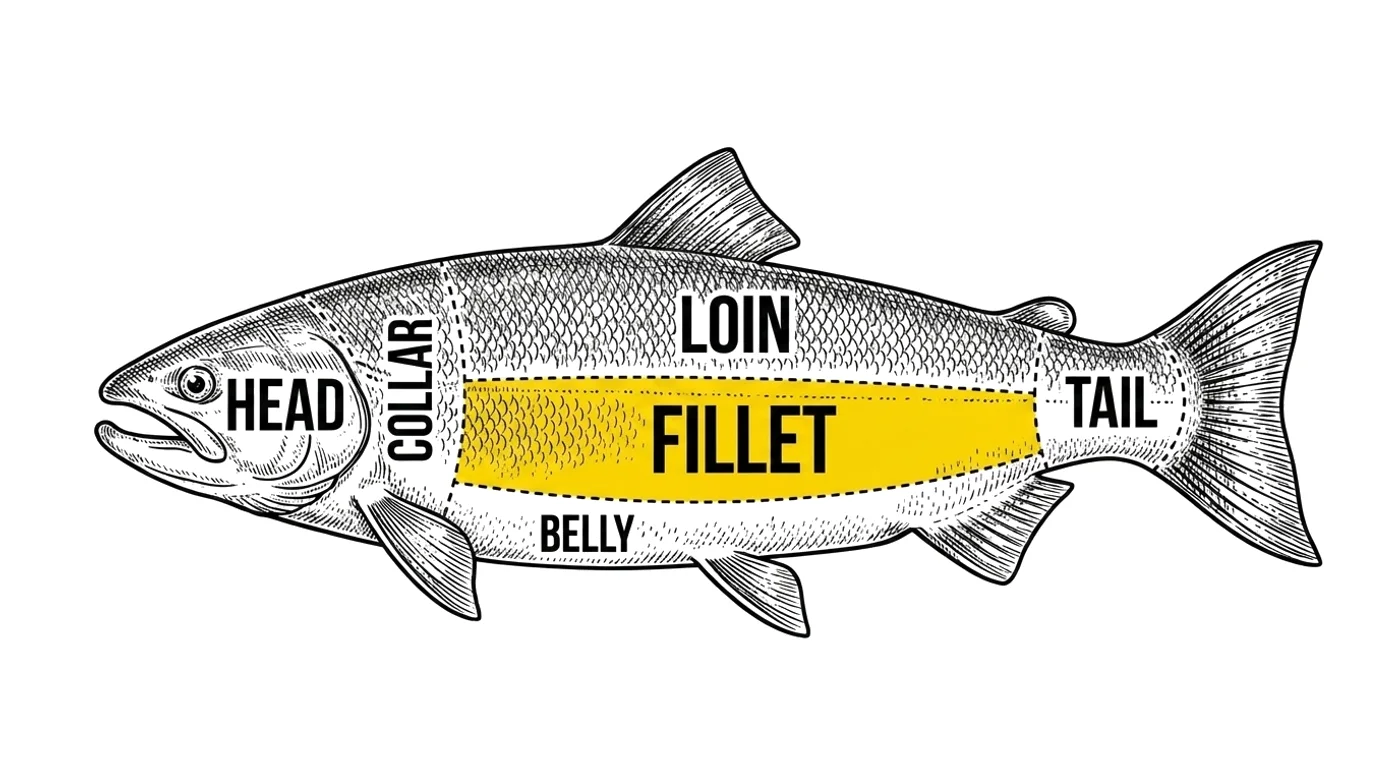
Identity and boundaries
Species must be named because salmon, trout, tuna, mackerel and white fish carry different sensory and hazard profiles. Fish rillettes are refrigerated transformed fish products, not a shelf-stable canning category. Smooth fish mousse, pâté, seafood terrine and commercial canned spreads are related but structurally and technically distinct. Smoked fish may be an ingredient, not the sole definition.
Composition and characteristics
The fish component should remain recognisable as fine flakes or a coarse paste, depending on style. Butter, cream cheese, crème fraîche, oil or emulsified dressing may provide richness and binding. Acid, herbs, capers, horseradish and spices are common. The finished spread should be cohesive, moist and clean-tasting, without free liquid, excessive oiling or bone fragments.
Production method
Fish is received under species-appropriate cold-chain control, trimmed and cooked or otherwise prepared through a validated route. It is deboned, cooled promptly and mixed with chilled binding ingredients. The spread is packed hygienically in small containers and returned to refrigeration. Hot filling, vacuum packing or a decorative fat layer must not be assumed to create a shelf-stable product.
History and cultural context
French cooks extended the rillettes form beyond pork to fish as seafood cookery, refrigeration and delicatessen production evolved. Coastal regions and modern bistros developed salmon, mackerel, trout and tuna versions for cold service. The result is less a single regional monument than a flexible refrigerated family shaped by available species and local accompaniments.
Culinary use and relationships
Fish rillettes are spread on bread, toast or crackers and served as an appetiser, picnic food or buffet component, often with lemon, pickles or herbs. They should link to pork rillettes, smoked fish, fish mousse and seafood terrine. Shelf-stable canned spreads require their own commercial-processing entry and must not be presented as a home variant.
Recipe and cure
This is not a finished recipe. It is a window into how this meat is traditionally cured. Before you follow any process, run it through one of our curing calculators so the salt, cure and timings are right and safe for your own batch.
Make this — the measured Curesmith version →“Make this” opens the same cure as a measured recipe, scaled to your batch.
- Meat
- Salmon fillet
- Cut
- Salmon fillet
- Curing salt
- None
- Fermented
- No
- Smoked
- No
- Basis
- per 1,000 g salmon fillet
- Style
- Cooked refrigerated salmon spread.
Ingredients
- Salmon fillet100% · 1000 g
- Unsalted butter18.6% · 214.5 g
- Crème fraîche14.3% · 143 g
- Lemon juice3.7% · 43 g
- Fine salt1.5% · 17 g
- White pepper0.18% · 2 g
- Chopped dill0.7% · 7 g
Safety. Control species-specific hazards, allergens and the cold chain. Susceptible fish may require histamine controls; all cooked fish requires protection from post-cook contamination and prompt cooling. Keep the finished spread refrigerated and use a validated shelf life. Vacuum packing, oil or fat cover does not by itself make it safe at room temperature.