
Guanciale
Amatrice area, Lazio, Italy
Rich, deeply porky and peppered, prized for how its fat melts into a pasta sauce.
Overview
Guanciale is rich, deeply porky and peppered, prized for how its fat melts into a pasta sauce. A triangular or irregular jowl with a dark peppered exterior, broad white fat and red seams of cheek muscle. The fat should be firm, sweet-smelling and clean, never yellow or rancid.
Where it's from
Climate. Central Italy, Lazio and neighbours.
Altitude. Hills and plain
The cut
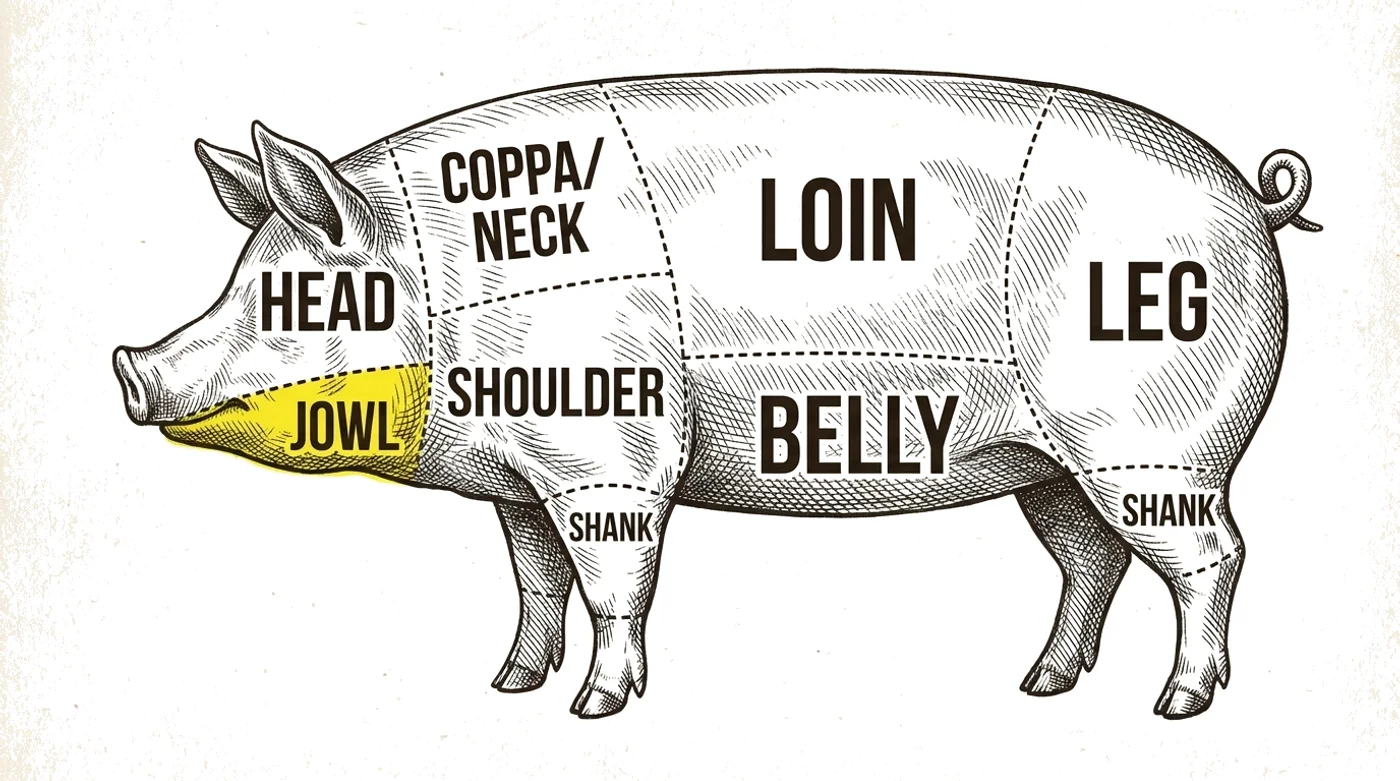
How to recognise it
A triangular or irregular jowl with a dark peppered exterior, broad white fat and red seams of cheek muscle. The fat should be firm, sweet-smelling and clean, never yellow or rancid. Yellow rancid fat, sour lean, wet internal pockets or a hard oxidised rind are faults.
- Shape and size
- Triangular cured cheek
- Lean colour
- Streaks of red
- Fat and marbling
- Thick, creamy white
- Casing
- None
- Surface bloom
- Possible
Origins and history
Cured pork cheek, or jowl, rubbed with salt and pepper, sometimes with a little garlic, herbs or chilli, and hung to dry for weeks. It is fattier and more richly flavoured than pancetta, and it is the traditional fat behind Rome's great pasta dishes, carbonara, amatriciana and gricia, where it renders down into the sauce. Central Italian cooks will argue that nothing else quite substitutes for it.
The jowl was valuable because it combined dense working muscle with a high proportion of firm fat. Shepherding and rural cooking in central Italy turned it into an intensely flavoured cure that could season pasta, beans and vegetables. The verified production area is Central Italy, especially Lazio, Umbria and Abruzzo. Stories and etymologies are retained when they help explain the tradition, but legends are not used as evidence for the modern specification.
Name. Guanciale, from guancia, 'cheek'.
- Production today
- Made across central Italy, artisan and industrial.
- Protection
- Not EU-protected as a general name.
- Tradition vs modern
- A workhorse cured fat of Roman cooking.
- Seasonality
- Year-round.
Compare with. Pancetta Piacentina
Serving and cultural significance
Cut guanciale into batons or small cubes and render it slowly for gricia, carbonara, amatriciana, beans and vegetables. The crisp lean pieces and clear rendered fat are both part of the dish. It is normally cooked as a seasoning meat rather than served like sliced ham.
Recipe and cure
This is not a finished recipe. It is a window into how this meat is traditionally cured. Before you follow any process, please run it through one of our curing calculators, so the salt, cure and timings are right and safe for your own batch.
Make this — the measured Curesmith version →The cure below is the traditional reference. “Make this” opens the measured Curesmith home recipe, scaled to your batch.
Traditional or protected production
Guanciale is a traditional cure made from the pig's cheek and jowl, not ordinary belly. Salt and black pepper are central; garlic, chilli or herbs vary by locality and maker. The generic name is not an EU-protected designation.
- Meat
- pork
- Salt (%)
- 2.8
- Curing salt
- Sea salt; some add a little Cure #2
- Fermented
- No
- Smoked
- No
- Target aW or weight loss
- ~ weight loss
- Temperature (°C)
- 12 to 15
- Humidity (%)
- 70 to 80
- Maturation
- 3 to 6 weeks
- Basis
- percentage of green meat weight
- Style
- Traditional dry salting
Ingredients
- sea salt2.8% · 28 g/kg
- black pepper0.6% · 6 g/kg
- garlic0.2% · 2 g/kg
Method
- Rub the pork cheek with salt, pepper and garlic and rest cold.
- Rest so the cure draws through.
- Hang to dry.
- Age until firm.
Notes
- A more efficient way of curing this product is using the EQ Method. No more than 2.5% salt to meat weight is required. To follow the EQ method, please use our whole-muscle EQ curing calculator to work out proper ratios and curing times.
In the Codex
What this product teaches, and where to read more.
Temple. Foundation, Time