
Overview
Herkules is a Czech durable fermented meat product with a fine-grained pink-red interior, a smoky aroma, pronounced seasoning and a pleasantly acidic taste. It is sold as a ready-to-eat slicing salami.
Where it's from
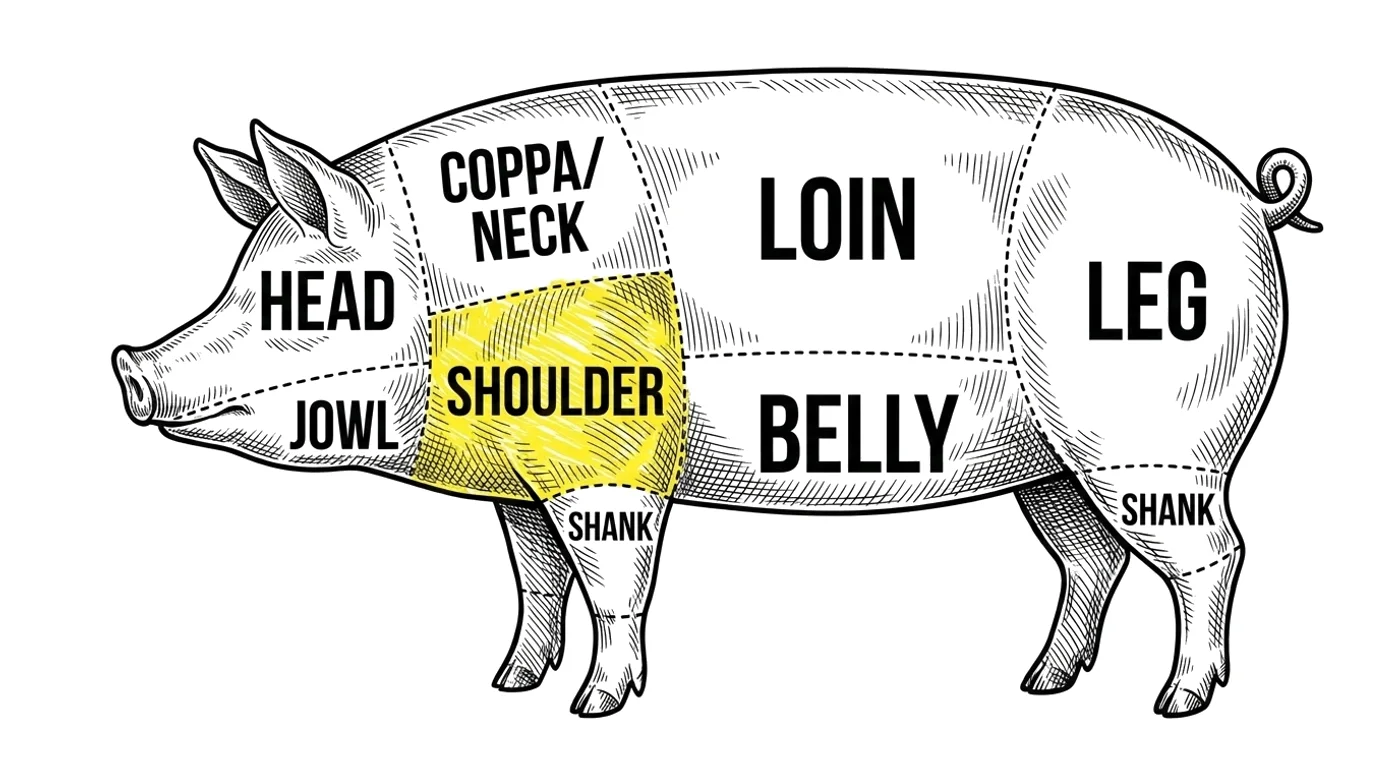
The cut
Identity and terminology
The current Czech decree lists Herkules among selected durable fermented meat products. This legal identity is distinct from ordinary products using the English word Hercules or from Hungarian and other regional salamis with similar branding.
Composition and characteristics
The regulated product uses beef and pork. The Czech framework excludes other species, mechanically separated meat, poultry mechanically separated meat, unrelated animal or plant proteins and fibre except where a minor spice or colouring component is technically necessary. The finished grain should be fine and even.
The exclusions are important because they prevent the name from becoming a general low-cost mixed-protein salami. Beef and pork remain the defining species base, while the fine grain and clean acidic finish distinguish Herkules from coarser or heavily paprika-led products.
Production and process
Beef, pork and fat are chilled, comminuted and mixed with cure, seasoning and a controlled fermentation system. The sausage is stuffed, fermented, smoked and dried until the required finished characteristics are achieved. pH, temperature, humidity, airflow and final aw must be measured rather than inferred from taste.
A suitable starter culture and fermentable carbohydrate may be used in modern controlled production, but the chosen system must be documented. Surface drying must not outpace internal moisture removal, and smoke should remain clean and restrained.
History and regional forms
Herkules developed within the Czech regulated salami tradition alongside Poličan, Paprikáš and Lovecký salám. National standards preserved recognisable differences between these products even as industrial methods modernised.
The heroic name is commercially memorable, but the Czech regulatory identity is carried by composition and sensory quality rather than branding alone. Foreign products using the same name require separate evidence.
Use, storage and related products
Herkules is sliced for bread, sandwiches and cold platters. Storage depends on its verified aw and packaging. Related products include Poličan and Paprikáš, but the fine grain, permitted raw materials and sensory profile should remain separate.
Recipe and cure
This is not a finished recipe. It is a window into how this meat is traditionally cured. Before you follow any process, run it through one of our curing calculators so the salt, cure and timings are right and safe for your own batch.
Make this — the measured Curesmith version →“Make this” opens the same cure as a measured recipe, scaled to your batch.
- Meat
- Pork shoulder
- Cut
- Pork shoulder
- Salt (%)
- 2.5
- Curing salt
- Cure #1/#2 as specified
- Fermented
- Yes
- Target pH
- 5.3 or lower
- Smoked
- Yes
- Basis
- per 1,000 g pork shoulder
- Style
- Czech-style fermented and dried salami.
Ingredients
- Pork shoulder100% · 1000 g
- Lean beef45% · 450 g
- Pork back fat35% · 350 g
- Fine salt2.5% · 45 g
- Cure #2 containing 6.25% sodium nitrite0.25% · 4.5 g
- Dextrose0.41% · 7.5 g
- Black pepper0.31% · 5.5 g
- Ground coriander0.15% · 2.5 g
- Garlic0.2% · 3.5 g
- Flora Italia LC or equivalent starter culture0.03% · 0.5 g
Safety. Herkules requires a validated fermented-and-dried process. Starter use, pH decline, cure, smoke and final water activity must be controlled. Excluded species and proteins under the Czech identity may not be introduced without changing the product name and label.