
Hmong Sausage
Also known as Hmong pork sausage
Hmong communities of mainland Southeast Asia and the diaspora, Generic
Overview
Hmong Sausage is a pork sausage made across Hmong communities in Laos, Thailand, Vietnam, China and the global diaspora. It is especially visible at New Year celebrations, markets and family gatherings, but no single nation owns the entire tradition.
Where it's from
The cut
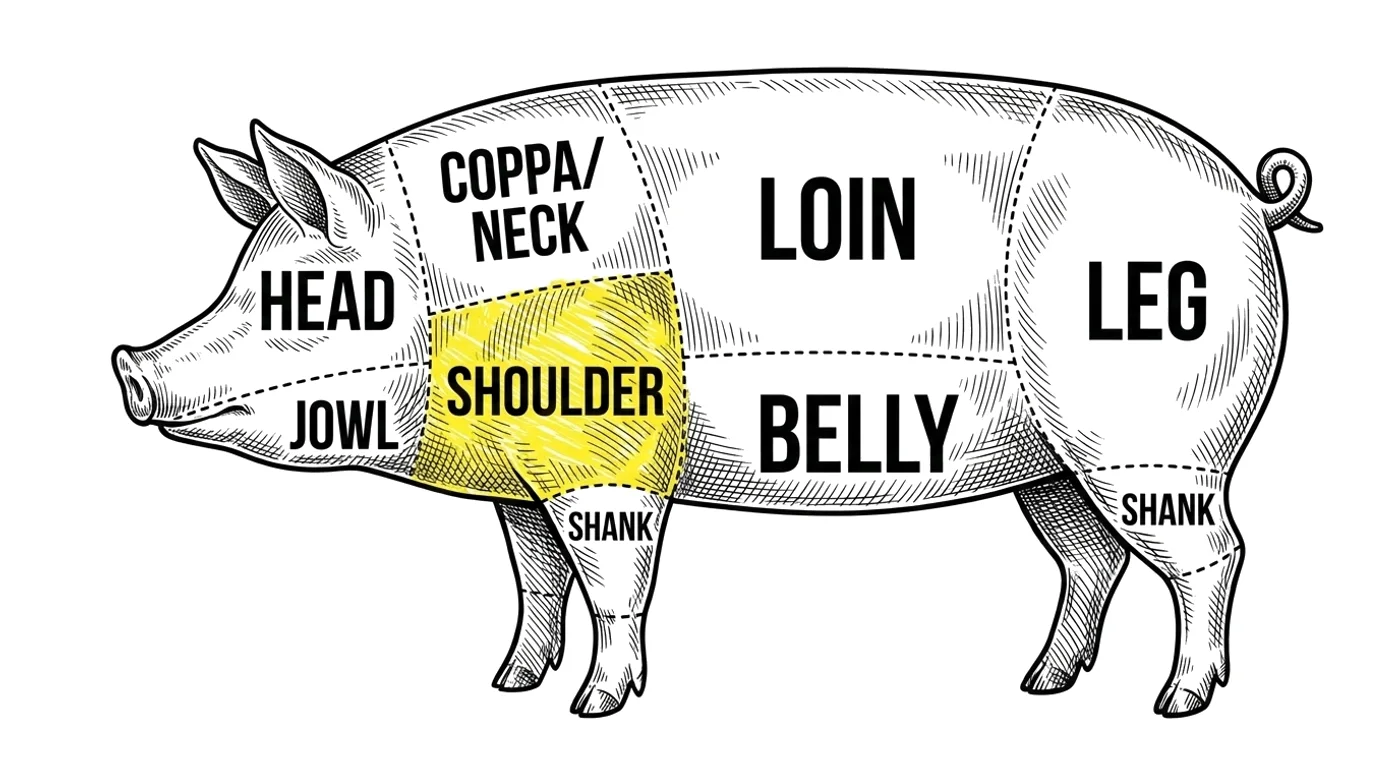
Identity and terminology
The Hmong people are a transnational ethnic group, so labelling the sausage simply Vietnamese or Thai is misleading. Names vary by language and diaspora context. Hmong Sausage is the parent identity, and the local spellings are aliases of it.
Composition and characteristics
Pork and firm fat are coarsely cut and seasoned with garlic, ginger, lemongrass, chilli, herbs and sometimes rice or fermented flavourings. The cut face is distinctly chunky and aromatic, often with visible green herbs.
Production and process
The mixture is stuffed into natural casing and may be cooked fresh, lightly smoked or air-dried according to community practice. The Curesmith branch is a refrigerated cooking sausage and does not assume that traditional hanging makes it shelf stable.
History and regional forms
Hmong livestock slaughter and sausage making are bound to household food preservation, ritual hospitality and New Year feasting. Migration after the conflicts in Laos carried the practice to France, the United States, Australia and other diaspora centres, where local ingredients and food law shaped new versions.
Use, storage and related products
It is grilled, fried or roasted and served with sticky rice, chilli sauces, herbs and vegetables. It differs from northern Thai sai ua, Lao som moo and Vietnamese fermented sausages.
Recipe and cure
This is not a finished recipe. It is a window into how this meat is traditionally cured. Before you follow any process, run it through one of our curing calculators so the salt, cure and timings are right and safe for your own batch.
Make this — the measured Curesmith version →“Make this” opens the same cure as a measured recipe, scaled to your batch.
- Meat
- Pork shoulder
- Cut
- Pork shoulder
- Salt (%)
- 1.8
- Curing salt
- None
- Fermented
- No
- Smoked
- No
- Maturation
- Raw sausage ≤4°C for up to 2 days; freeze for longer storage
- Basis
- per 1,000 g pork shoulder
- Style
- Fresh aromatic Hmong pork sausage; cook before eating
Ingredients
- Pork shoulder100% · 1000 g
- Pork back fat35% · 350 g
- Fine salt1.6% · 24 g
- Ground black pepper0.19% · 2.5 g
- Fresh ginger, finely grated4.1% · 60 g
- Fresh garlic, finely chopped2.3% · 33.5 g
- Thai chiles, finely chopped4% · 40 g
- Green onion, finely sliced1.8% · 26.5 g
- Fresh cilantro, chopped2.7% · 26.5 g
- Tender lemongrass hearts, finely minced3.4% · 50 g
- Fresh lime juice4% · 40 g
Method
- Chill pork, fat, lime juice and equipment to 0–3°C.
- Grind shoulder and back fat separately through 6 mm.
- Mix shoulder with salt until tacky.
- Add pepper, ginger, garlic, chiles, green onion, cilantro, lemongrass and lime juice.
- Fold in the ground fat without smearing.
- Stuff into 36 mm hog casings.
Safety. Fresh or lightly smoked Hmong sausage remains perishable unless a validated fermentation and drying process is documented.