
Jambon de l'Ardèche
Ardeche, Auvergne-Rhone-Alpes, France
Sweet and rounded, a clean mountain-cured ham of the southern Massif Central.
Overview
Jambon de l'Ardèche is a mountain ham matured for at least seven months and protected by pannage on the exposed lean. Chestnut flour may form part of that coating, and a lightly smoked version is permitted, linking the ham with the chestnut and woodland culture of Ardèche.
Where it's from
Climate. The dry mountain valleys of the Ardeche in the southern Massif Central.
Altitude. Southern Massif Central
The cut
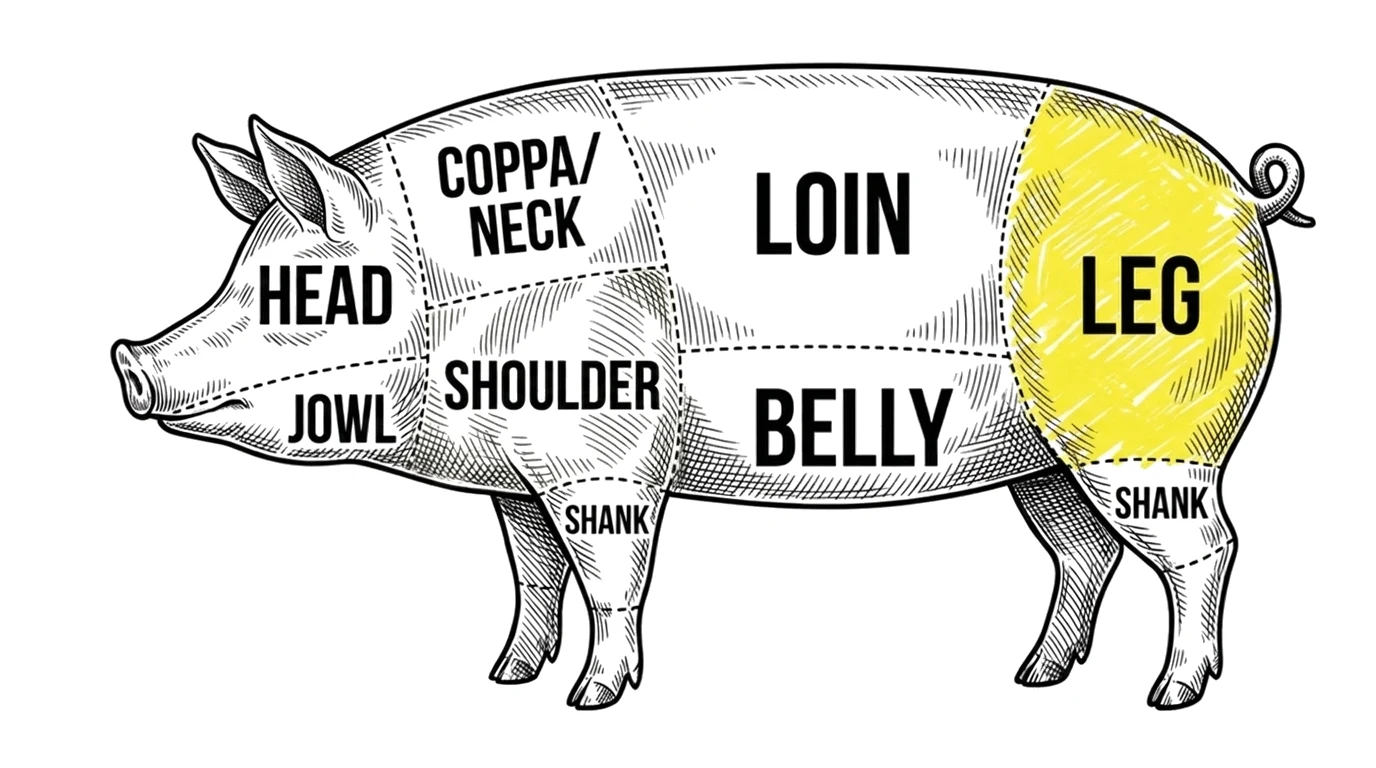
How to recognise it
The whole ham is compact with a dry seasoned surface, while the slice is red to deep pink with clean pale fat. Aroma is sweet and mature; smoked examples should show only restrained woodland smoke. Chestnut flour in the pannage should not make the product taste dusty or stale. Rancidity, sourness or a sticky bone area are faults.
- Shape and size
- Whole leg, rounded
- Lean colour
- Rosy red
- Fat and marbling
- White
- Casing
- None
- Surface bloom
- Possible
Origins and history
Ardèche households preserved pork during the cold season in farms scattered across mountain, plateau and chestnut country. Hams hung in ventilated rooms while chestnuts supplied flour, food and animal feed. The local pannage that protected exposed lean could therefore incorporate chestnut flour, turning an available agricultural material into a regional marker. Some producers added restrained chestnut-wood smoke, while others kept the ham unsmoked. Rural production moved into specialist curing houses as transport and tourism opened the department to wider markets. PGI recognition protects the Ardèche area, minimum ageing and the optional smoked presentation without pretending that every ham must taste identical.
Name. Jambon, ham; Ardeche the department.
- Production today
- Producers across the Ardeche.
- Protection
- IGP.
- Tradition vs modern
- Mountain-air ageing.
- Seasonality
- Year-round.
Compare with. Jambon d'Auvergne
Serving and cultural significance
Slice thinly with country bread, chestnut products, goat cheese, fruit or Ardèche wine. Smoked versions suit lentils and potatoes, while unsmoked ham is best served simply. Allow the slices to warm slightly before serving so the fat softens and the chestnut or smoke notes become more apparent.
Recipe and cure
This is not a finished recipe. It is a window into how this meat is traditionally cured. Before you follow any process, please run it through one of our curing calculators, so the salt, cure and timings are right and safe for your own batch.
Curesmith home adaptation — not designation-compliant
Make this — the measured Curesmith version →The cure below is the traditional reference. “Make this” opens the measured Curesmith home recipe, scaled to your batch.
Traditional or protected production
The PGI controls the pork leg, salting, drying and minimum seven-month maturation. Exposed lean is protected by pannage, which may include chestnut flour, and optional smoking is regulated. Production takes place in the recognised Ardèche area.
Sea salt, salt-box method; no fixed percentage.
- Meat
- pork
- Salt (%)
- traditional, no fixed %
- Curing salt
- Sea salt only
- Fermented
- No
- Starter or mould
- Natural cellar mould possible
- Smoked
- No
- Target aW or weight loss
- ~ weight loss
- Temperature (°C)
- cold salting, then 10 to 15
- Humidity (%)
- 70 to 80
- Maturation
- 7 to 12 months
- Basis
- percentage of green meat weight
- Style
- Traditional dry salting (salt-box)
Method
- Salt and season the cut by the traditional method and rest cold so the salt draws through.
- Wash or brush off surface salt and begin the slow dry.
- Case or hang as the style requires.
- Age to the target loss, judging by weight.
Notes
- The official protected specification controls the named product. Any Curesmith EQ, starter-culture, curing-salt or home-scale adaptation is a separate method and must not be presented as designation-compliant.
- A more efficient way of curing this product is using the EQ Method. No more than 2.5% salt to meat weight is required. To follow the EQ method, please use our whole-muscle EQ curing calculator to work out proper ratios and curing times.
In the Codex
What this product teaches, and where to read more.
Temple. Roof, Microclimate