
Kartoffelwurst
Also known as German potato sausage, Hessische Kartoffelwurst, Grumbierewurst
Hesse and neighbouring south-western regions, Germany
Overview
Kartoffelwurst is a German cooked sausage in which potato is a structural ingredient, not a side dish or token flavouring. Regional forms occur especially in Hesse and neighbouring south-western areas. Some are coarse and sliceable, others soften when reheated. The two source records document materially different household branches: one mixes pork belly with boiled potato purée, while the other cooks grated raw potato inside the casing.
Where it's from
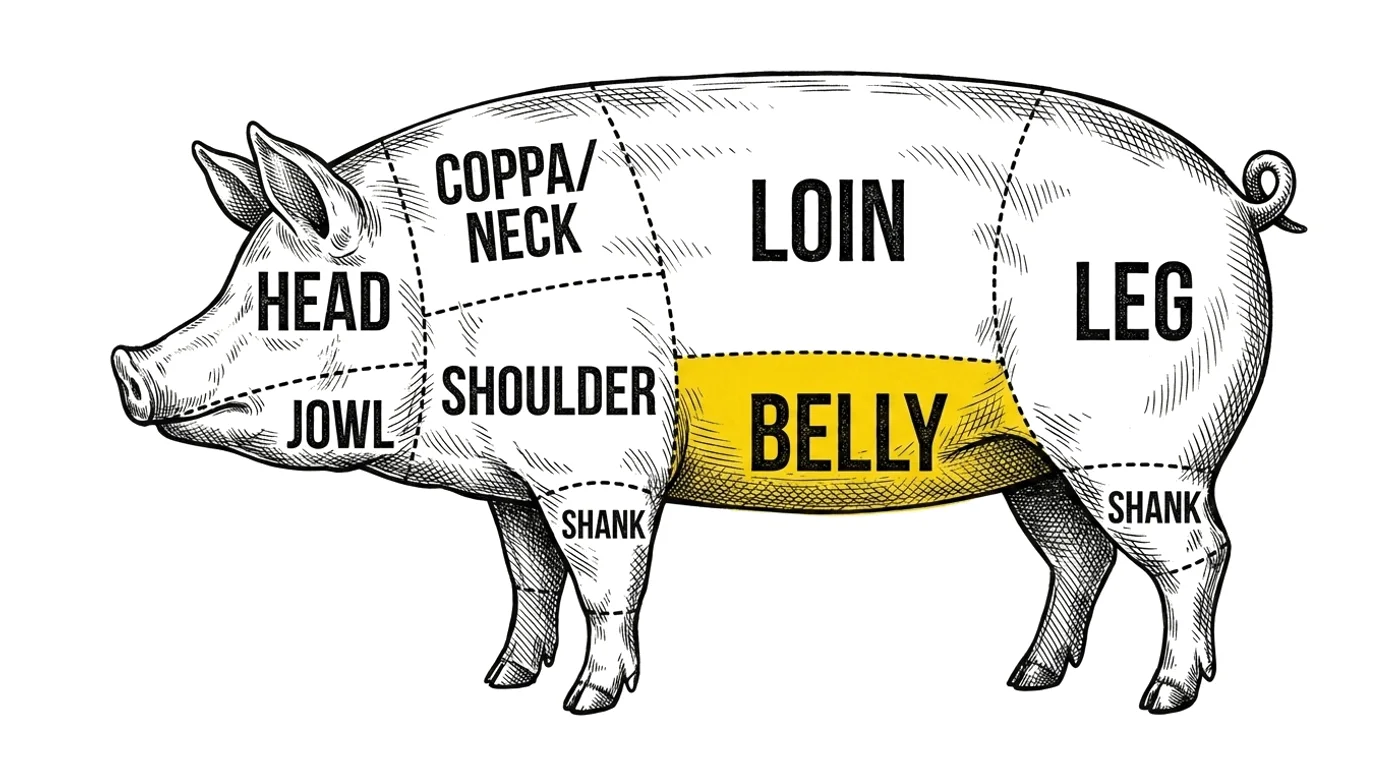
The cut
Identity and terminology
German meat guidelines recognise Hessische Kartoffelwurst and broader cooked sausage groups whose names reflect the use of potato. The term is descriptive rather than an EU protected designation, and regional formulas differ in meat, fat, onion, offal and spice. Hessian tourism material confirms a living local version. It is one product with two recipes, boiled-potato and raw-potato, rather than two products.
Composition and characteristics
Pork belly supplies both meat and fat, while potato moderates richness and increases yield. Boiled, steam-dried purée makes a milder and more uniform cut. Raw grated potato retains more water and starch, giving the filling a coarser structure and a softer texture after heating. White pepper, mace and allspice are common restrained seasonings; fried onion is especially important in the raw-potato branch. Neither source formula is fermented or dried.
Production and process
The boiled branch requires potatoes to be cooked, drained, steam-dried, weighed and chilled before meeting raw pork. The raw branch uses freshly grated, drained potato and cooled onion, with enough casing space for starch swelling. Both are stuffed in broad casings and poached until the cold point reaches 71°C and the potato is fully cooked. Rapid chilling is essential because meat, moist starch and a large diameter create a perishable product.
History and regional forms
Potato sausages reflect economical farmhouse use of a staple crop alongside pork, but modern regional pride has turned former thrift food into a speciality. The family extends beyond Germany, yet Swedish potato sausage, Polish potato kishka and Spanish potato-bearing sausages have different seasoning, casing and service traditions. Hessische Kartoffelwurst is also distinct from Hessian cooked Mettwurst without potato and from cereal-filled white or blood puddings.
Use, storage and related products
Chill the cooked sausage before slicing, then fry pieces until lightly golden or reheat them gently with onion. The boiled-potato branch is smoother and milder; the raw-potato branch is more rustic and onion-led. Neither should be stored at room temperature. Weigh the potato at a stated state, raw, cooked or as finished purée, and record which. Moisture loss changes the denominator, and with it the salt, the texture and whether the batch repeats.
Recipe and cure
This is not a finished recipe. It is a window into how this meat is traditionally cured. Before you follow any process, run it through one of our curing calculators so the salt, cure and timings are right and safe for your own batch.
Make this — the measured Curesmith version →“Make this” opens the same cure as a measured recipe, scaled to your batch.
- Meat
- Skinless pork belly
- Cut
- Skinless pork belly
- Salt (%)
- 1.6
- Curing salt
- None
- Fermented
- No
- Starter or mould
- None; this product is not fermented
- Smoked
- No
- Maturation
- Refrigerate at 0–4°C; use within 3 days or freeze
- Basis
- per 1,000 g skinless pork belly
- Style
- uncured German cooked pork-and-potato sausage using boiled potato purée
Ingredients
- Skinless pork belly100% · 1000 g
- Cooked, drained potato purée66.7% · 666.5 g
- Fine salt2.7% · 26.5 g
- White pepper0.33% · 3.5 g
- Ground mace0.08% · 0.8 g
- Ground allspice0.08% · 0.8 g
Method
- Boil peeled potatoes without salt until tender, drain thoroughly, return them briefly to low heat to drive off steam, then mash and weigh 400 g.
- Spread the purée shallowly and chill it to 5°C or below; chill pork and equipment to 0–2°C.
- Grind the pork belly through 5 mm.
- Mix pork, chilled purée, salt and spices until evenly distributed but still visibly coarse.
- Fill the broad casing without large air pockets and close securely.
- Poach at 78–80°C until the cold point reaches 74°C.
Safety. Chill cooked potato and onion before mixing, allow starch expansion, verify a 74°C cold point and cool the broad casing rapidly.