
Kiełbasa Bydgoska
Also known as Bydgoska sausage, Kiełbasa bydgoska surowa
Kuyavia and Pomerania, Poland
Where it's from
The cut
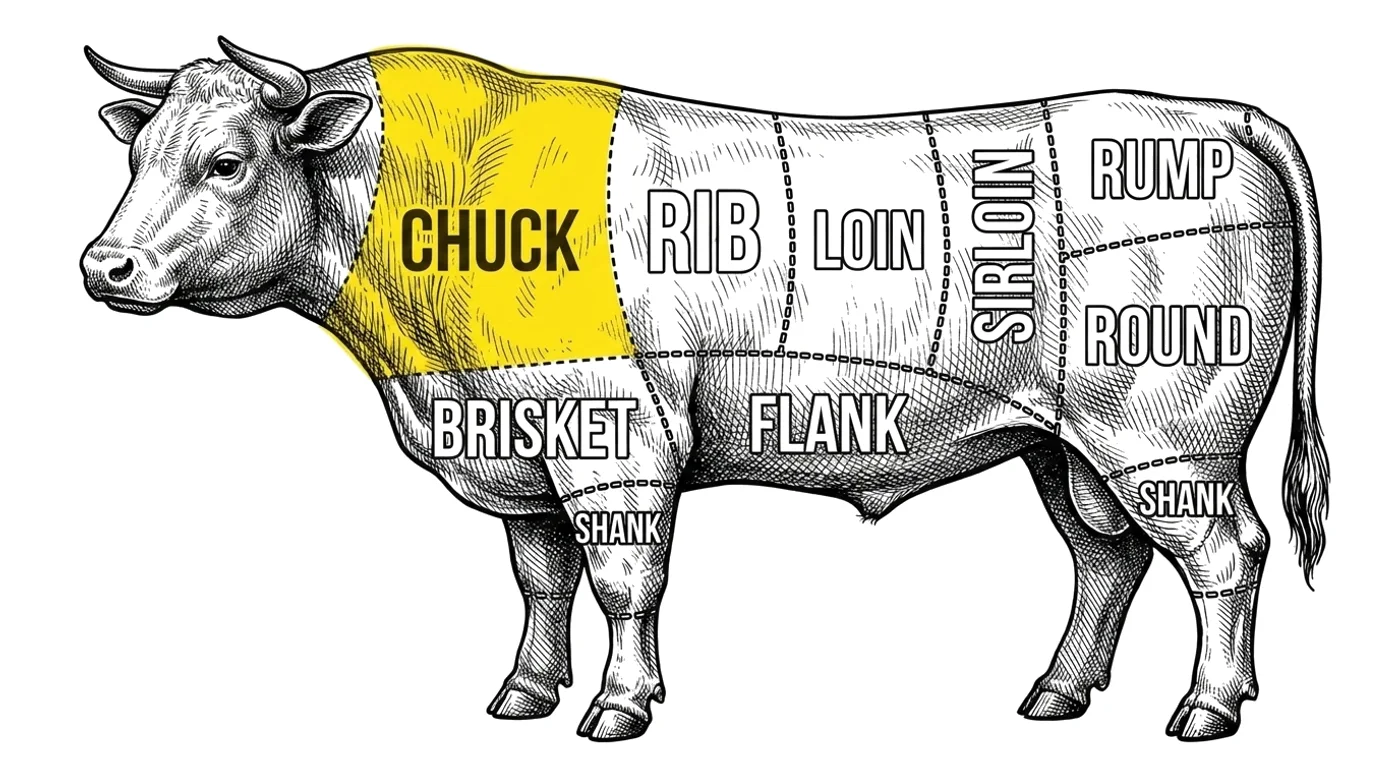
Identity and naming
Kiełbasa Bydgoska takes its adjective from Bydgoszcz in north-central Poland. The name now covers at least two materially different technical records. The 1964 state-era nomenclature includes a cooked, beef-rich sausage, while the product promoted in the twenty-first-century registration campaign is a raw smoked pork sausage. Those branches are distinct, and blending them would give a formula that belongs to none of them.
The historical cooked branch
The cooked branch uses several grades of beef, firm fat and a small binding fraction of collagen-rich trimmings or skin. Lean beef supplies the visible grain, while a finely processed portion binds the sausage. Garlic and pepper are restrained. Broad fibrous casings, hot smoke and poaching give a firm slicing sausage quite unlike the thin raw product now associated with the Bydgoska name.
The modern raw smoked identity
Current regional promotion describes Kiełbasa Bydgoska as a high-meat pork sausage sold raw and smoked. Research by Poland's meat and fat research institute has also examined raw and raw-ripened Bydgoska variants, including salt, curing-salt and bacterial-culture treatments. These records show that the modern identity is not simply the cooked beef formula renamed.
Registration status
Poland's agriculture ministry announced that a national application for protected geographical indication status was received on 22 July 2024. That notice records an application, not a completed registration. Until a registered specification can be confirmed, uncertified Atlas adaptations must not carry a PGI claim, and the historical cooked branch must not be described as compliant with the proposed protected identity.
Historical context
The name belongs to the post-war period in which Polish meat production was organised through national technical schedules and named city sausages. Later producers in Kuyavia and Pomerania recovered a raw smoked Bydgoska as a regional product and began the registration campaign. Evidence located for this batch supports a twentieth-century development; it does not justify an older guild legend or a single unbroken recipe.
Use and boundaries
The cooked beef branch is chilled, sliced and eaten as a ready-to-eat sausage. The raw smoked branch requires its own validated treatment and must not be eaten as though it were the cooked version. Kiełbasa Bydgoska is separate from Bydgoszcz's unrelated culinary products and from other Polish city sausages whose names reflect different formulas and processing classes.
Recipe and cure
This is not a finished recipe. It is a window into how this meat is traditionally cured. Before you follow any process, run it through one of our curing calculators so the salt, cure and timings are right and safe for your own batch.
Make this — the measured Curesmith version →“Make this” opens the same cure as a measured recipe, scaled to your batch.
- Meat
- Lean beef chuck
- Cut
- Lean beef chuck
- Salt (%)
- 1.8
- Curing salt
- Cure #1 as specified in the recipe
- Fermented
- No
- Starter or mould
- None; this historical cooked branch is not fermented
- Smoked
- Yes
- Maturation
- Refrigerate at 0–4°C; use within 4 days or freeze
- Basis
- per 1,000 g lean beef chuck
- Style
- historical Polish cured, smoked and cooked beef sausage with pork skin
Ingredients
- Lean beef chuck100% · 1000 g
- Beef shank and collagen-rich trimmings50% · 500 g
- Beef fat trimmings75% · 750 g
- Cleaned pork skin25% · 250 g
- Retained unsalted skin stock10% · 250 g
- Fine salt1.8% · 45 g
- Cure #1, 6.25% sodium nitrite0.24% · 6 g
- Black pepper0.15% · 4 g
- Fresh garlic0.15% · 4 g
Method
- Simmer cleaned pork skin in an equal mass of water until tender; drain and retain 100 g unsalted stock.
- Trim, dice and chill all meat and fat to 0–2°C; chill grinder parts.
- Grind lean beef through 6 mm, fat through 8 mm, and connective beef plus cooked skin through 3 mm.
- Fine-process connective beef and skin with stock, salt, Cure #1, pepper and garlic; mix with lean beef and fat.
- Stuff into fibrous casing, 60–70 mm; remove air pockets and form the specified links.
- Rest filled casings for 8–12 hours.
Safety. Confirm the branch before use. The cooked branch requires verified lethality and refrigeration; raw or ripened branches need separate pathogen, fermentation and drying controls.