
Kiełbasa Bytomska
Also known as Bytomska sausage, Kiełbasa bytomska
Upper Silesia, Poland
Where it's from
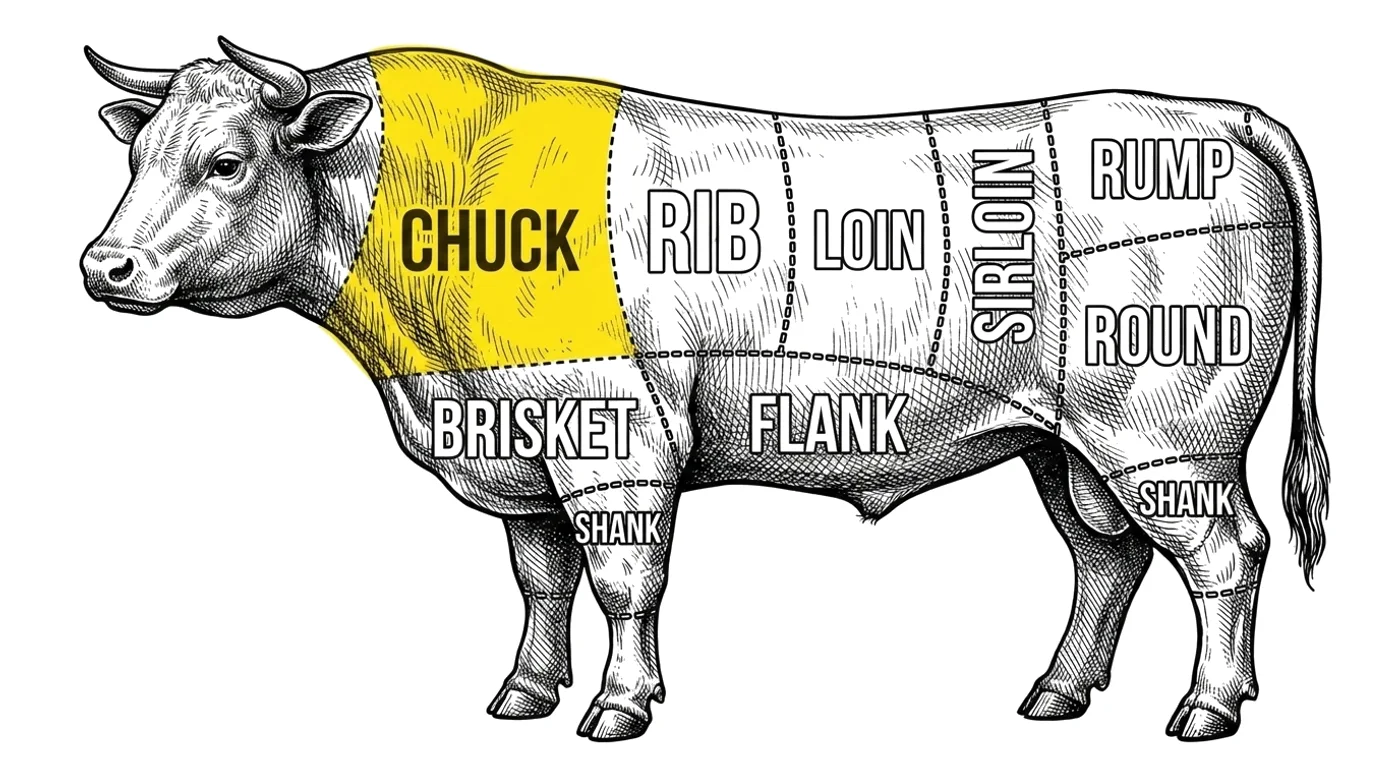
The cut
Identity
Kiełbasa Bytomska is a beef-led Polish cooked sausage named for Bytom in Upper Silesia. Its documented formula uses mostly lean beef, a smaller collagen-rich beef fraction and firm fat. The sausage is cured, hot-smoked and poached in a medium hog casing. That architecture produces a dense, springy slice with visible meat grain rather than a fine frankfurter-style emulsion.
Name and place
Bytomska is the feminine adjectival form of Bytom and agrees with kiełbasa, the Polish word for sausage. Bytom developed into one of Upper Silesia's major mining and industrial cities during the nineteenth and twentieth centuries. The city association is therefore meaningful, but the evidence located does not establish a protected production area or prove that the formula originated in a particular Bytom butcher shop.
Composition and flavour
Lean beef forms three quarters of the meat block. Connective-tissue-rich beef is worked with cold water to create a fine binding component, while firm beef fat provides small pale inclusions. Pepper, coriander and garlic give a savoury, lightly aromatic profile. The result is leaner and more beef-forward than many Polish mixed pork-and-beef cooked sausages.
Production
The lean beef and fat are ground to a medium grain. A smaller beef fraction is ground more finely and processed with water and seasoning, then mixed through the coarse portion. After stuffing, the sausage is cured under refrigeration, surface-dried, hot-smoked, cooked and cooled. It remains a moist refrigerated sausage, not a dry or semi-dry product.
Historical evidence
The strongest product evidence is the Polish state-standard tradition documented in the 1960s. This places Kiełbasa Bytomska within the post-war system that specified raw-material classes, casing and processing for named sausages sold across Poland. Modern commercial use of the name continues, but no current geographical indication or reserved legal definition was located.
Use and boundaries
Bytomska is served cold in slices or gently reheated. It should not be collapsed into Kiełbasa Bydgoska merely because both carry city adjectives: Bydgoska has a different fat, connective-tissue and casing structure and now also names a raw smoked pork branch. Bytomska is also distinct from raw Silesian sausages and from blood or cereal sausages of the region.
Recipe and cure
This is not a finished recipe. It is a window into how this meat is traditionally cured. Before you follow any process, run it through one of our curing calculators so the salt, cure and timings are right and safe for your own batch.
Make this — the measured Curesmith version →“Make this” opens the same cure as a measured recipe, scaled to your batch.
- Meat
- Lean beef chuck
- Cut
- Lean beef chuck
- Salt (%)
- 1.8
- Curing salt
- Cure #1 as specified in the recipe
- Fermented
- No
- Starter or mould
- None; this branch is not fermented
- Smoked
- Yes
- Maturation
- Refrigerate at 0–4°C; use within 4 days or freeze
- Basis
- per 1,000 g lean beef chuck
- Style
- Polish cured, hot-smoked and cooked beef sausage
Ingredients
- Lean beef chuck100% · 1000 g
- Beef shank and connective trimmings20% · 200 g
- Beef fat15% · 150 g
- Ice water4.9% · 66.5 g
- Fine salt1.8% · 24 g
- Cure #1, 6.25% sodium nitrite0.24% · 3.5 g
- Black pepper0.15% · 2 g
- Ground coriander0.05% · 0.7 g
- Fresh garlic0.15% · 2 g
Method
- Trim, dice and chill all meat and fat to 0–2°C; chill grinder parts.
- Grind lean beef and fat separately through 6 mm; grind connective beef through 3 mm.
- Fine-process connective beef with ice water and seasonings; mix lean beef with salt and Cure #1, then add batter and fat.
- Stuff into natural hog casing, 34–36 mm; remove air pockets and form the specified links.
- Rest filled sausages for 8–12 hours.
- Dry the casing, then hot-smoke at 55–60°C until evenly coloured.
Safety. Use curing salt accurately, cook to a verified cold-point endpoint, cool rapidly and keep refrigerated.