
Kiełbasa Cielęca Tarnowska Pieczona
Also known as Tarnowska, Tarnovska veal sausage
Lesser Poland, Poland
Overview
Kiełbasa Cielęca Tarnowska Pieczona is a Polish veal-led sausage with smaller contributions from pork and firm pork fat. It is coarsely textured but held by a finely worked veal binding phase, then smoked and finished by chamber baking. The result is a light-brown link with a pale cured interior, visible meat grain and restrained pepper-garlic seasoning. Although historical classifications treated it as semi-durable, the controlled home branch remains refrigerated and is not presented as safe for ambient storage.
Where it's from
The cut
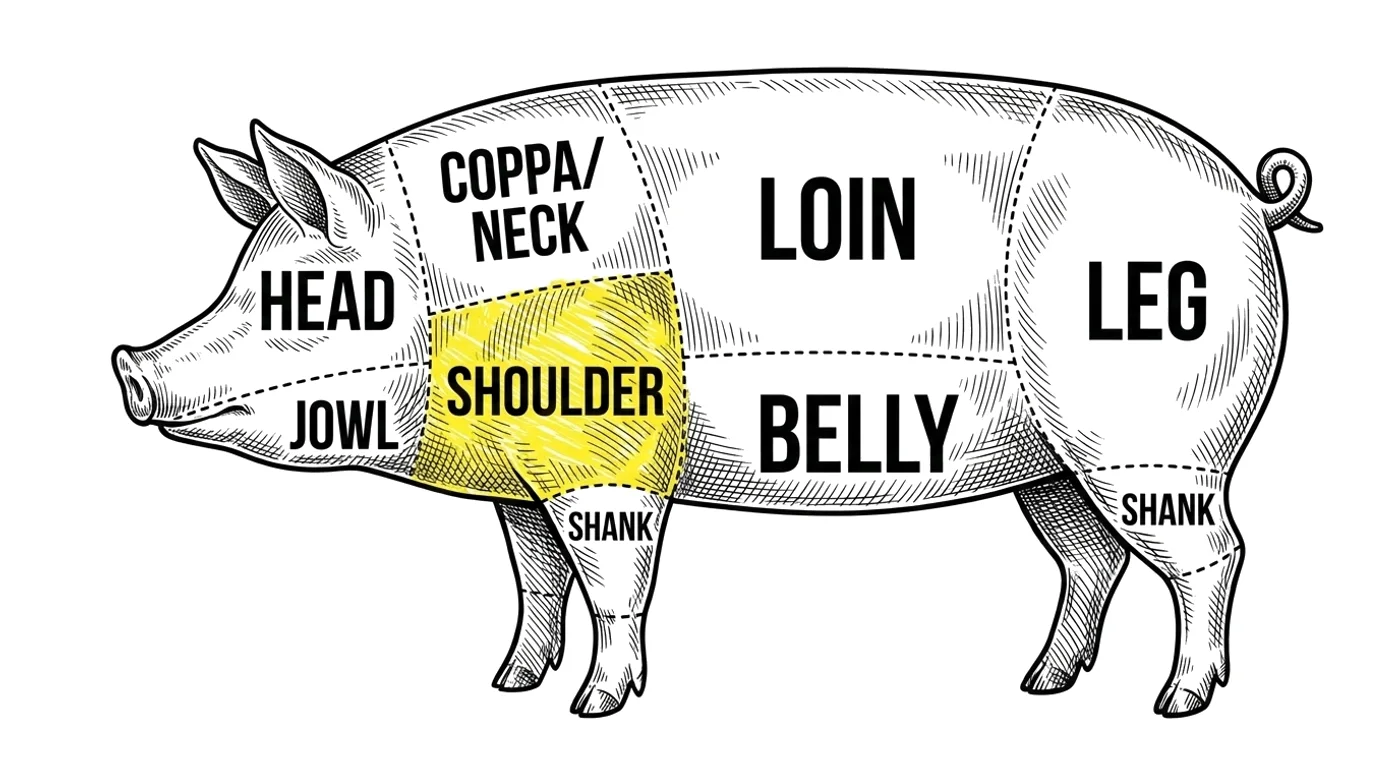
Identity and terminology
Cielęca means veal, tarnowska associates the name with Tarnów, and pieczona indicates a baked finish. Every word helps prevent a serious identity error. Tarnowska is not Tarnogórska: the latter refers to Tarnowskie Góry and describes a different pork-and-beef, scalded and lightly dried ring. The Polish official schedule from the 1960s lists both names separately, supporting distinct selectors. Neither the historical listing nor the town adjective alone establishes current EU geographical protection.
Composition and characteristics
Semi-fat veal supplies most of the coarse meat and gives the sausage its mild identity. Connective veal is reduced finely with ice to form the adhesive base. A smaller semi-fat pork fraction adds depth, while firm fat trimmings produce visible pale inclusions without turning the filling greasy. Pepper and garlic remain deliberately simple. The slice should be cohesive and moist, with clean particles, even cured colour and no grey centre, fat smear, free jelly or scorched casing.
Production and process
All fractions are prepared cold and kept separate through grinding. The connective veal is fine-cut with measured ice, spice and curing salt; coarse veal and pork are worked with salt until sticky before the fine phase and fat are folded in. The casing is surface-dried under cool control rather than held warm. Clean smoke builds colour and aroma, then gradual chamber heat cooks the sausage to its cold-point target. Rapid chilling completes the process.
History and regional forms
The old Polish storage schedule classed cielęca tarnowska among semi-durable sausages, which confirms that the name was part of organised twentieth-century production. It does not prove an unchanged ancient recipe, a single inventor or an exclusive modern territory. Current market sausages may differ in veal proportion, calibre and spice. The Atlas preserves the source branch and its historical class while keeping modern legal claims separate from archival nomenclature.
Use, storage and related products
Serve Tarnowska fully chilled in medium slices or warm it gently without boiling. Bread, mustard, horseradish and pickled vegetables suit its mild veal character. Keep the cut face covered and cold. It differs from Tarnogórska in place-name, meat structure and process; from ordinary veal bologna in its coarse grain and smoked baked form; and from fresh veal sausage because it is cured, smoked and fully cooked before sale or service.
The recipe for this product is in preparation and will be published once it has been verified.
Safety. Calculate Cure #1 on the full animal block, keep veal and fat cold, verify the chamber-baked cold point, cool rapidly and keep refrigerated.