
Kiełbasa Cytrynowa
Also known as Lemon Sausage, Polish lemon sausage
Poland
Overview
Kiełbasa cytrynowa is a broad Polish cooked sausage in which fresh lemon zest perfumes a cured pork mosaic. Lean and semi-fat pork provide the visible grain, while a small fine bind of beef and connective pork holds the slice together. Smoke, nutmeg, black pepper and restrained sugar frame the citrus rather than turning the sausage sweet or sour.
Where it's from
The cut
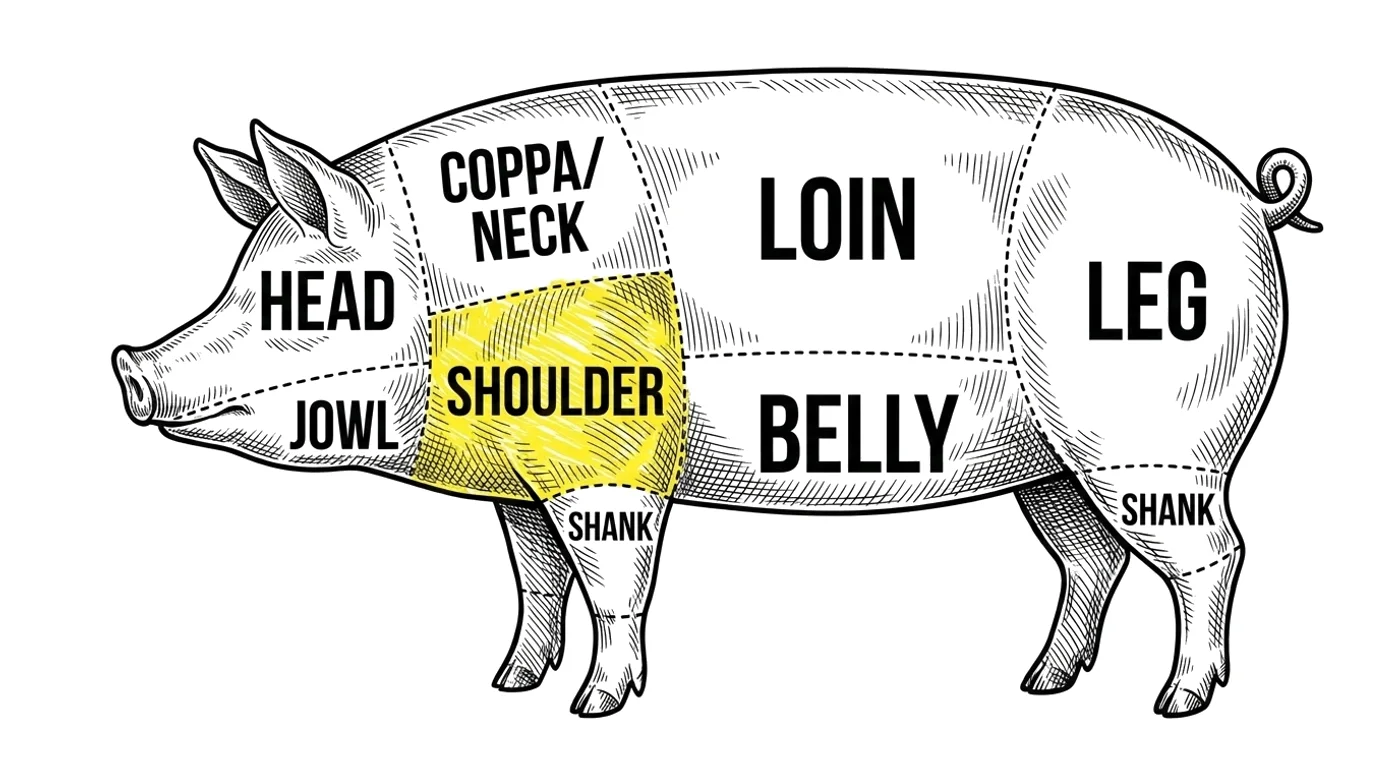
Identity and terminology
Cytrynowa means lemon in the adjectival form used with kiełbasa. The historical name describes seasoning, not a town or a protected designation. Only the coloured outer peel belongs in the mixture: juice would change the protein chemistry, and white pith would introduce bitterness. The product therefore remains a cured cooked sausage flavoured with zest, not an acidified meat preparation.
Composition and characteristics
The cut face should be pink and medium-grained, with most pork passing through a moderate plate and a finer binding fraction dispersed between it. The broad casing produces a substantial cold-cut slice. Lemon is present as an aroma that lifts the cured meat and smoke; it should not obscure pork, pepper or nutmeg, nor leave wet pockets of peel.
Production and process
Production separates the pork from the fine beef-connective fraction. Accurate cure is distributed through the full animal block, the fine fraction is cut with ice water and seasonings, and the two structures are mixed without over-emulsifying the pork. The chub is refrigerated, surface-dried, smoked, cooked until the centre reaches 71°C and chilled quickly.
History and regional forms
Polish technical standards recorded many named sausages distinguished by meat class, comminution, casing and seasoning. Cytrynowa belongs to that archival industrial and craft vocabulary. Its importance lies in a specific construction and flavour idea, not in a claim that lemon sausage is a universal Polish household staple or that every citrus sausage is equivalent.
Use, storage and related products
Serve thinly sliced with rye or wheat bread, mild mustard, fresh cucumber or a restrained salad that leaves room for the zest aroma. Keep the moist cooked chub refrigerated. It differs from lemony fresh breakfast sausage, from uncured veal links and from whole-muscle citrus marinades because it is cured, smoked, broad-cased and fully cooked.
Recipe and cure
This is not a finished recipe. It is a window into how this meat is traditionally cured. Before you follow any process, run it through one of our curing calculators so the salt, cure and timings are right and safe for your own batch.
Make this — the measured Curesmith version →“Make this” opens the same cure as a measured recipe, scaled to your batch.
- Meat
- Pork ham
- Cut
- Pork ham
- Salt (%)
- 1.8
- Curing salt
- Cure #1 as specified in the recipe
- Fermented
- No
- Starter or mould
- None; this product is not fermented
- Smoked
- Yes
- Maturation
- Refrigerate at 0–4°C; use within 4 days or freeze promptly
- Basis
- per 1,000 g pork ham
- Style
- cured smoked and cooked Polish lemon-zest chub
Ingredients
- Pork ham100% · 1000 g
- Semi-fat pork shoulder100% · 1000 g
- Pork shoulder10% · 100 g
- Beef chuck10% · 100 g
- Ice water5.1% · 111 g
- Fine salt1.8% · 40 g
- Cure #1, 6.25% sodium nitrite0.25% · 5.5 g
- Ground black pepper0.2% · 4.5 g
- Ground nutmeg0.05% · 1 g
- White sugar0.2% · 4.5 g
- Fresh unwaxed lemon zest, finely grated0.2% · 4.5 g
Method
- Weigh the zest rather than estimating a fraction of a lemon; chill meat, water and equipment to 0–2°C.
- Grind pork through 8 mm and the beef-connective fraction through 3 mm.
- Fine-cut beef and connective pork with ice water, salt, cure, pepper, nutmeg, sugar and zest until adhesive.
- Fold the fine aromatic bind through the coarser pork until evenly tacky.
- Fill the broad casing tightly, remove air, lace if required and refrigerate 8–12 hours.
- Dry the casing and hot-smoke around 55°C until evenly brown and citrus-smoke aroma is apparent.
Safety. Weigh zest, avoid pith and juice, use measured cure and cooking controls, chill rapidly and refrigerate.