
Kiełbasa Husarska
Also known as Husarska sausage, Hussar sausage, Kielbasa husarska
Poland
Overview
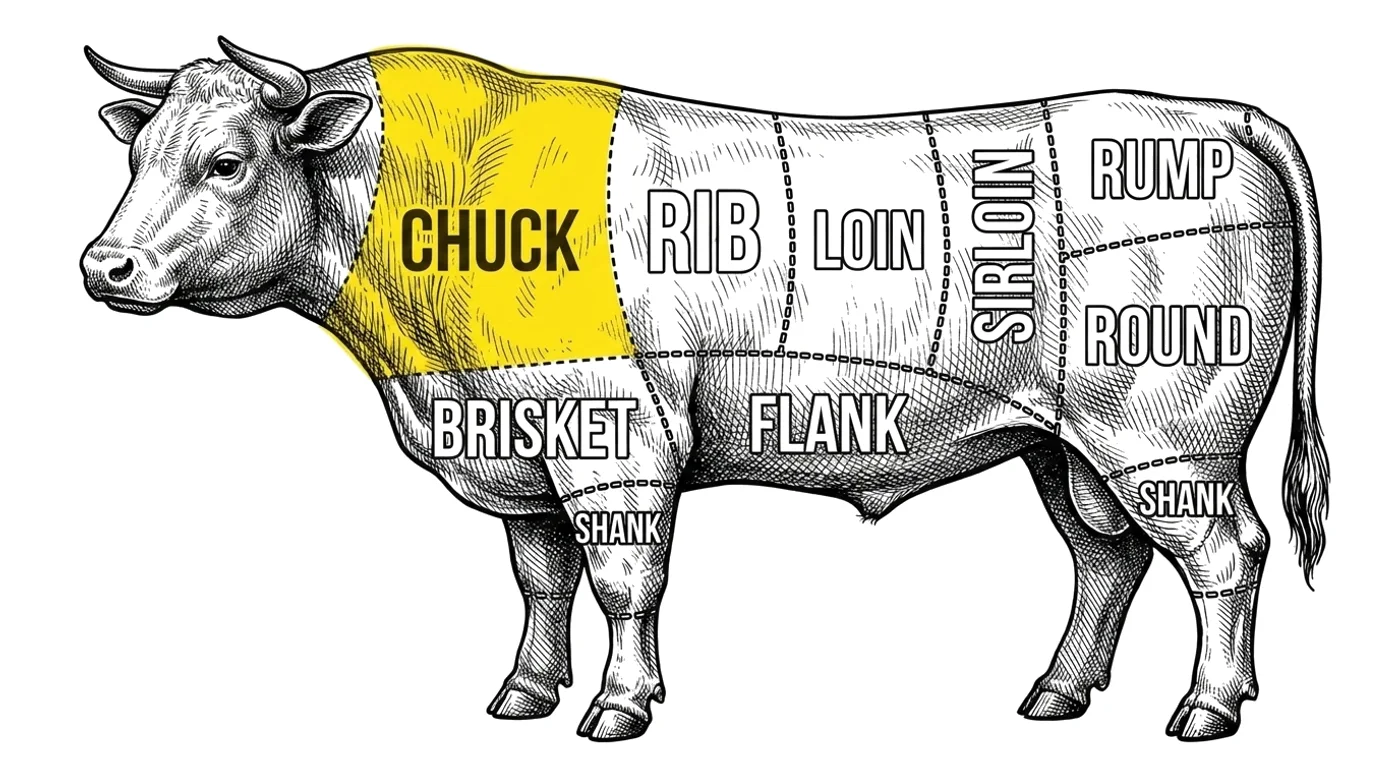
Kiełbasa husarska is a Polish smoked cooked sausage built unusually around beef and firm pork fat rather than the pork-dominant structure of many familiar kiełbasy. The source formula gives more than half of the animal block to connective-tissue beef, a large back-fat share and small fine pork and beef fractions for binding. Mustard, garlic and pepper produce an assertive savoury profile. The batch treats it as a documented Polish technical style, not as a modern protected geographical product.
Where it's from
The cut
Identity and terminology
Husarska means hussar-style and evokes the mounted military formation central to Polish national imagery. The name does not prove that the sausage was carried by historic winged hussars. It is a product name from the Polish sausage repertoire. No current EU PDO, PGI or TSG registration, and no national traditional-product listing, was established for this generic title during the designation check.
Composition and characteristics
The cut face is coarse and richly marbled. Eight-millimetre beef pieces provide the dark cured structure, while a fine beef-and-pork binding mass locks in broad particles of white back fat. Ground white mustard seed is more prominent than in most Polish smoked sausages, backed by black pepper and fresh garlic. A broad casing creates a large slice suited to cold service. The high fat proportion makes temperature control during grinding essential.
Production and process
Cold coarse beef is kneaded with salt until tacky and combined with a fine cured binding mass. Back fat is folded through last so that it remains clearly defined. After refrigerated curing in the casing, the sausage is dried, hot-smoked and baked or poached to 71°C. Rapid chilling protects the large diameter and prevents the fat-rich slice from softening. The finished sausage is refrigerated and is not made shelf stable by smoke.
History and regional forms
Polish industrial and craft manuals of the twentieth century catalogued many named sausages whose formulas reflected meat grading and planned use rather than a single town tradition. Husarska fits that system: its beef-heavy composition, mustard seasoning and coarse format distinguish it within a broad national technical canon. The surviving recipe is valuable evidence of that canon, but it does not justify an invented origin story, legal reservation or association with one present-day region.
Use, storage and related products
Serve Kiełbasa husarska cold in sturdy slices with rye bread, mustard, horseradish and pickled vegetables, or warm it gently without rendering the visible fat. Keep the casing and opened cut face at 0–4°C. It is not Kiełbasa Myśliwska, which has a protected traditional specification, and it is not German Jagdwurst, whose name also refers to hunting but whose cut-face rules and national framework are different.
Recipe and cure
This is not a finished recipe. It is a window into how this meat is traditionally cured. Before you follow any process, run it through one of our curing calculators so the salt, cure and timings are right and safe for your own batch.
Make this — the measured Curesmith version →“Make this” opens the same cure as a measured recipe, scaled to your batch.
- Meat
- Beef chuck
- Cut
- Beef chuck
- Salt (%)
- 1.8
- Curing salt
- Cure #1 as specified in the recipe
- Fermented
- No
- Starter or mould
- None; this product is not fermented
- Smoked
- Yes
- Maturation
- Refrigerate at 0–4°C; use within 4 days or freeze promptly
- Basis
- per 1,000 g beef chuck
- Style
- cured, smoked and cooked Polish coarse beef sausage
Ingredients
- Beef chuck100% · 1000 g
- Pork back fat65% · 650 g
- Pork shoulder10% · 100 g
- Beef10% · 100 g
- Ice water3.4% · 63.5 g
- Fine salt1.8% · 32.5 g
- Cure #1, 6.25% sodium nitrite0.24% · 4.5 g
- Black pepper0.19% · 3.5 g
- White mustard seed, finely ground0.3% · 5.5 g
- Garlic, crushed0.3% · 5.5 g
Method
- Chill all fractions to 0–2°C, then grind them separately through the specified plates.
- Dissolve Cure #1 in ice water and fine-mix it with the pork and lean-beef binding fractions, mustard, pepper and garlic.
- Knead the coarse beef with salt until tacky, then incorporate the fine mass and coarse back fat evenly.
- Fill the large casing firmly, remove air and refrigerate for 8–12 hours.
- Dry the surface, hot-smoke at 55–65°C and finish by baking or poaching until the cold point reaches 71°C.
- Shower briefly and complete controlled chilling before packaging.
Safety. Keep fat firm during grinding, distribute Cure #1 through the complete block, cook to 71°C and chill rapidly.