
Overview
Kiełbasa Parówkowa is a Polish finely comminuted cooked sausage traditionally filled in a medium hog casing, divided into short sections and often left as a continuous coil. Its pork-and-jowl matrix is smooth, moist and rich, with white pepper, paprika, nutmeg and garlic providing restrained seasoning. Although English sources sometimes call it steamed sausage, the defining manufacturing sequence is fine comminution, smoking and parzenie, meaning scalding or gentle hot-water cooking.
Where it's from
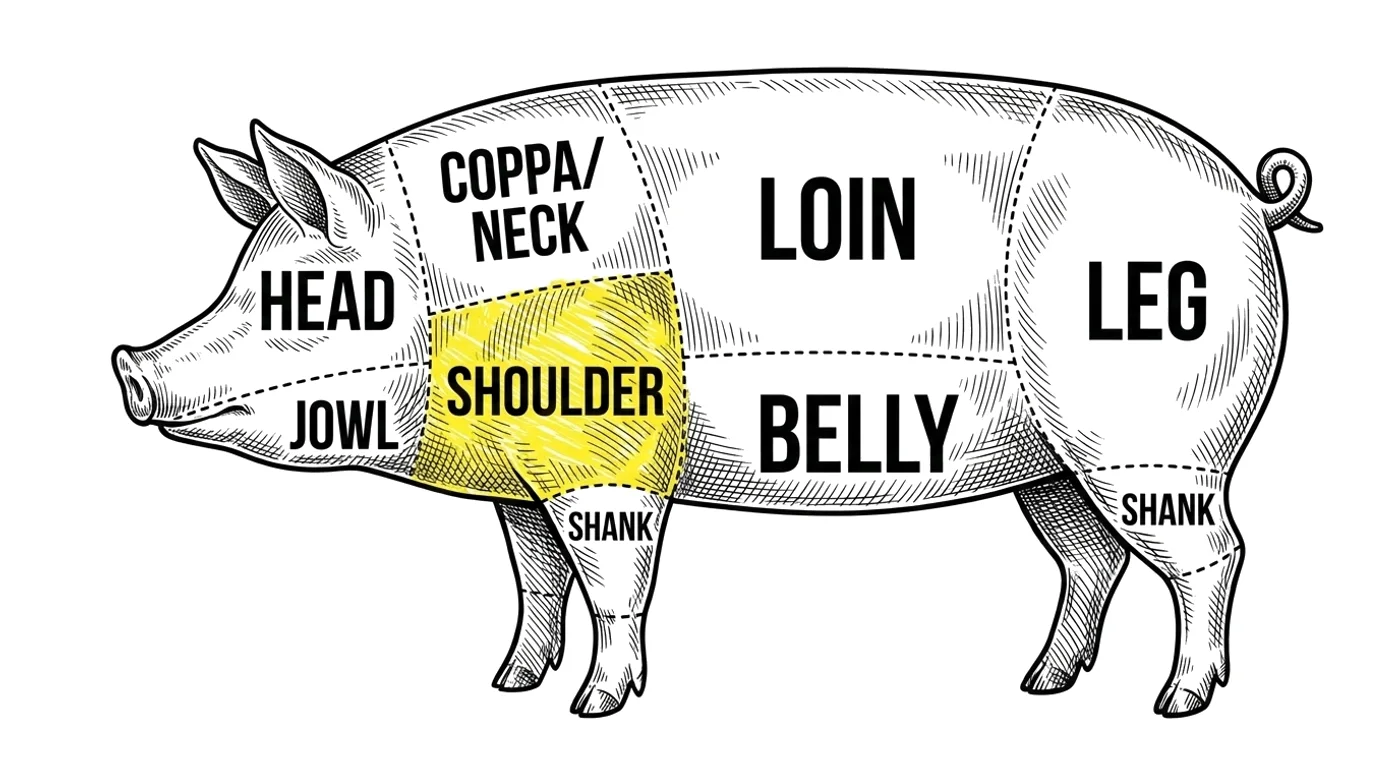
The cut
Identity and terminology
The name is related to parówka, but official Polish technical material lists kiełbasa parówkowa separately from parówki and serdelki. That separation matters. Parówki are small fine links, while parówkowa is larger and historically used a hog casing around the low-thirties millimetre range. Serdelki are also short cooked links but have their own material and diameter conventions. The Atlas therefore keeps three selectors instead of treating every fine Polish cooked sausage as the same product.
Composition and characteristics
Semi-fat pork and skinless jowl give parówkowa a high-fat, succulent body. Fine chopping with measured ice produces a stable protein matrix rather than a loose mince. The finished cut face is smooth, cured pink and evenly seasoned, with no visible large meat cubes. Its smoke colour is light brown rather than dark. The texture should be tender and cohesive; fat separation, jelly pockets, a rubbery bite or a grey centre indicate poor temperature, mixing or cooking control.
Production and process
Cold pork and jowl are ground and then fine-cut with ice, salt, curing salt and spices. Stable emulsification depends on extracting salt-soluble protein before the mixture warms enough to smear or release fat. The sausage is stuffed without air, surface-dried and hot-smoked lightly. Gentle scalding avoids casing rupture while the cold point reaches the verified endpoint. A water shower can stop carry-over heat, but it must be followed by complete chilling to refrigeration temperature.
History and regional forms
Polish archival schedules from the early post-war period provide a parówkowa formula, and later official storage classifications place the name among non-durable sausages alongside serdelki and portioned links. These records establish historical technical usage; they are not a modern protected specification. Contemporary parówkowa can include poultry, mechanically separated meat or other industrial ingredients, but those market variants do not erase the documented pork-and-jowl form developed here.
Use, storage and related products
Warm parówkowa gently in hot water without boiling, or serve it fully chilled and sliced. Bread, mustard, horseradish and pickled vegetables suit its mild spice profile. Keep it refrigerated and use opened portions promptly. It differs from Parówki chiefly through its larger casing and coil form, from Serdelki through historical classification and texture, and from Mortadela through calibre, service and seasoning. The word steamed in translation should never be taken to mean that visible steam proves doneness.
The recipe for this product is in preparation and will be published once it has been verified.
Safety. Measure ice and Cure #1, keep the emulsion cold, avoid overfilling, verify the cold point and complete rapid chilling.