
Overview
Kiełbasa Serdelowa is a Polish fine-textured cooked sausage made in a noticeably larger casing and tied as a ring. It is related in flavour and texture to serdelki but differs in presentation, calibre and portioning. The filling combines pork, beef, collagen-rich pork material and jowl or firm fat, producing a soft yet cohesive slice. It is commonly served hot after gentle reheating in water, though it can also be sliced cold once fully cooked and chilled.
Where it's from
The cut
Identity and terminology
Serdelowa is an adjectival sausage name in Polish and should be retained with the generic kiełbasa when clarity is needed. The archival Polish classification lists serdelowa alongside serdelki within the same broad non-durable cooked-sausage group but names them separately. That relationship supports two linked Atlas articles rather than aliases. Serdelowa is not simply the singular of serdelki; serdelek is the singular form of that separate short-link product.
Composition and characteristics
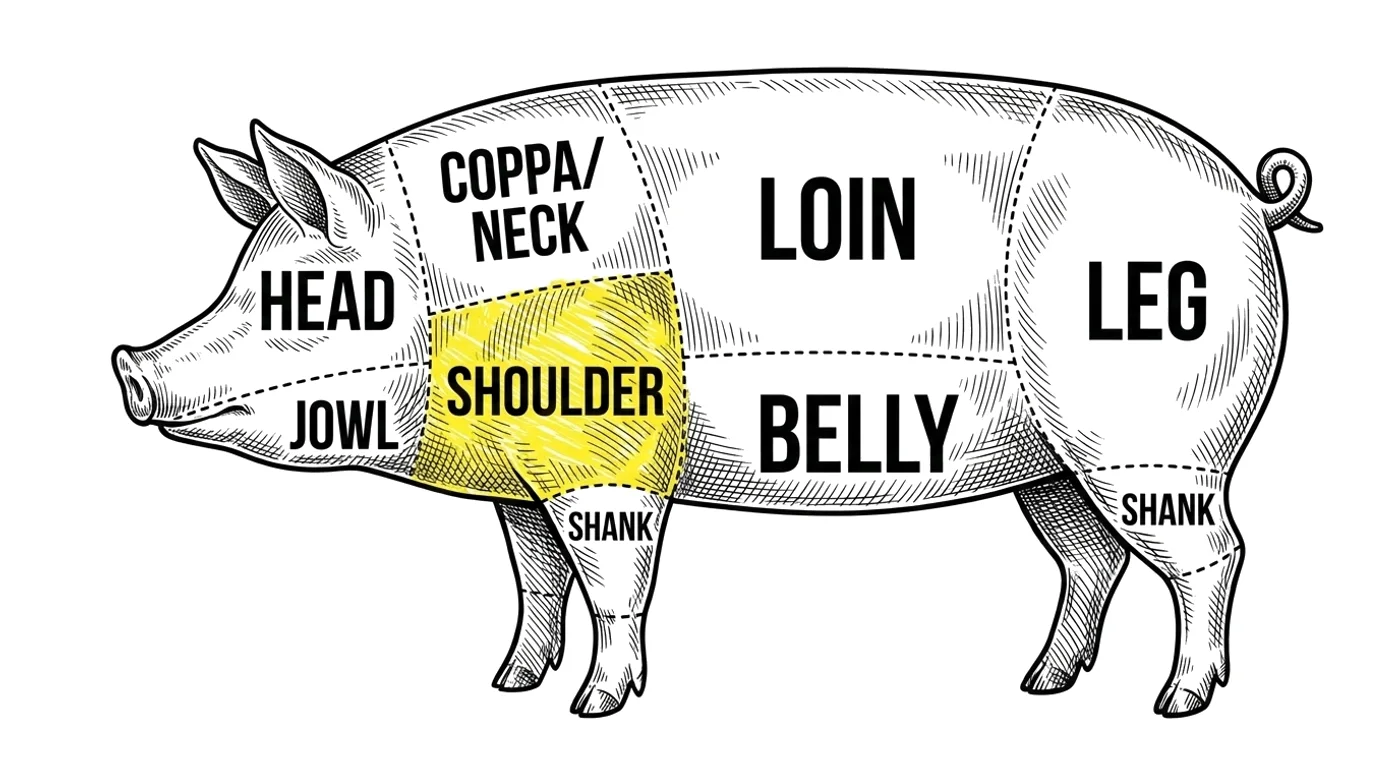
The meat block blends semi-fat pork, a collagen-rich pork fraction, beef and jowl or firm fat. Fine comminution disperses those materials into a uniform cured-pink matrix. White pepper and mace or nutmeg provide gentle warmth, while garlic may be present at a restrained level. Collagen helps body and bite but should not dominate. The characteristic large ring and broad slice distinguish the product visually before the seasoning is assessed.
Production and process
Meat and fat are ground cold through a fine plate and then fine-cut with a measured quantity of ice, salt, curing salt and spices. Temperature control prevents the fat from separating and keeps the protein bind intact. The batter is filled into a beef round or broad hog casing, tied into a ring, surface-dried under refrigerated or controlled cool conditions and hot-smoked. Gentle scalding to a verified centre and rapid chilling complete the process.
History and regional forms
Serdelowa reflects the precise product vocabulary used in Polish sausage manufacture, where casing diameter, form and raw-material grade help distinguish otherwise related fine sausages. Historical standards provide evidence for the name and family relationship, but they should not be presented as current mandatory formulas. Contemporary products may vary in meat species and additives, so commercial labels remain the authority for a particular packet.
Use, storage and related products
Reheat the ring in hot water without boiling, then cut into broad slices or portions. It can be served with mustard, horseradish, bread or potatoes. Keep it refrigerated and cover the cut face. Serdelowa differs from serdelki through its large ring form, from parówki through both diameter and material structure, and from mortadella or Lyoner through its Polish technical identity and customary service.
The recipe for this product is in preparation and will be published once it has been verified.
Safety. Measure ice and Cure #1, keep the fine batter cold, use a casing of at least medium-large calibre, verify the centre and complete rapid chilling.