
Kiełbasa Służewiecka Parzona
Also known as Służewiecka, Sluzewiecka
Masovia, Poland
Overview
Kiełbasa Służewiecka Parzona is a Polish large-calibre cooked sausage with a coarse semi-fat pork body bound by a smaller quantity of finely worked beef. It is smoked, scalded and sold as a moist refrigerated slicing sausage. The broad casing and long straight section distinguish it from ordinary linked śląska or zwyczajna sausages. Its seasoning is concise: pepper, coriander and garlic support the cured pork rather than creating a heavily spiced or paprika-coloured product.
Where it's from
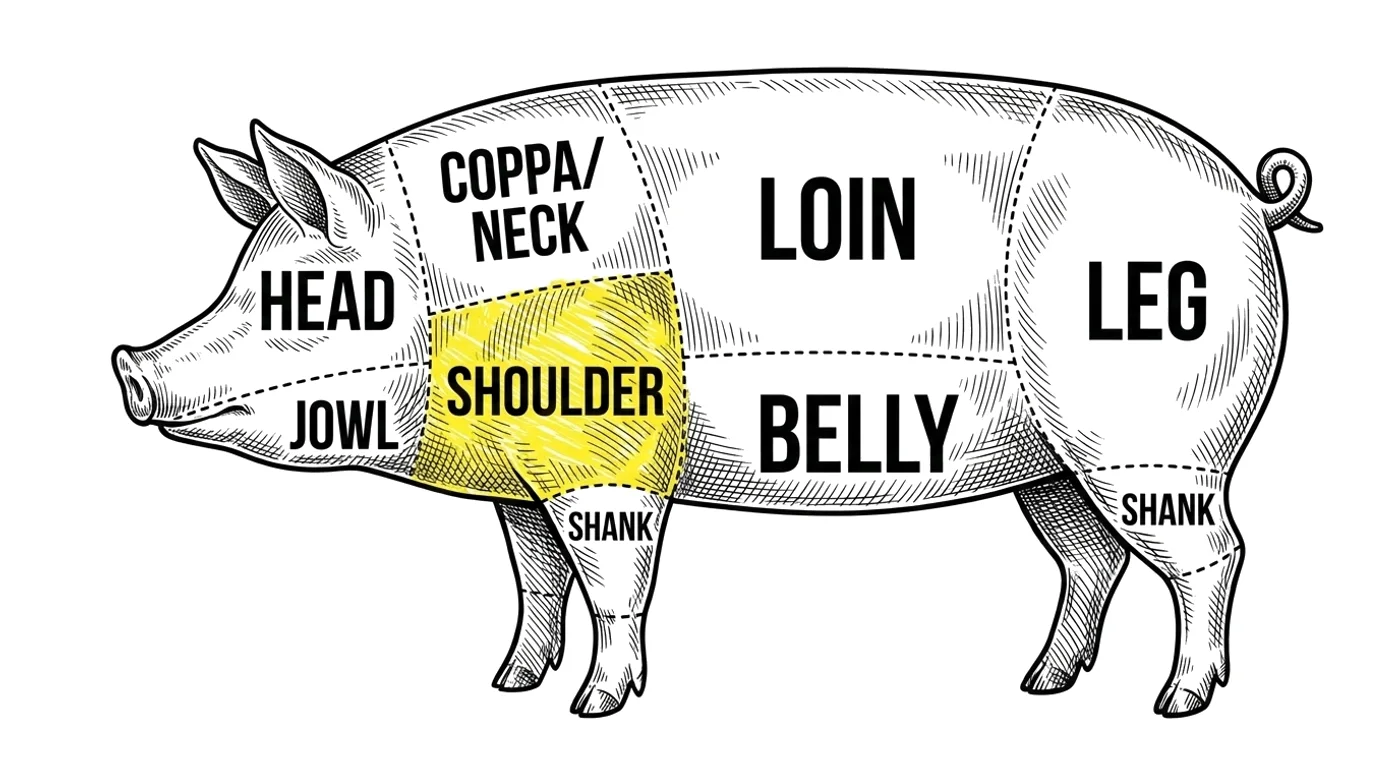
The cut
Identity and terminology
Służewiecka is an adjective formed from Służewiec, the Warsaw district known internationally for its racecourse. The historical product name is best retained in Polish, including diacritics. Parzona means scalded and identifies the cooking class. The place association is evidence of terminology, not proof of a protected geographical indication or a requirement that every sausage be produced within the district. The source provides no basis for such exclusivity.
Composition and characteristics
Semi-fat pork forms most of the filling and is kept in conspicuous coarse particles. Beef is ground and fine-cut with ice to build a sticky phase that locks those pieces together. The result should be a firm but juicy broad slice with a cured pink-red interior, small dispersed fat and a smoked brown casing. Because beef is only the binder, Służewiecka should not resemble a fine beef bologna or an emulsified frankfurter.
Production and process
Cold pork and beef are prepared separately. Curing salt is worked through the complete animal block, while the beef fraction receives the spices and is reduced to a smooth adhesive batter. The two are combined without destroying the coarse pork. After tight filling into a beef middle or fibrous casing, refrigerated curing replaces ambient hanging. Smoke supplies surface colour and aroma, scalding establishes the cook, and controlled cooling follows immediately.
History and regional forms
A Polish technical classification from the 1960s lists służewiecka with śląska, zwyczajna, bieszczadzka, mazowiecka and umowna among non-durable sausages. That placement supports a distinct historical identity and confirms that it was not a dry salami. It does not make the archived manufacturing system current legislation. Evidence for an older local Służewiec craft origin is limited, so the Atlas avoids inventing a racecourse vendor, named butcher or exact date.
Use, storage and related products
Slice Służewiecka across its broad diameter for sandwiches, cold platters or a warm meal with bread, mustard and pickles. Gentle reheating is preferable to boiling, which can squeeze moisture from the coarse matrix. Refrigerate the intact sausage and cover the cut surface. It differs from Kiełbasa Śląska in calibre and architecture, from Serwolatka Pieczona in its scalded finish, and from bologna-style sausages because it retains a visible pork grain.
The recipe for this product is in preparation and will be published once it has been verified.
Safety. Distribute Cure #1 through pork and beef, keep the beef binding phase cold, verify the centre of the thick log and complete rapid chilling.