
Kiełbasa Tarnogórska Parzona Podsuszana
Also known as Tarnogórska, Tarnogorska Sausage
Silesia, Poland
Overview
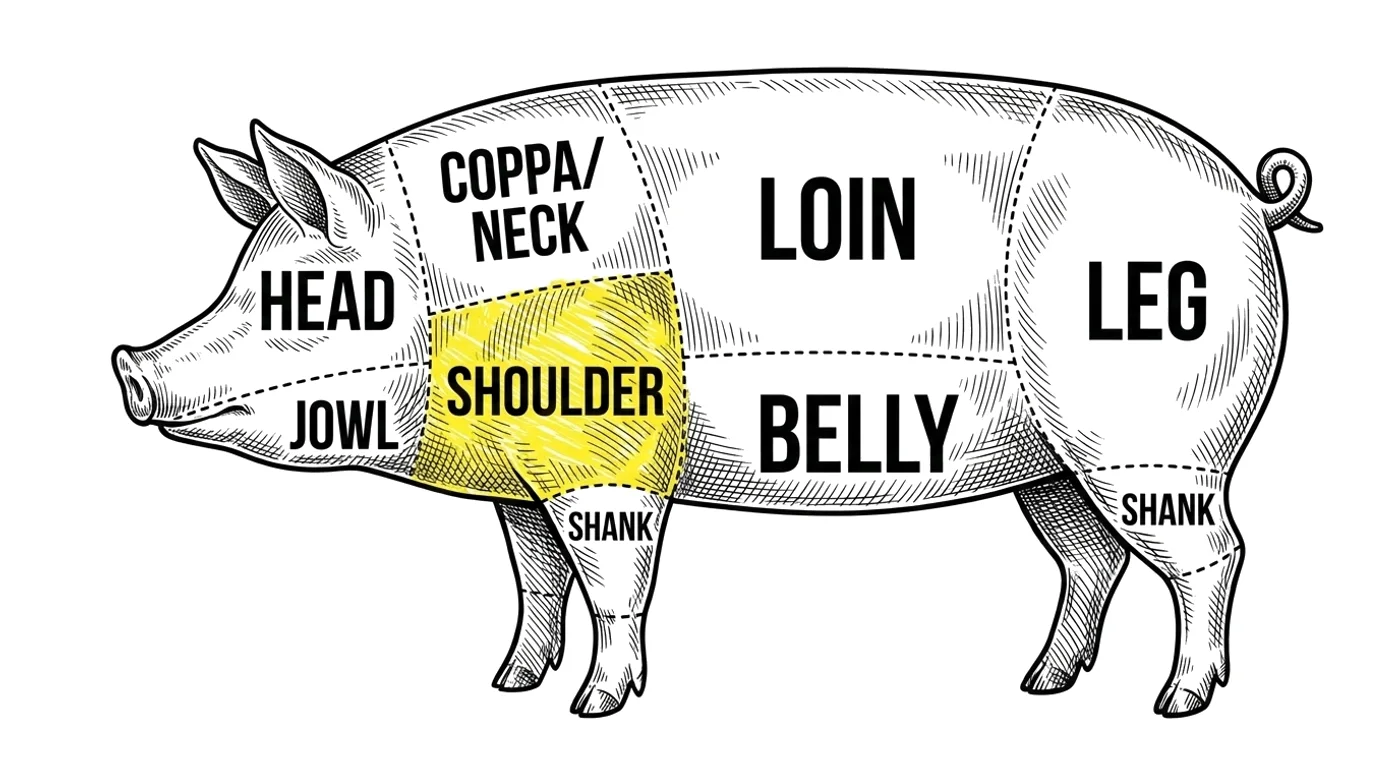
Kiełbasa Tarnogórska Parzona Podsuszana is a Polish semi-durable sausage formed as a ring, smoked, scalded and then lightly dried. Its filling combines finely ground connective beef and semi-fat pork with a slightly larger jowl or hard-fat grain. Pepper, paprika and marjoram give the sausage a warm, savoury profile. The light post-cook moisture loss firms the slice and concentrates flavour, but the controlled home branch remains refrigerated rather than being declared shelf stable.
Where it's from
The cut
Identity and terminology
Tarnogórska points to Tarnowskie Góry in Silesia. It must not be confused with tarnowska, the adjective associated with Tarnów; the source places a veal Tarnowska sausage immediately after this record. Parzona means scalded and podsuszana means lightly dried. Retaining both process words prevents the product from being mistaken for a raw dry sausage or for an ordinary moist cooked ring. No protected geographical designation is claimed.
Composition and characteristics
Beef and semi-fat pork form a relatively fine adhesive body, while jowl or firm back fat appears as a slightly larger pale grain. The finished interior should be cured red with visible but controlled fat particles, and the ring casing should be light brown from smoke. Paprika supports colour without making the sausage chilli-hot; marjoram and pepper carry the aroma. Light drying produces a firmer bite, not the hard texture or pronounced tang of fermented salami.
Production and process
The meats are ground cold and mixed with salt, curing salt and seasonings before the fat is folded in. Refrigerated curing allows colour and flavour development without an ambient rest. After filling into a beef round or large hog casing, the ring is surface-dried, hot-smoked and gently scalded to a verified centre. It is then completely chilled, weighed and dried under refrigeration to a controlled post-cook yield. Direct fan blast is avoided because it would harden the surface before the centre equilibrates.
History and regional forms
A Polish official storage classification from the 1960s lists tarnogórska among semi-durable sausages, alongside toruńska, limanowska and other named products. That evidence establishes historical technical usage and the lightly dried class, but the old schedule is not a current protected specification. The source's ambient post-cook drying reflects earlier preservation practice. The Curesmith branch retains the target yield while moving the operation into a controlled cold chamber.
Use, storage and related products
Serve Tarnogórska in firm cross-cut slices with rye bread, mustard, horseradish or pickled vegetables. Its concentrated texture also suits travel food when kept cold. Refrigerate after drying and freeze surplus portions. It differs from Tarnowska through geography, meat composition and the absence of defining veal; from Toruńska through seasoning and technical identity; and from fermented Polish salami because Tarnogórska is fully cooked before its modest moisture reduction.
The recipe for this product is in preparation and will be published once it has been verified.
Safety. Correct Cure #1 to the full animal block, verify the cook, chill before drying, use 3–7°C controlled drying to the target yield and keep refrigerated.