
Kiełbasa Warszawska
Also known as Warsaw Sausage, Warszawska Sausage
Masovian Voivodeship, Poland
Overview
Kiełbasa Warszawska is a large Polish cooked-smoked sausage with visible lean pork cubes in a fine binding phase of beef and connective pork, plus medium back-fat pieces. The broad casing creates a deli-style baton intended for slicing. Black pepper leads the flavour, with restrained sweet paprika and coriander. Smoking adds a reddish-brown exterior before the sausage is gently scalded. It remains moist, cooked and refrigerated rather than fermented, dry or safe for ambient display.
Where it's from
The cut
Identity and terminology
Warszawska is the feminine adjective from Warszawa, Warsaw. The English description Warsaw Sausage is useful as an explanation but should not replace the Polish canonical name. Historical Polish technical material recognises Warszawska as a separate named product. That evidence does not create an EU geographical indication, nor does it prove that every sausage sold in Warsaw belongs to this formula. The Atlas treats it as a bounded Polish identity and avoids expanding the city reference into unsupported protected status.
Composition and characteristics
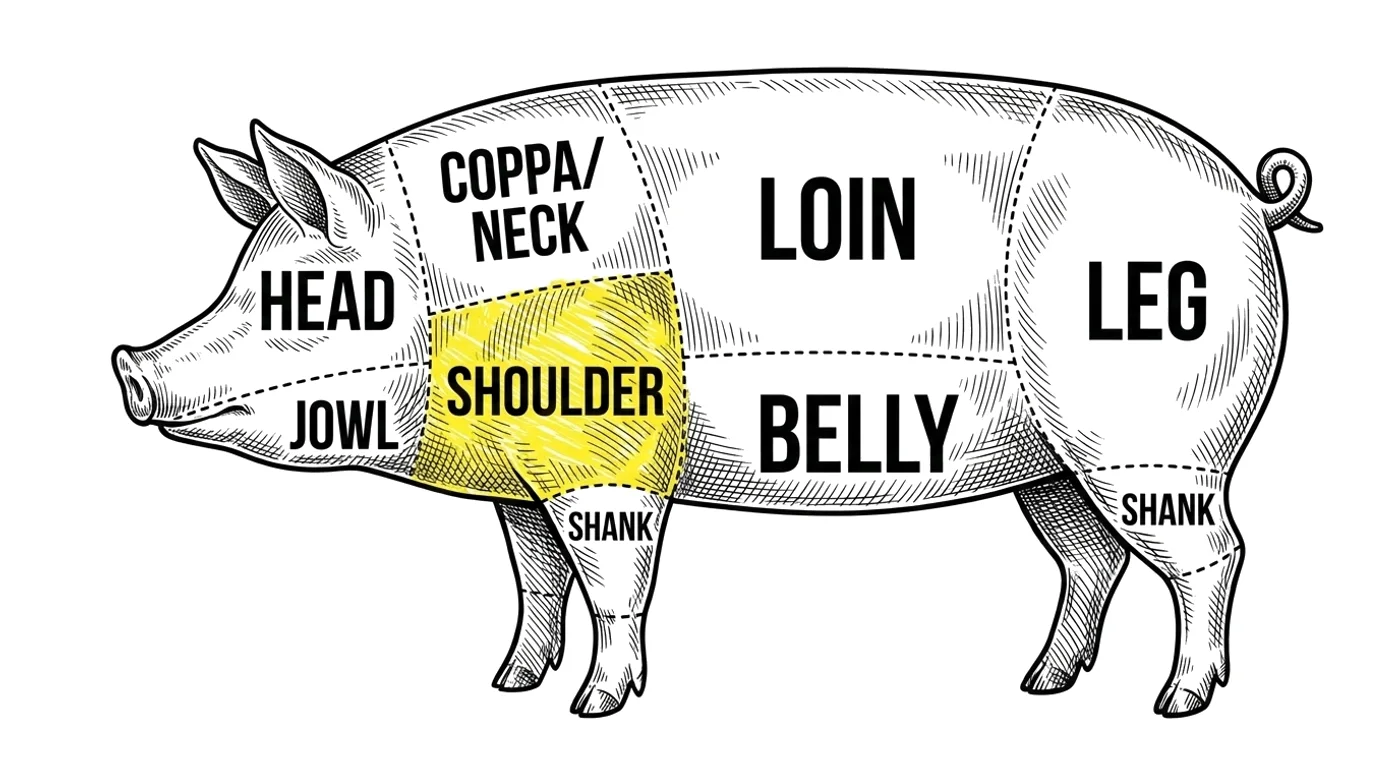
Lean pork makes up the visible majority and is diced rather than finely ground. A smaller fraction of lean beef and collagen-rich semi-fat pork is reduced with ice to bind the cubes. Firm fat ground at medium size supplies white points and succulence. The slice is therefore coarser than bologna but more cohesive than a loose rustic link. Pepper should remain obvious; paprika contributes warmth and colour, while coriander gives a faint citrus-spice note without overtaking cured pork and smoke.
Production and process
The lean pork receives salt and measured nitrite cure under refrigeration. Binding meat is ground finely and worked cold with ice and seasoning; fat remains partly frozen for clean cutting. Once the pork is adhesive, the fine phase and fat are added in sequence. The filled large casing is surface-dried under controlled cool air, hot-smoked and poached to a measured cold point. Cold-water showering may limit casing shrinkage, but complete controlled chilling is still required before packaging.
History and regional forms
City-named sausages formed an important part of Poland's documented twentieth-century meat-product classifications. Warszawska belongs beside Krakowska, Wawelska, Bydgoska and other names whose technical identities outlast any single manufacturer. The Warsaw association is meaningful, but the reviewed sources do not establish one inventor or an exclusive municipal guild specification. Preserving the historical name and compositional pattern is more accurate than inventing a ceremonial origin story or collapsing it into generic Polish sausage.
Use, storage and related products
Slice Warszawska for bread, mustard, horseradish and pickles, or warm thicker pieces without boiling hard. It differs from Wawelska because Warszawska contains semi-fat pork in its binder, more back fat, and paprika-coriander seasoning, while Wawelska uses more beef and allspice, nutmeg and garlic. It differs from Krakowska in its own meat proportions and standard identity. Keep the cooked baton properly refrigerated and freeze surplus promptly.
The recipe for this product is in preparation and will be published once it has been verified.
Safety. Keep Warszawska distinct from Wawelska, use measured Cure #1, replace ambient hanging with cool drying, cook to 71°C and refrigerate.