
Kiełbasa Żuławska Pieczona
Also known as Kiełbasa żuławska, Zulavska sausage, Żuławska baked sausage
Żuławy and northern Polish naming tradition, Poland
Overview
Kiełbasa Żuławska Pieczona is a Polish cured sausage combining medium-ground pork with a fine beef binding paste. It is formed in rings, smoked to a deep brown-red colour and finished by baking in the smokehouse. The slice shows distinct pork particles held in a finer matrix. Pepper, hot paprika, allspice and marjoram give a warm, gently aromatic profile.
Where it's from
The cut
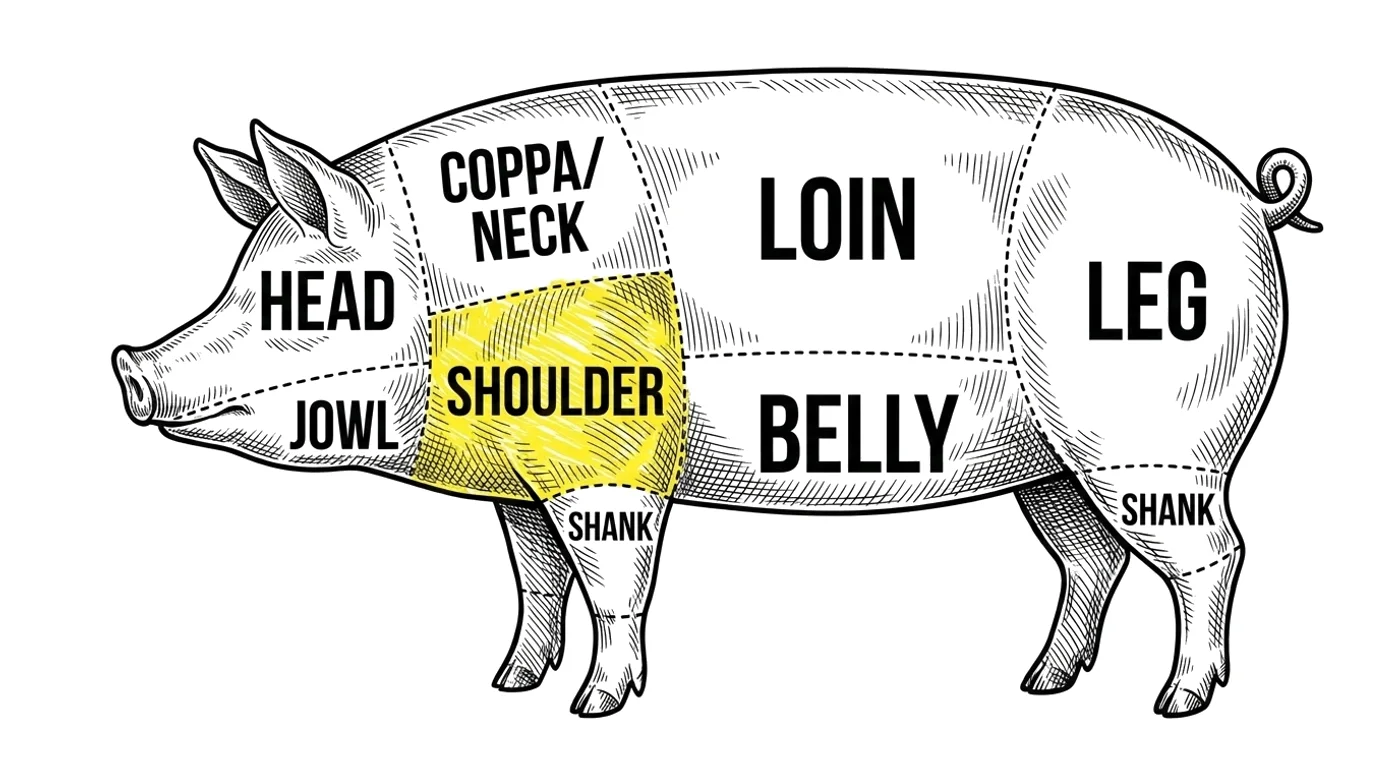
Identity and terminology
Żuławska links the name with Żuławy, the lowland delta region around the Vistula, while pieczona identifies the baked finishing method. Older English-language recipe collections often transliterate the name as Zulavska. The Atlas retains that spelling only as an alias and uses the Polish canonical title. Current official registers do not support presenting the name as an EU geographical indication.
Composition and characteristics
The structural formula uses well-trimmed but moderately fatty pork for the visible grain and several functional beef fractions for binding. Lean beef supplies colour and protein, while connective-tissue-rich trimmings strengthen the fine paste. A small addition of cold water assists emulsification. Nitrite cure establishes the cured colour and flavour expected in a smoked, baked Polish sausage.
Production and process
Meat classes from historical Polish standards must be translated carefully into actual cuts and functional properties. Pork is ground at a medium plate, beef is ground fine and then chopped with cold water and seasonings. The beef paste is mixed through the pork, stuffed into rings, surface-dried and smoked. Baking completes lethality; controlled chilling and refrigeration follow rather than historical ambient assumptions.
History and regional development
The name appears in the lineage of post-war Polish meat-product classifications, a system that defined sausages through animal classes, particle size and thermal process. That background makes the product a useful historical technical identity even when modern commercial formulas vary. Regional wording alone is not evidence of protected status, and the article avoids claims of an unbroken local monopoly or certified traditional production.
Use, storage and related products
Serve the sausage cold in slices or warm it gently as part of a mixed Polish meal. Its ring form, beef-bound pork grain and baked smokehouse finish distinguish it from finely emulsified parówki and from dry fermented sausages. Keep the cooked sausage chilled, wrap cut surfaces and use clean slicing equipment. Related products include Żywiecka, Zwyczajna and other smoked Polish ring sausages.
The recipe for this product is in preparation and will be published once it has been verified.
Safety. Weigh cure accurately, translate historical meat classes functionally, verify the baked cold point, chill rapidly and refrigerate.