
Kiełbaski Porcjowe Parzone
Also known as Kiełbaski porcjowe, Sausage Links, historical Polish technical form
Poland
Overview
Kiełbaski porcjowe parzone are historical Polish portion sausages with a fine cured beef-and-pork matrix and small visible cubes of firm fat. They are stuffed into hog casing, linked into individual portions, hot-smoked and scalded. The English title Sausage Links is too broad for an encyclopaedic identity, because almost any linked sausage could carry it. The Polish technical name preserves the product's period, composition and processing class.
Where it's from
The cut
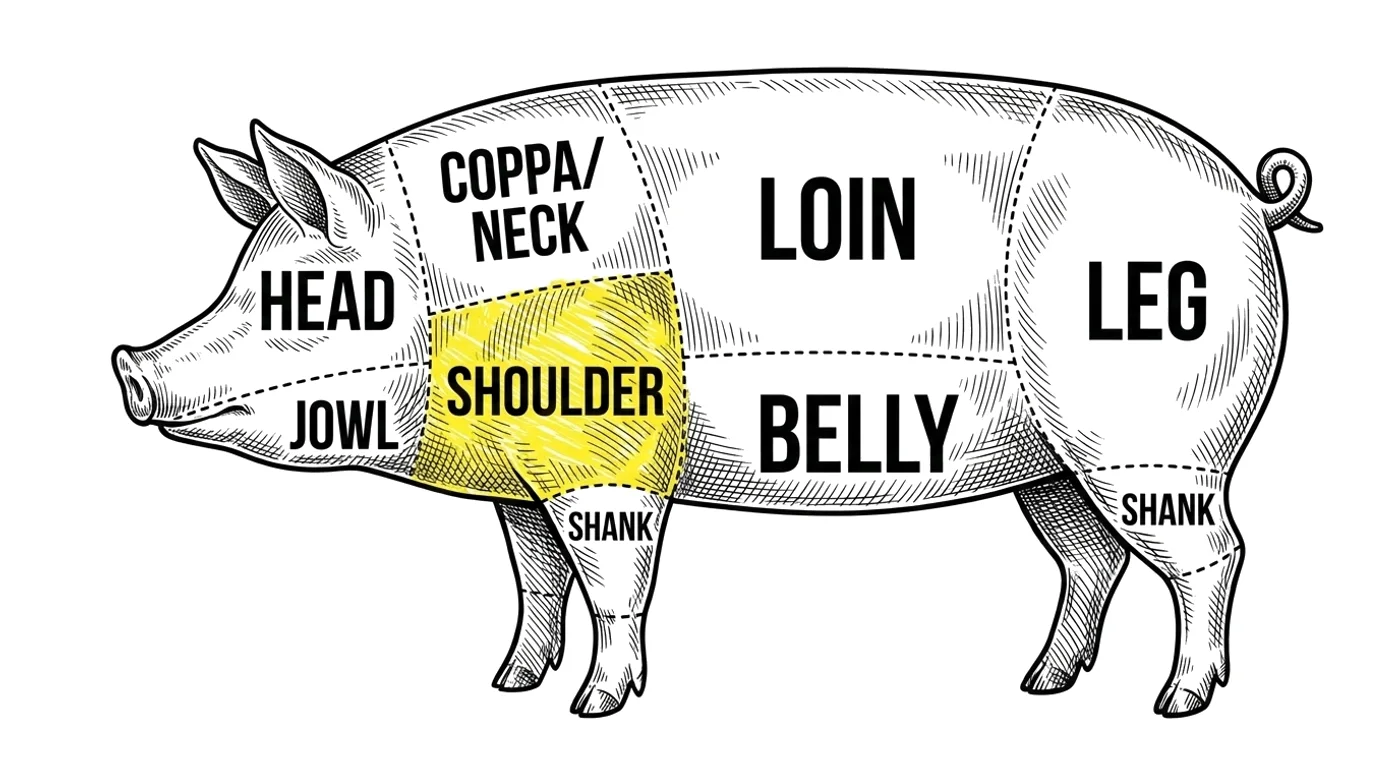
Identity and terminology
Kiełbaski is the diminutive plural of kiełbasa, porcjowe means portioned, and parzone identifies scalding or poaching. The phrase therefore describes small portion sausages that are heat treated. Historical standards place them among fine, perishable cooked sausages alongside serdelki and parówkowa. That position does not make them synonyms. Parówki use a narrower service form, while serdelki and serdelowa have their own calibre, meat quality and presentation traditions.
Composition and characteristics
Beef forms the largest share and supplies the adhesive fine matrix. Connective pork adds cooked gel and pork flavour, while firm fat appears both emulsified and as small pale dice. Pepper, paprika, coriander, white mustard seed and garlic give a gentle but recognisable spice profile. The casing is broader than a typical frankfurter and each link is portioned by weight. A cut surface should be cohesive and pink, dotted with small fat cubes rather than completely uniform.
Production and process
The beef, pork and most of the fat are ground fine and comminuted with ice, curing salt and spices. A reserved fraction of fat is diced and folded through the bound batter. The mixture is stuffed into hog casing, linked, surface-dried and hot-smoked. Scalding supplies the lethality step and rapid chilling fixes the fat pattern. The sausage remains refrigerated and is commonly warmed in hot water for service, but should not be boiled hard.
History and regional forms
The product belongs to the standardised Polish meat industry of the post-war period. Official Polish measures from the 1960s list kiełbaski porcjowane among short-keeping sausages and distinguish versions with and without semolina. Separate official cooling-loss tables also name kiełbasa porcjowa. These records establish a historical technical category rather than a modern protected regional speciality. The Atlas retains that administrative history without presenting the formula as the only contemporary Polish link sausage.
Use, storage and related products
Serve the cooked link warmed gently with bread, mustard or simple cold accompaniments. Refrigeration remains necessary despite curing and smoke. Kiełbaski Porcjowe differ from American hot dogs through casing, size and historical standard, from Parówki through calibre and fat mosaic, and from Serdelki through their specific beef-led formula and seasoning. The generic source title is kept only as a search alias.
The recipe for this product is in preparation and will be published once it has been verified.
Safety. Declare mustard, distribute Cure #1 accurately, cook to a measured centre, cool rapidly and keep refrigerated.