
Overview
Kolbász is a vivid red sausage with coarse pork and white fat, paprika, garlic, caraway and clean smoke. heat may range from mild to assertive. A vivid red sausage with coarse pork and white fat, paprika, garlic, caraway and clean smoke. Heat may range from mild to assertive. The Codex treats it as a complete production system, not merely a familiar name. Raw material, cut or particle size, casing, smoke, fermentation, cooking and maturation all contribute to the identity. The current status is Generic Hungarian sausage family : no generic GI. The protected or traditional reference and the Curesmith home method remain separate.
Where it's from
The cut
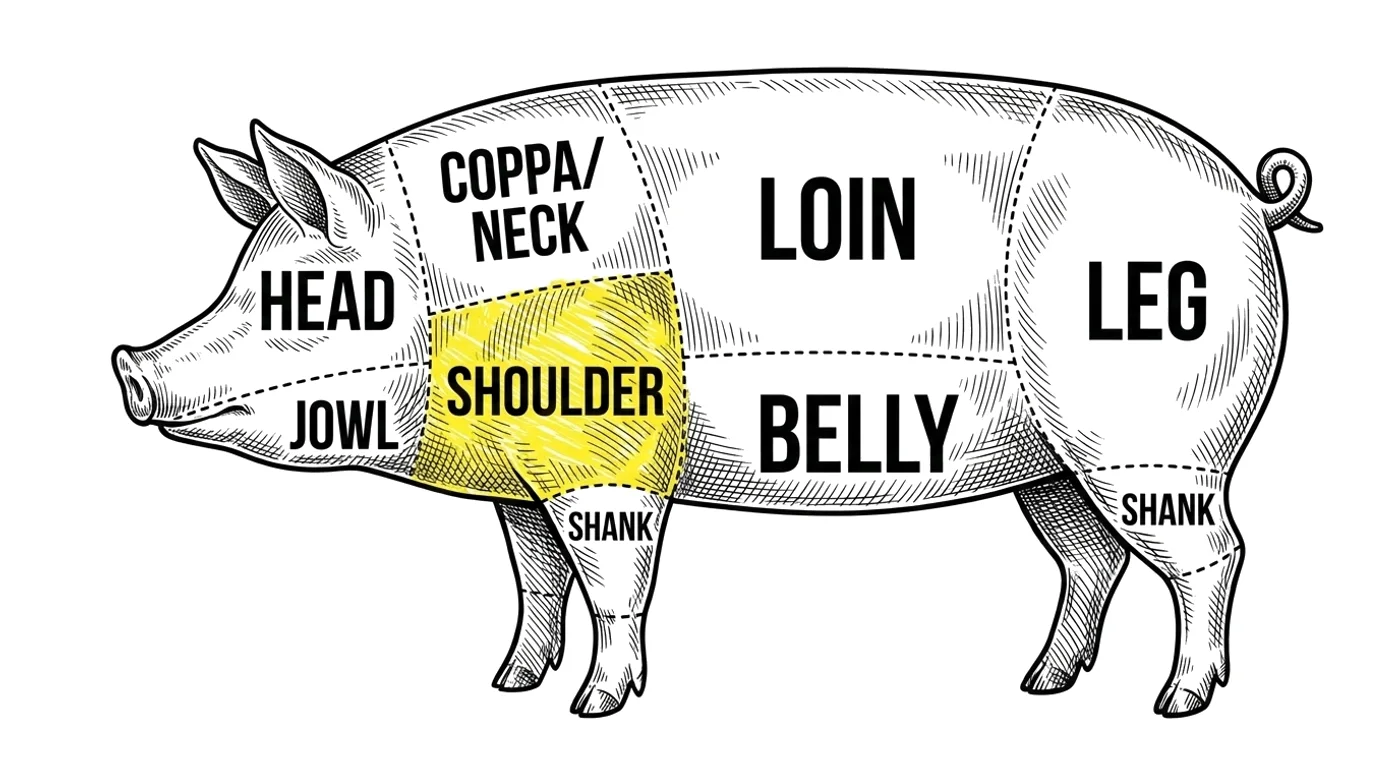
How to recognise it
A vivid red sausage with coarse pork and white fat, paprika, garlic, caraway and clean smoke. Heat may range from mild to assertive. Grease smear, hollow pockets, case hardening, a wet centre, rancidity or uncontrolled dark mould is a production fault.
Origins and history
Kolbász is the Hungarian word for a broad sausage family, not one protected formula. Winter pig slaughter produced fresh, smoked and dried forms, while paprika transformed colour and flavour after peppers became established in Hungary during the early modern period. Garlic, caraway and smoke varied by household and region, and casing size determined whether a sausage was eaten quickly or matured for months. Békéscsaba and Gyula developed particularly famous styles, now protected separately as Csabai and Gyulai products. The generic Atlas entry records the wider paprika-and-garlic tradition without claiming those regional specifications or using their names as synonyms.
Serving and cultural significance
Slice dry Kolbász with bread and pickles, or add it to goulash, beans, potatoes and cabbage. The rendered paprika fat seasons an entire pot, so add extra salt and pepper only after tasting. Dry versions also appear on cold plates with onions and peppers, while softer or fresher regional forms should be cooked according to their own process.
Recipe and cure
This is not a finished recipe. It is a window into how this meat is traditionally cured. Before you follow any process, run it through one of our curing calculators so the salt, cure and timings are right and safe for your own batch.
Make this — the measured Curesmith version →The cure below is the traditional reference. “Make this” opens the measured Curesmith home recipe, scaled to your batch.
Traditional or protected production
Generic Kolbász has no single protected specification. Pork and firm fat are seasoned with paprika, garlic, caraway and pepper, stuffed and made as fresh, smoked, semi-dry or fully dried sausage according to regional practice. The Curesmith entry represents the dry fermented form. Gyulai and Csabai sausages have separate protected specifications and cannot be treated as interchangeable names for the generic family.
- Meat
- pork
- Cut
- minced
- Salt (%)
- 2.2 to 2.5%
- Curing salt
- Cure #1
- Other agents
- dextrose; sweet and hot paprika, garlic, caraway, black pepper
- Fermented
- Yes
- Target pH
- ~4.9
- Starter or mould
- lactic acid bacteria starter
- Smoked
- cold-smoked
- Target aW or weight loss
- ~30% weight loss
- Temperature (°C)
- ferment then dry 12 to 14
- Humidity (%)
- 72 to 75
- Maturation
- weeks
- Basis
- percentage of meat weight
- Style
- minced, cured, fermented and dried
Ingredients
- pork
- salt
- dextrose
- sweet and hot paprika
- garlic
- caraway
- black pepper
- Cure #1
Notes
- Nitrite at 156 ppm ingoing.
- Target roughly pH 4.9 through a prompt, clean ferment.
- Convert any volume spice measures to weight as a percentage of the meat.
- Kolbász is the general Hungarian word for sausage; the famed regional versions such as Gyulai and Csabai carry EU protected designations. Verify the designation before asserting it.
- Gyulai kolbász and Csabai kolbász hold EU PGI status; plain 'kolbász' is the generic term and is not itself protected.
Safety. A fermented sausage: the acid drop and drying carry the safety. Ferment promptly to close the early Staphylococcus aureus window.
In the Codex
What this product teaches, and where to read more.
Temple. Roof, pH