
Kosher Beef Sausage
Also known as Kosher-compatible beef sausage, All-beef kosher sausage
Generic
Overview
Kosher Beef Sausage is a process family rather than a single historical formula. Its defining requirement is compliance with kashrut across the meat, fat, casing, ingredients, equipment and supervision. The batch adds a cured smoked brisket-fat branch and an uncured cooked branch using vegetable oil. Their shared beef composition does not, on its own, substantiate a kosher label.
Where it's from
The cut
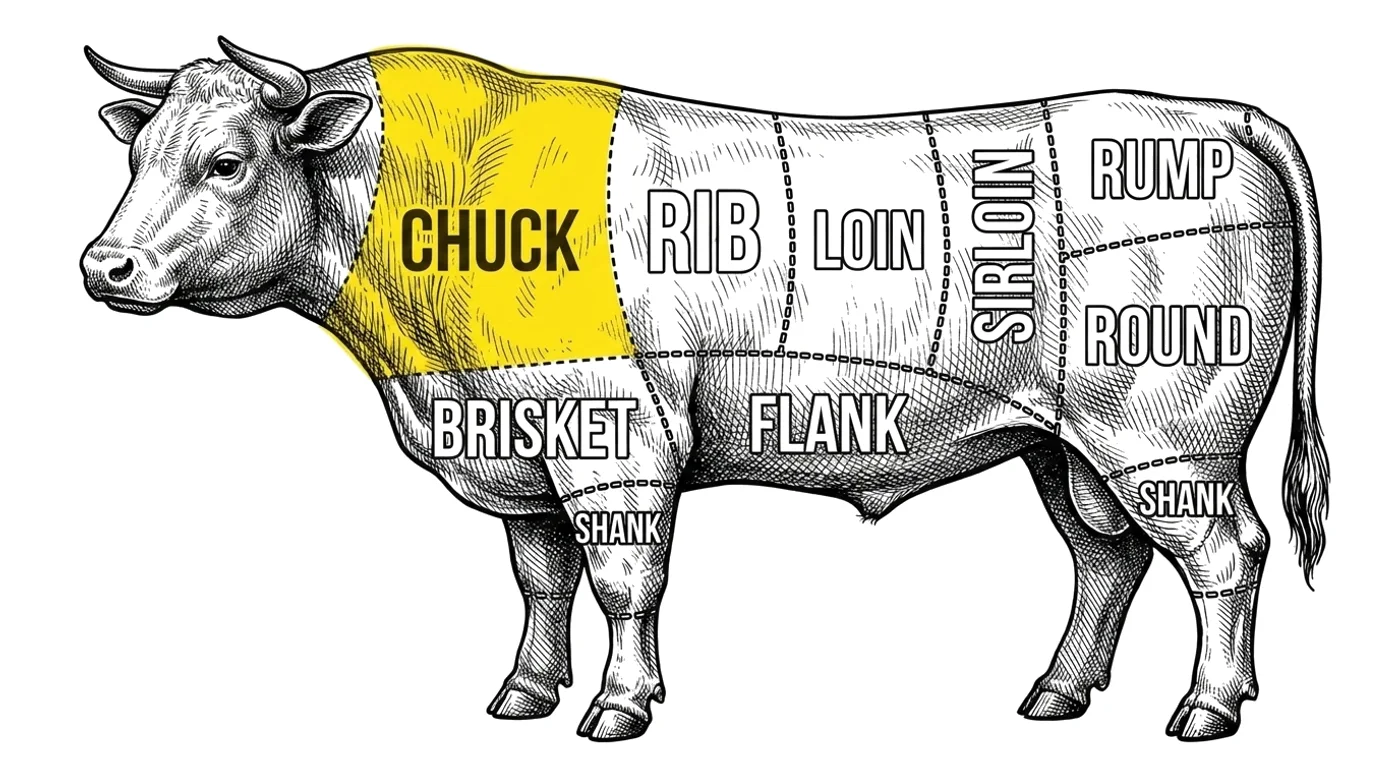
Identity and terminology
United States labelling guidance permits kosher wording for meat and poultry products prepared under rabbinical supervision. That boundary matters because apparently minor inputs can defeat the identity: a pork casing, non-certified seasoning carrier or shared equipment may conflict with the claim. The source oil recipe illustrates the problem by specifying hog casing, which the executable branch rejects.
Composition and characteristics
The smoked branch combines lean beef with firm brisket fat, paprika, pepper and garlic in a coarse cured link. The oil branch uses a fine beef protein matrix to hold a controlled addition of neutral vegetable or olive oil, producing a softer, paler and uncured slice. Beef middle, cellulose or certified synthetic casing replaces any pork-derived casing. Ingredient and process declarations must match the certification actually obtained.
Production and process
For the cured branch, chilled beef is mixed with weighed nitrite cure before stuffing, smoking and cooking. For the oil branch, salt-soluble beef proteins are extracted first, then oil is added gradually below the emulsion temperature ceiling. Both branches are cooked until the cold point reaches 71°C and cooled promptly. Production controls also include segregation, cleaning and documentary traceability required by the supervising authority.
History and regional forms
Jewish dietary law predates industrial sausage, but modern kosher meat processors adapted familiar sausage forms using permitted species, specialised slaughter and controlled processing. Beef fat and later vegetable oils replaced pork fat in many formulas, while non-pork casings enabled linked products. There is no universal seasoning or one national origin for Kosher Beef Sausage; the common identity is certification and controlled manufacture.
Use, storage and related products
Serve the smoked version sliced or gently reheated and the oil-emulsion version warmed or pan-browned after cooking. Both remain perishable. They differ from merely pork-free sausages because kosher status reaches beyond species, and from vegetarian kosher products because the meat process remains central. The merge should consolidate the earlier flour-extended beef recipe as another branch of this wider family.
Recipe and cure
This is not a finished recipe. It is a window into how this meat is traditionally cured. Before you follow any process, run it through one of our curing calculators so the salt, cure and timings are right and safe for your own batch.
Make this — the measured Curesmith version →“Make this” opens the same cure as a measured recipe, scaled to your batch.
- Meat
- Beef chuck and plate
- Cut
- Beef chuck and plate
- Salt (%)
- 1.8
- Curing salt
- Cure #1 as specified in the recipe
- Fermented
- No
- Starter or mould
- None; this product is not fermented
- Smoked
- Yes
- Maturation
- Refrigerate at 0–4°C; use within 4 days or freeze promptly
- Basis
- per 1,000 g beef chuck and plate
- Style
- cured smoked and cooked all-beef sausage requiring kosher certification for the claim
Ingredients
- Beef chuck and plate100% · 1000 g
- Beef brisket fat35% · 350 g
- Ice water5.9% · 80 g
- Fine salt1.8% · 24 g
- Kosher-certified Cure #1, 6.25% sodium nitrite0.24% · 3.5 g
- Black pepper0.2% · 2.5 g
- Sweet paprika0.2% · 2.5 g
- Fresh garlic0.35% · 4.5 g
Method
- Confirm certification and segregation of beef, fat, casing, cure, seasonings and equipment before starting.
- Chill beef and brisket fat to 0–2°C and grind through 10 mm.
- Dissolve cure in ice water and mix beef with salt, cure and water until tacky; add fat and seasonings.
- Fill the approved casing firmly and refrigerate 8–12 hours.
- Dry the surface and hot-smoke until a brown-red casing develops.
- Bake or poach until the cold point reaches 71°C.
Safety. Treat kosher status as a supervised supply-chain and process claim; prevent pork-casing substitution, cook to 71°C and refrigerate.