
Kosher Beef Sausage with Flour
Also known as kosher-compatible beef sausage with flour
Generic
Overview
Kosher Beef Sausage with Flour is a formula-defined beef sausage designed without pork, but the absence of pork does not by itself make a product kosher. Kosher status depends on the animal, slaughter, inspection, ingredients, casings, equipment and supervision.
Where it's from
The cut
Identity and terminology
Kosher is a religious compliance claim, not a flavour style. Beef must come from a permitted species and be obtained through shechita, then processed according to applicable requirements. Casings, spices, flour, additives and processing aids also require appropriate certification. An uncertified home formula should be described as kosher-compatible, not kosher.
Composition and characteristics
The sausage uses beef and beef fat with flour as a binder. The flour produces a dense, cohesive slice and distinguishes it from coarse all-meat beef sausages. Seasoning is generally restrained so the product can function as a basic fresh sausage.
Production and process
Certified production requires segregation from non-kosher materials and controls extending beyond the recipe. The chilled beef mixture is minced, bound with flour and liquid, stuffed into a certified casing or formed without casing, and sold as a raw product for cooking.
History and regional forms
Jewish sausage making adapted European sausage forms to the dietary laws of kashrut, replacing pork meat, pork fat and pork casings with acceptable alternatives. Commercial kosher meat processing expanded markedly in the nineteenth and twentieth centuries as urban Jewish communities and supervised factories grew.
Use, storage and related products
It may be grilled, fried or served with bread and mustard, but dairy accompaniments are incompatible with a meat meal under traditional kosher practice. It is related to kosher frankfurters and Romanian-Jewish beef sausages but has no single protected geographical origin.
Recipe and cure
This is not a finished recipe. It is a window into how this meat is traditionally cured. Before you follow any process, run it through one of our curing calculators so the salt, cure and timings are right and safe for your own batch.
Make this — the measured Curesmith version →“Make this” opens the same cure as a measured recipe, scaled to your batch.
- Meat
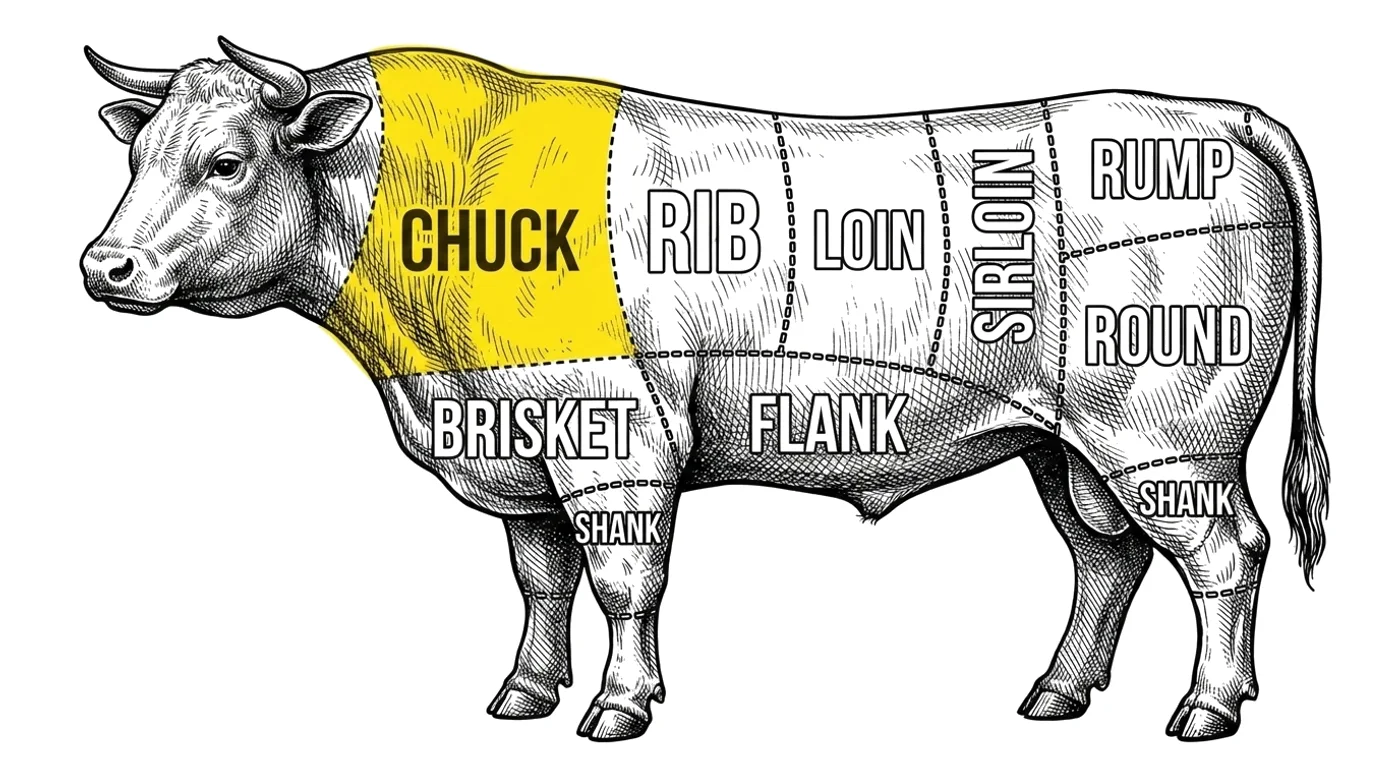
- Certified or otherwise suitable beef chuck
- Cut
- Certified or otherwise suitable beef chuck
- Salt (%)
- 2
- Curing salt
- None
- Fermented
- No
- Smoked
- No
- Maturation
- Raw sausage ≤4°C for up to 2 days; freeze for longer storage
- Basis
- per 1,000 g certified or otherwise suitable beef chuck
- Style
- Fresh beef sausage; cook before eating
Ingredients
- Certified or otherwise suitable beef chuck100% · 1000 g
- Certified or otherwise suitable beef suet30% · 300 g
- Potato starch or potato flour11% · 143 g
- Fresh onion, finely chopped3.3% · 43 g
- Fine salt2% · 25.5 g
- Ground black pepper0.22% · 3 g
- Ice-cold water22% · 285.5 g
Method
- Chill beef, suet, water and equipment to 0–3°C.
- Blend potato starch, salt and pepper into the measured cold water until smooth.
- Combine beef, suet, onion and slurry until uniformly coated.
- Pass the full mass through a 3 mm plate.
- Mix briefly until the mass is cohesive and tacky.
- Stuff into 28–32 mm suitable casings and form links.
Safety. Kosher certification is not a food-safety treatment. The sausage remains raw and perishable and must be fully cooked.