
Kümmelwurst, Cooked German Style
Also known as Kummelwurst, Boiled caraway sausage, Kümmelwurst-Kochen
Germany
Overview
Cooked German Kümmelwurst is a cured, smoked and poached sausage whose defining seasoning is caraway. The source form combines finely ground beef with coarser pork and a high proportion of firm back fat in hog casing. The finished link is rich, aromatic and sliceable, with caraway carried by smoke, cured meat and warm spice.
Where it's from
The cut
Identity and terminology
Kümmel is German for caraway, while Wurst means sausage. English sources often omit the umlaut and write Kummelwurst. The name describes flavour rather than one place, and it is used for more than one sausage process. This article controls the cooked German branch; dry or fermented sausages bearing the same seasoning name require separate recipe treatment.
Composition and characteristics
Fine beef supplies the primary protein bind. Pork and fat remain coarser, creating a pale pink mosaic rather than a uniform emulsion. Ground caraway leads the aroma, supported by white pepper, mace, coriander and ginger. With a large fat fraction, temperature discipline during grinding and mixing is essential to prevent smear and a greasy cooked texture.
Production and process
The beef is mixed first with salt and measured nitrite cure until tacky. Coarse pork and spices follow, and partly frozen back fat is folded in last. The casing is filled without air, refrigerated for curing, surface-dried and smoked. Gentle poaching finishes the cook before rapid cooling and chilled storage.
History and regional forms
German meat guidelines retain Kümmelwurst among established cooked-sausage descriptions and distinguish product groups by structure, casing and composition. That framework is more reliable than assuming every caraway-flavoured sausage is the same. Caraway's long partnership with rye bread, cabbage and fatty pork explains its particularly strong fit in this rich cooked link.
Use, storage and related products
Slice cold with rye bread, mustard and pickled vegetables, or warm gently and serve with sauerkraut or potatoes. The sausage is not a dry snack stick and should not be stored at room temperature. It also differs from simple Kümmel-flavoured bratwurst because it is cured, smoked and fully cooked before sale or service.
Recipe and cure
This is not a finished recipe. It is a window into how this meat is traditionally cured. Before you follow any process, run it through one of our curing calculators so the salt, cure and timings are right and safe for your own batch.
Make this — the measured Curesmith version →“Make this” opens the same cure as a measured recipe, scaled to your batch.
- Meat
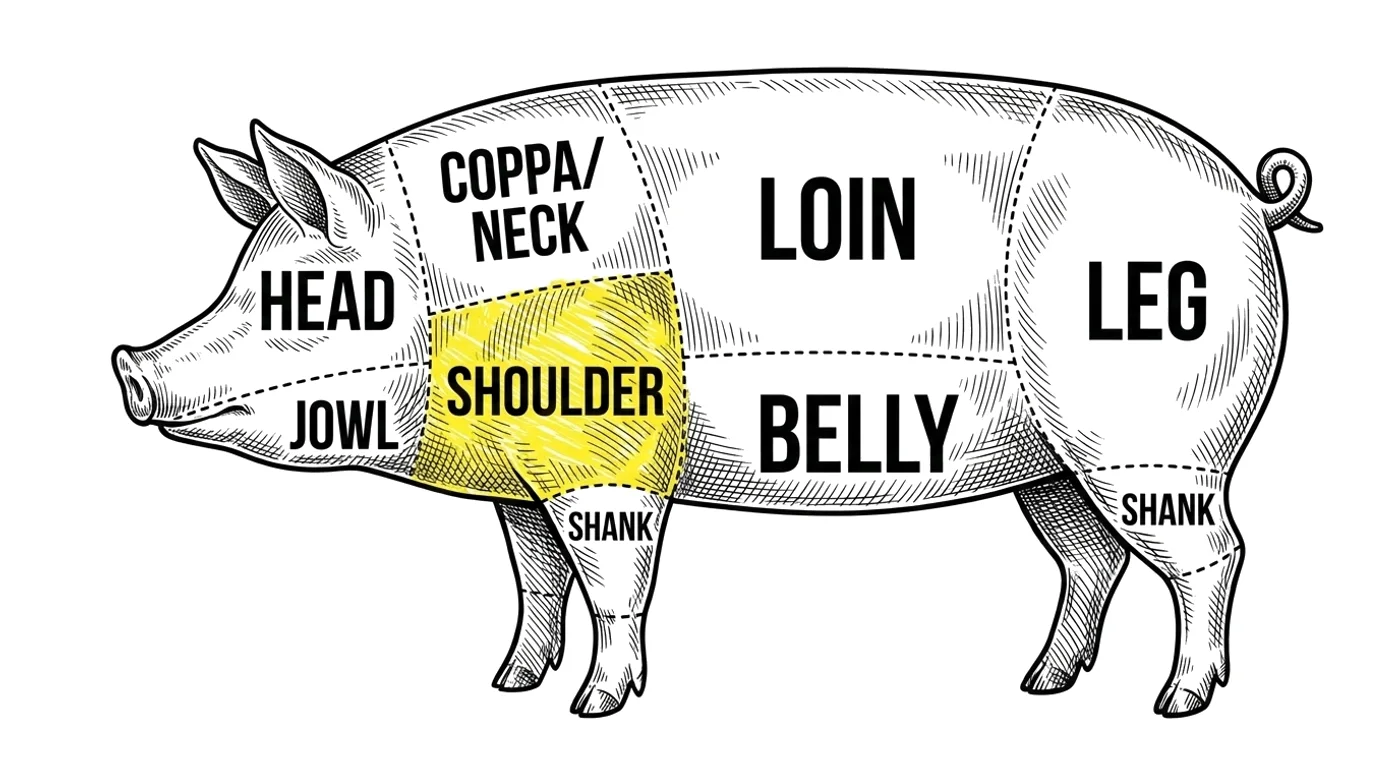
- Pork shoulder
- Cut
- Pork shoulder
- Salt (%)
- 1.6
- Curing salt
- Cure #1 as specified in the recipe
- Fermented
- No
- Starter or mould
- None; this product is not fermented
- Smoked
- Yes
- Maturation
- Refrigerate at 0–4°C; use within 4 days or freeze promptly
- Basis
- per 1,000 g pork shoulder
- Style
- cured smoked and cooked German caraway sausage
Ingredients
- Beef chuck65% · 650 g
- Pork shoulder100% · 1000 g
- Pork back fat90% · 900 g
- Fine salt1.6% · 40 g
- Cure #1, 6.25% sodium nitrite0.25% · 6.5 g
- Ground white pepper0.2% · 5 g
- Ground mace0.05% · 1.5 g
- Ground coriander0.05% · 1.5 g
- Ground ginger0.03% · 0.8 g
- Ground caraway seed0.1% · 2.5 g
Method
- Chill all animal materials to 0–2°C, grind beef through 3 mm and pork and fat separately through 10 mm.
- Mix beef with salt and Cure #1 until a strong tack develops.
- Add pork, pepper, mace, coriander, ginger and caraway, then fold in back fat.
- Fill hog casing, remove air and refrigerate 8–12 hours.
- Dry the casing and hot-smoke at about 60°C until evenly coloured.
- Poach at 78–80°C until the cold point reaches 71°C.
Safety. Keep the fat cold, cure on the complete animal block, cook to 71°C and distinguish the cooked branch from dry Kümmelwurst.