
Overview
Liver pâté is a cooked liver-based paste or spread. It usually contains liver, boneless meat, fat and seasonings and is packed in a jar, mould, terrine, tin or other container rather than presented as a conventional sausage. Texture ranges from very smooth and emulsified to rustic and coarse.
Where it's from
The cut
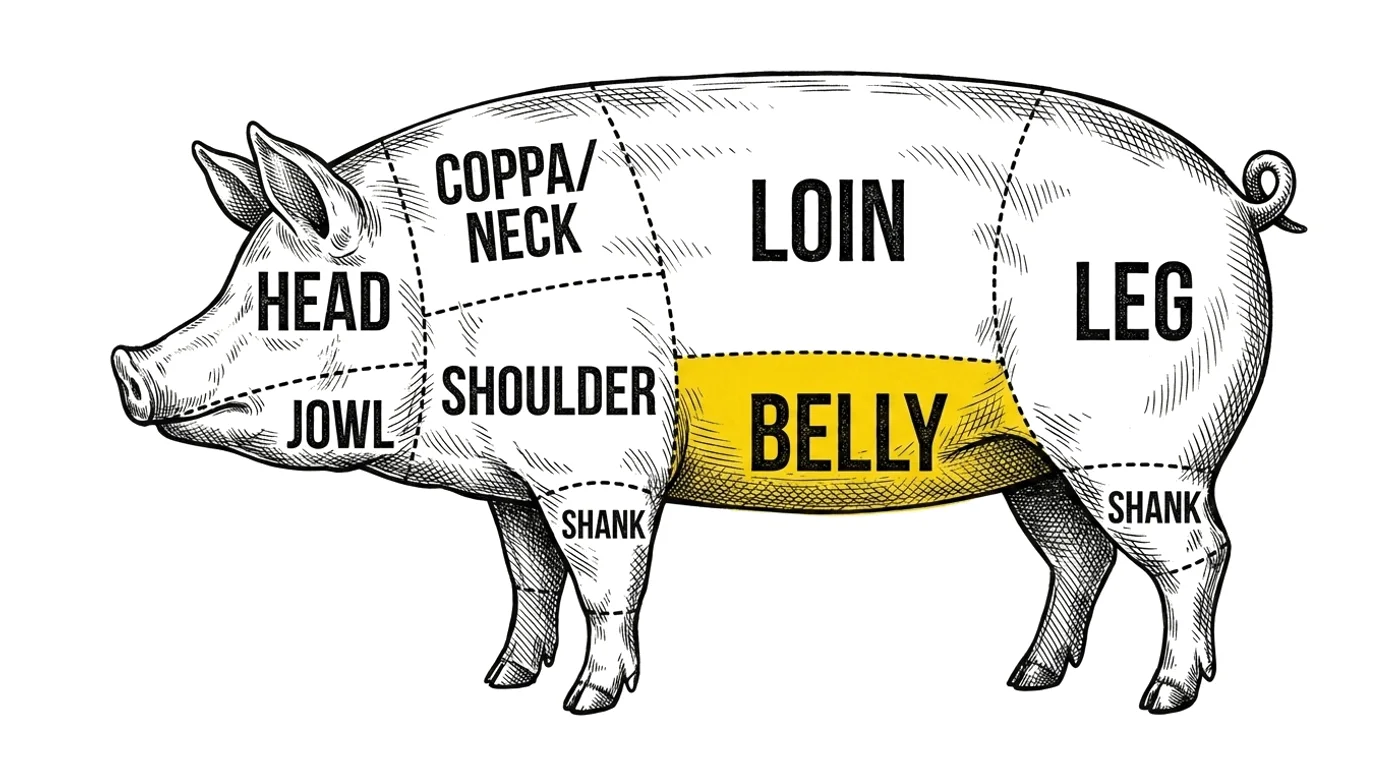
Identity and terminology
The generic English term overlaps with liver paste, liver spread and pâté de foie in regulatory standards. Canadian and United States standards use minimum liver and protein rules for named commercial products. Liverwurst is a sausage family and may be spreadable, but casing, texture and national identity distinguish it from pâté. Liver terrine is typically a mould-cooked, sliceable product with a more visible structure. Foie gras is a separate raw-material and legal identity.
Composition and characteristics
Common raw materials include pork, poultry or veal liver, lean meat, pork fat or butter, onions and aromatics. Smooth products use fine comminution or emulsification; coarse products retain small pieces. Alcohol, herbs, cream, eggs or binders may be used in particular recipes. The finished pâté should have an even set, clean liver aroma and a texture appropriate to spreading or slicing.
Production and process
Liver and meat are trimmed, chilled and prepared according to the chosen structure. Ingredients may be sautéed, precooked or mixed raw before filling a mould or container. The pâté is cooked until the centre reaches 74°C, often in a water bath for gentle heat transfer. It must be protected from post-cook contamination, cooled rapidly and refrigerated. Commercially sterile canned pâté follows a different validated retort process.
History and regional forms
European cookery developed many liver forcemeats, pastry-enclosed pâtés and terrines. Industrial meat standards later formalised liver paste and liver spread as distinct commercial products. Modern liver pâté therefore includes classical restaurant preparations, refrigerated retail spreads and shelf-stable canned products, which should not be treated as one process.
Use, storage and related products
Liver pâté is served cold or at cool room temperature with bread, toast, pickles, fruit preserves or mustard. Refrigerated products must follow validated use-by and opened-pack instructions. Related entries include Liverwurst, Liver Terrine and Foie Gras. Each species or regional claim should be stated rather than inferred from the generic name.
Recipe and cure
This is not a finished recipe. It is a window into how this meat is traditionally cured. Before you follow any process, run it through one of our curing calculators so the salt, cure and timings are right and safe for your own batch.
Make this — the measured Curesmith version →“Make this” opens the same cure as a measured recipe, scaled to your batch.
- Meat
- Skinless pork belly
- Cut
- Skinless pork belly
- Curing salt
- None
- Fermented
- No
- Smoked
- No
- Basis
- per 1,000 g skinless pork belly
- Style
- Representative cooked pork-liver pâté; intentionally uncured to remove the source's imprecise 'pinch' cure instruction.
Ingredients
- Pork liver65% · 650 g
- Skinless pork belly100% · 1000 g
- Cooked onion, chilled8.1% · 133.5 g
- Fine salt1.8% · 30 g
- Black pepper0.15% · 2.5 g
- Pâté spice or quatre-épices0.15% · 2.5 g
- Heavy cream10.1% · 166.5 g
- Whole egg10.1% · 166.5 g
- Plain flour4% · 66.5 g
Safety. Liver pâté is generally a cooked, ready-to-eat and refrigerated product unless commercially sterilised in a sealed container. The thermal process, post-cook handling, cooling, packaging and shelf life must be validated for the actual product. Liver and species declarations must meet applicable standards; foie gras and protected products remain separate identities.