
Overview
Filipino Longganisa is a national family of fresh, cured, smoked and sometimes skinless sausages with strong town and provincial identities. The generic Curesmith recipe represents a sweet-sour garlic pork branch, not a single canonical Philippine formula.
Where it's from
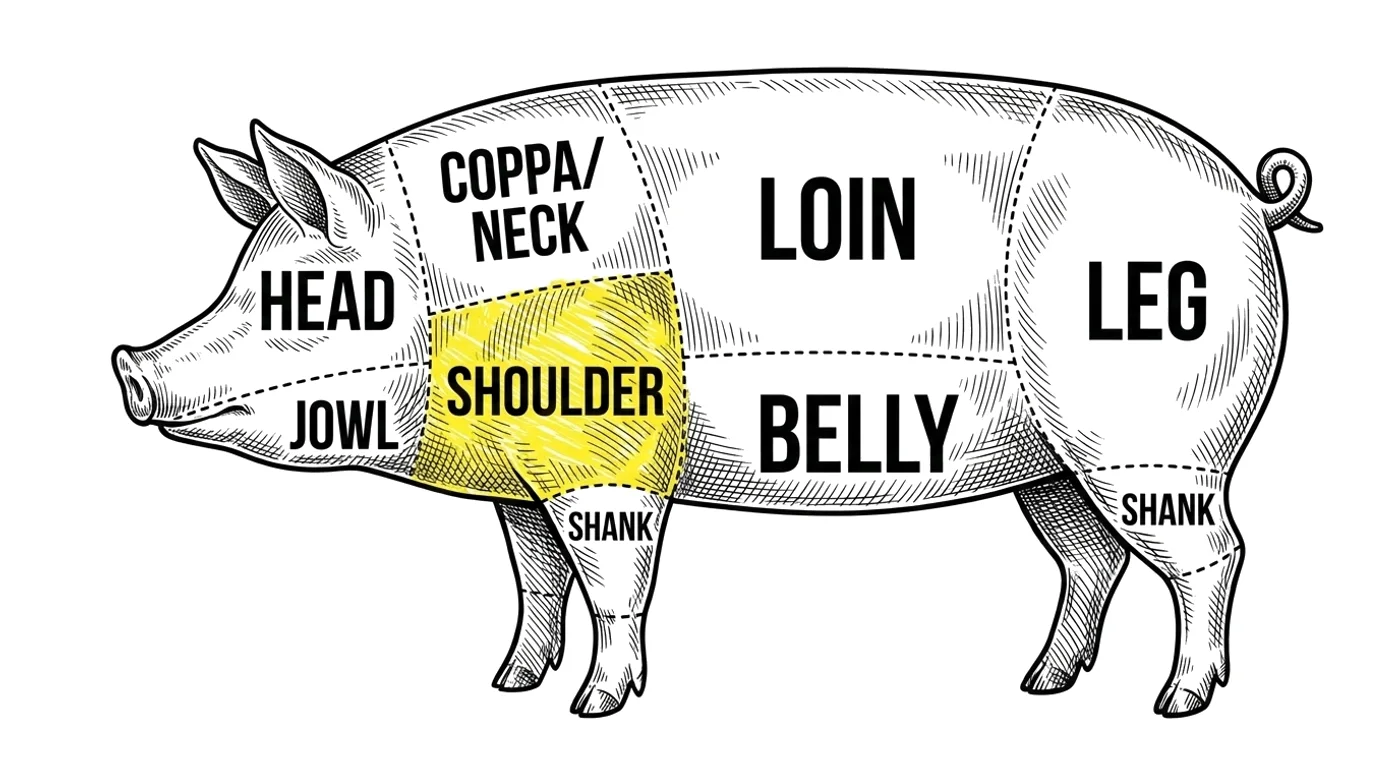
The cut
Identity and terminology
Longganisa derives from Spanish longaniza, but Filipino usage has developed its own spelling and categories. Hamonado versions are sweet, while de recado or derecado forms emphasise garlic, vinegar and savoury spice. Regional names should remain intact.
Composition and characteristics
Pork and diced fat are common, with garlic, vinegar, sugar, salt, pepper and annatto. Regional variants may use oregano, native vinegar, anise liqueur, chilli, chicken, beef or tuna. Links can be red, orange, pale or dark.
Production and process
The mixture is rested under refrigeration, stuffed into casing or formed as skinless links, then fried or simmered and browned. Some commercial forms are cured, but generic longganisa should not be assumed ready to eat.
History and regional forms
Spanish colonial sausage terminology was localised across the archipelago. Towns such as Vigan, Lucban, Guinobatan, Cabanatuan and regions such as Pampanga and Cebu developed recognisable versions, turning longganisa into a map of local taste.
Use, storage and related products
It is commonly served as longsilog with garlic rice and egg, with vinegar as a condiment. It differs from Spanish longaniza and from dry chorizo de Bilbao.
Recipe and cure
This is not a finished recipe. It is a window into how this meat is traditionally cured. Before you follow any process, run it through one of our curing calculators so the salt, cure and timings are right and safe for your own batch.
Make this — the measured Curesmith version →“Make this” opens the same cure as a measured recipe, scaled to your batch.
- Meat
- Pork shoulder
- Cut
- Pork shoulder
- Salt (%)
- 1.8
- Curing salt
- None
- Fermented
- No
- Smoked
- No
- Maturation
- Raw sausage ≤4°C for up to 2 days; freeze for longer storage
- Basis
- per 1,000 g pork shoulder
- Style
- Fresh sweet-sour garlic pork sausage
Ingredients
- Pork shoulder100% · 1000 g
- Pork back fat45% · 450 g
- Fine salt1.8% · 25.5 g
- Ground black pepper0.25% · 3.5 g
- Granulated sugar0.25% · 3.5 g
- Sweet paprika0.59% · 8.5 g
- Fresh garlic, minced0.69% · 10 g
- Dried oregano0.2% · 3 g
- Fresh onion, finely minced3% · 43 g
- White vinegar4.9% · 71.5 g
- Ice-cold water4.9% · 71.5 g
Method
- Chill pork, fat, vinegar, water and equipment to 0–3°C.
- Grind shoulder and back fat through 10–12 mm.
- Add salt, pepper, sugar, paprika, garlic, oregano, onion, vinegar and water; mix evenly.
- Stuff into casings and tie 10–12 cm links, or form skinless links on parchment.
- Refrigerate 4–12 hours at 2–4°C.
- Pan-fry or grill until browned and the cold point reaches 71°C.
Safety. Process status varies. Most household and market longganisa requires refrigeration and full cooking.