
Overview
Meat terrine is a mould-cooked charcuterie family made from seasoned meat and fat, usually as a coarse forcemeat, layered preparation or smooth emulsion. It is cooked in a terrine mould or similar container, chilled and sliced. The name describes a structural form and service style, not one meat species, garnish or universal recipe.
Where it's from
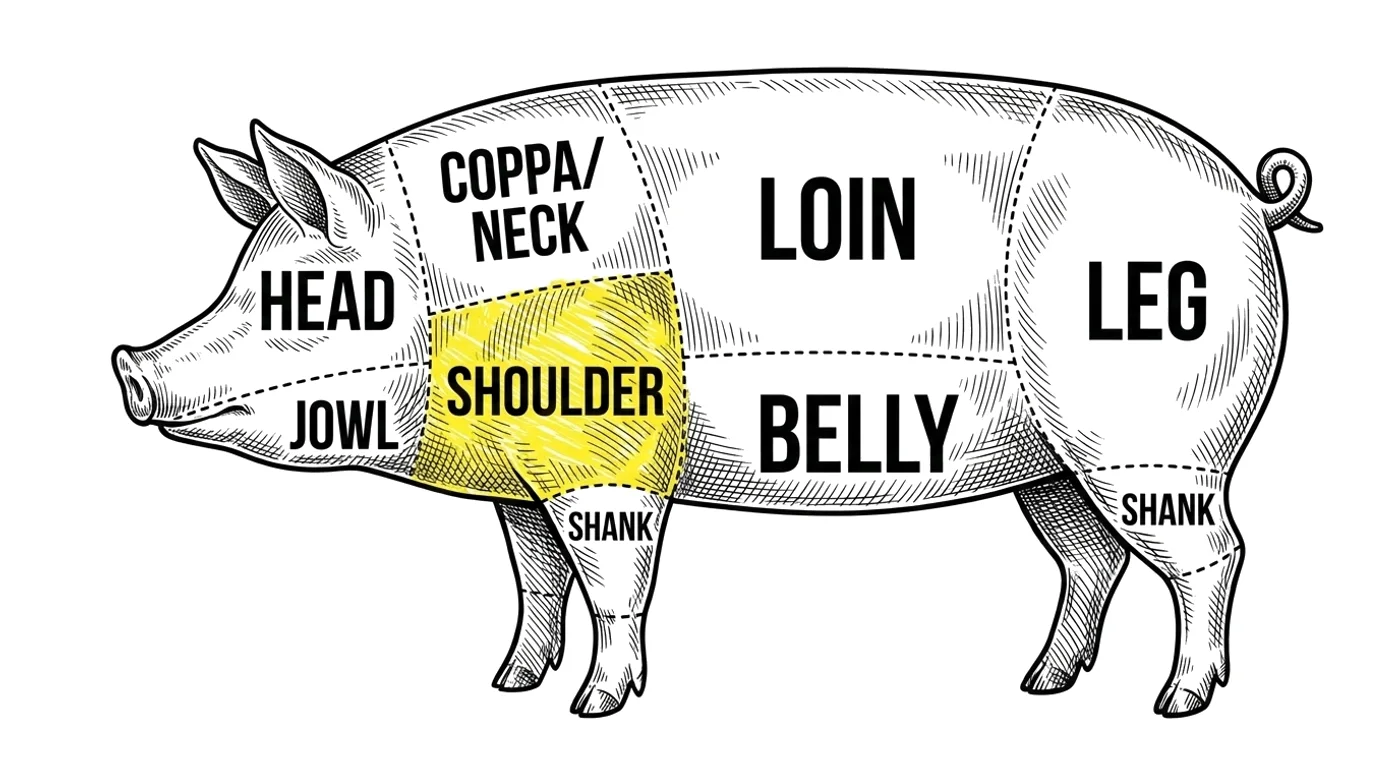
The cut
Identity and boundaries
The family excludes products whose defining identity lies elsewhere. Liver terrine and liver pâté require separate treatment when liver dominates the formula or texture. Seafood terrine has different raw materials and hazards. Pâté en croûte is enclosed in pastry, while galantine and ballotine use wrapped or rolled architectures. These pages should cross-link without being merged.
Composition and characteristics
Terrines may use pork, poultry, veal, rabbit, game or mixed meats with back fat, liver in a secondary role, eggs, dairy, panade, alcohol and visible garnishes. Texture ranges from rustic chunks to fine emulsions. A sound slice is cohesive and moist, with evenly distributed inclusions and no raw pockets, broken fat, excessive purge or large air gaps.
Production method
Ingredients are trimmed, chilled and prepared according to the intended texture, then seasoned and packed firmly into a lined or unlined mould. The terrine is covered and baked, steamed or cooked in a water bath until the cold point reaches 71°C. It is cooled rapidly, sometimes lightly pressed, matured under refrigeration and unmoulded or sliced for service.
History and cultural context
Terrine originally named the earthenware vessel and gradually came to name the preparation cooked within it. French charcuterie made the form central because it accommodates small cuts, offal, game and decorative garnishes while producing regular slices. Professional traditions later spread internationally, creating both rustic country forms and refined restaurant versions.
Culinary use and relationships
Meat terrine is served chilled as a starter, buffet item or charcuterie-board component with bread, mustard, pickles, fruit or salad. It may also be portioned for sandwiches. Related entries include liver pâté, seafood terrine, galantine and pâté en croûte. The distinction should be explained through mould, wrapper, pastry and dominant ingredient.
Recipe and cure
This is not a finished recipe. It is a window into how this meat is traditionally cured. Before you follow any process, run it through one of our curing calculators so the salt, cure and timings are right and safe for your own batch.
Make this — the measured Curesmith version →“Make this” opens the same cure as a measured recipe, scaled to your batch.
- Meat
- Pork shoulder
- Cut
- Pork shoulder
- Salt (%)
- 1.75
- Curing salt
- Cure #1/#2 as specified
- Fermented
- No
- Smoked
- No
- Basis
- per 1,000 g pork shoulder
- Style
- Cooked moulded rabbit-and-pork terrine.
Ingredients
- Rabbit meat60% · 600 g
- Pork shoulder100% · 1000 g
- Pork back fat40% · 400 g
- Fine salt1.7% · 35 g
- Cure #1 containing 6.25% sodium nitrite0.24% · 5 g
- Black pepper0.19% · 4 g
- Pâté spice0.14% · 3 g
- Whole egg9.6% · 200 g
- Heavy cream9.6% · 200 g
- Shelled pistachios8% · 80 g
Safety. Dense moulds heat and cool slowly. Keep the forcemeat cold, prevent contamination while packing, validate the centre cooking endpoint, cool rapidly and refrigerate. Pressing, alcohol, surface fat or aspic does not remove the need for time-temperature control and a defined refrigerated shelf life.