
Mombar Mahshy
Also known as Mombar, Mumbar, Egyptian stuffed intestine
Egypt
Overview
Mombar is an Egyptian stuffed-intestine dish in which cleaned sheep or beef intestine becomes both casing and a defining edible component. The filling is usually based on seasoned rice with herbs, onion and tomato, though meat-bearing versions also occur. The source record presents a beef-and-cooked-rice branch bound lightly with flour. Poaching cooks the filling; frying or pan-browning then creates the crisp exterior associated with service.
Where it's from
The cut
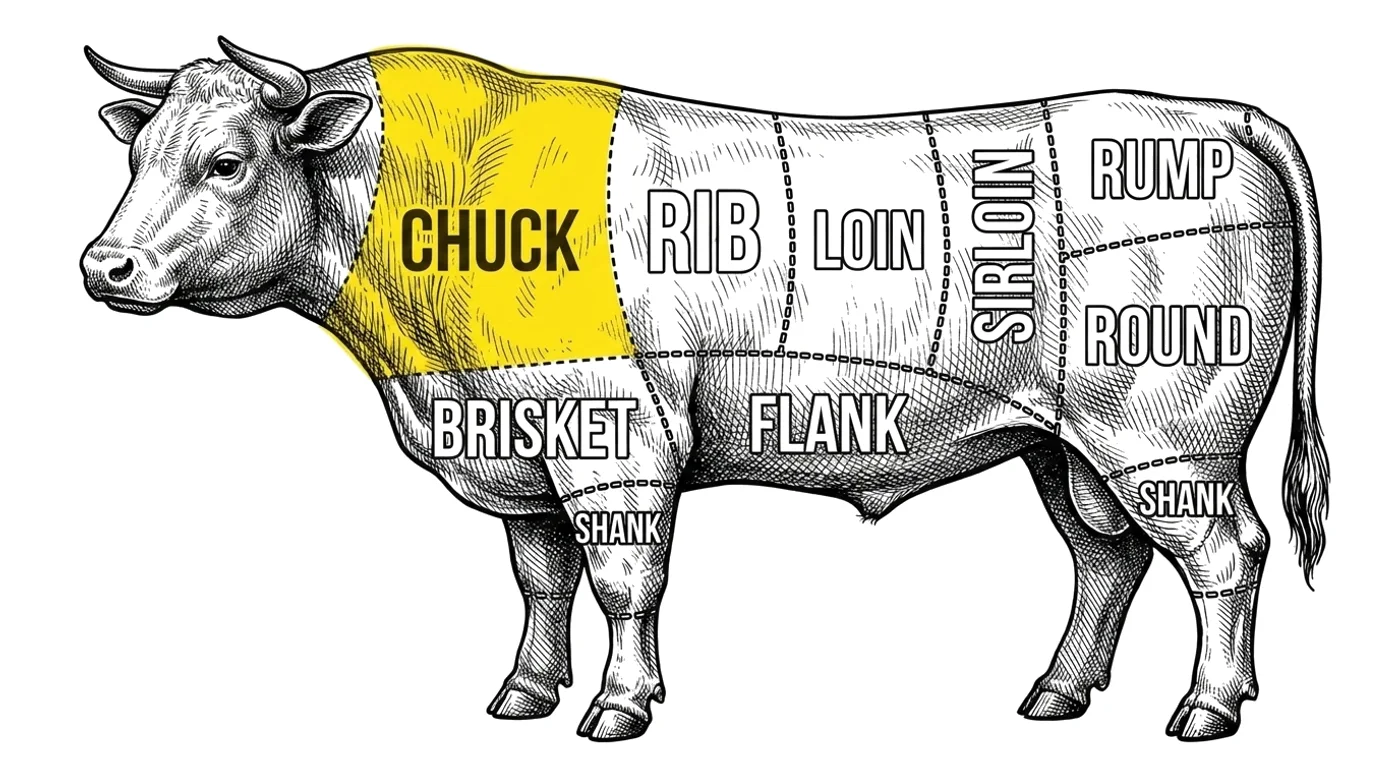
Identity and terminology
The Arabic name is commonly transliterated mombar or mumbar, while mahshy means stuffed. Related stuffed-intestine dishes appear across North Africa and Southwest Asia under names such as usban and fawaregh, but shared technique does not make them identical. Egyptian mombar is best understood as a family with regional and household variation, not as a single fixed industrial formula or a conventional European meat sausage.
Composition and characteristics
Good mombar balances a tender, fully cleaned casing with separate rice grains and an aromatic filling. Parsley, coriander, dill, onion, garlic, tomato and warm spices may shape the profile. A meat-rich branch is denser and more sausage-like, while rice-centred versions remain closer to other mahshi. The casing is stuffed loosely so expanding rice and steam do not split it during simmering.
Production and process
Preparation of the intestine is the critical craft step: it must be sourced for food use, cleaned thoroughly and kept cold. Filling ingredients are chilled and mixed without crushing the rice. Links are tied with expansion space and poached below a hard boil until both meat and centre reach a safe temperature. Controlled cooling follows when service is delayed; crisping takes place only after the poach.
History and regional forms
Mombar belongs to Egypt's broader culture of stuffed foods and communal meals. Rice, herbs and economical animal parts create a dish suited to family gatherings and celebratory tables. Modern tourism and food writing present it as recognisably Egyptian, but its history intersects with older Ottoman and regional stuffed-intestine traditions. The cultural connection is real. A single uncontested origin is not documented.
Use, storage and related products
Serve hot after pan-frying or shallow-frying until golden, with lemon, salad, pickles or other dishes from an Egyptian spread. Refrigerate cooked links promptly and reheat only the portion required. Keep the identity separate from merguez, which is a meat sausage without rice, and from blood sausage. The source's beef-heavy formula is one branch within mombar, not the complete definition.
Recipe and cure
This is not a finished recipe. It is a window into how this meat is traditionally cured. Before you follow any process, run it through one of our curing calculators so the salt, cure and timings are right and safe for your own batch.
Make this — the measured Curesmith version →“Make this” opens the same cure as a measured recipe, scaled to your batch.
- Meat
- Beef chuck
- Cut
- Beef chuck
- Salt (%)
- 1.7
- Curing salt
- None
- Fermented
- No
- Starter or mould
- None; this product is not fermented
- Smoked
- No
- Maturation
- Refrigerate at 0–4°C; use within 4 days or freeze promptly
- Basis
- per 1,000 g beef chuck
- Style
- Egyptian beef-and-rice intestine sausage, poached and crisped
Ingredients
- Beef chuck100% · 1000 g
- Cooked medium-grain rice, cooled28% · 285.5 g
- Plain wheat flour7% · 71.5 g
- Ice water7% · 71.5 g
- Fine salt1.7% · 17 g
- Ground black pepper0.28% · 3 g
- Fresh flat-leaf parsley, chopped1.7% · 17 g
- Ground cardamom0% · 0.4 g
- Ground allspice0.07% · 0.7 g
- Neutral vegetable oil2.1% · 21.5 g
Method
- Clean, rinse and inspect the intestine casing carefully; keep it chilled until stuffing.
- Chill beef and equipment to 0–2°C, then grind through 6 mm.
- Mix beef, cooled rice, flour, water, oil, salt, parsley and spices until cohesive.
- Fill the casing loosely, expel air and tie short links with expansion space.
- Poach gently at 78–80°C until the cold point reaches 71°C.
- Shower briefly and complete controlled chilling if not finishing immediately.
Safety. Use food-grade cleaned intestine, stuff loosely, poach to a verified 71°C cold point before frying, cool rapidly and refrigerate.