
Morcilla Blanca de Cazorla
Also known as Cazorla white sausage, White morcilla of Cazorla
Andalusia, Spain
Overview
Morcilla Blanca de Cazorla is a blood-free cooked sausage associated with the Cazorla area of Jaén in Andalusia. Lean pork and firm pork fat are extended with dry wheat bread, eggs and cream, then seasoned with garlic, parsley, white pepper, cinnamon, clove, nutmeg and saffron. The result is a pale, softly set link whose bread-and-egg body is more rustic than a fine cream-only white sausage.
Where it's from
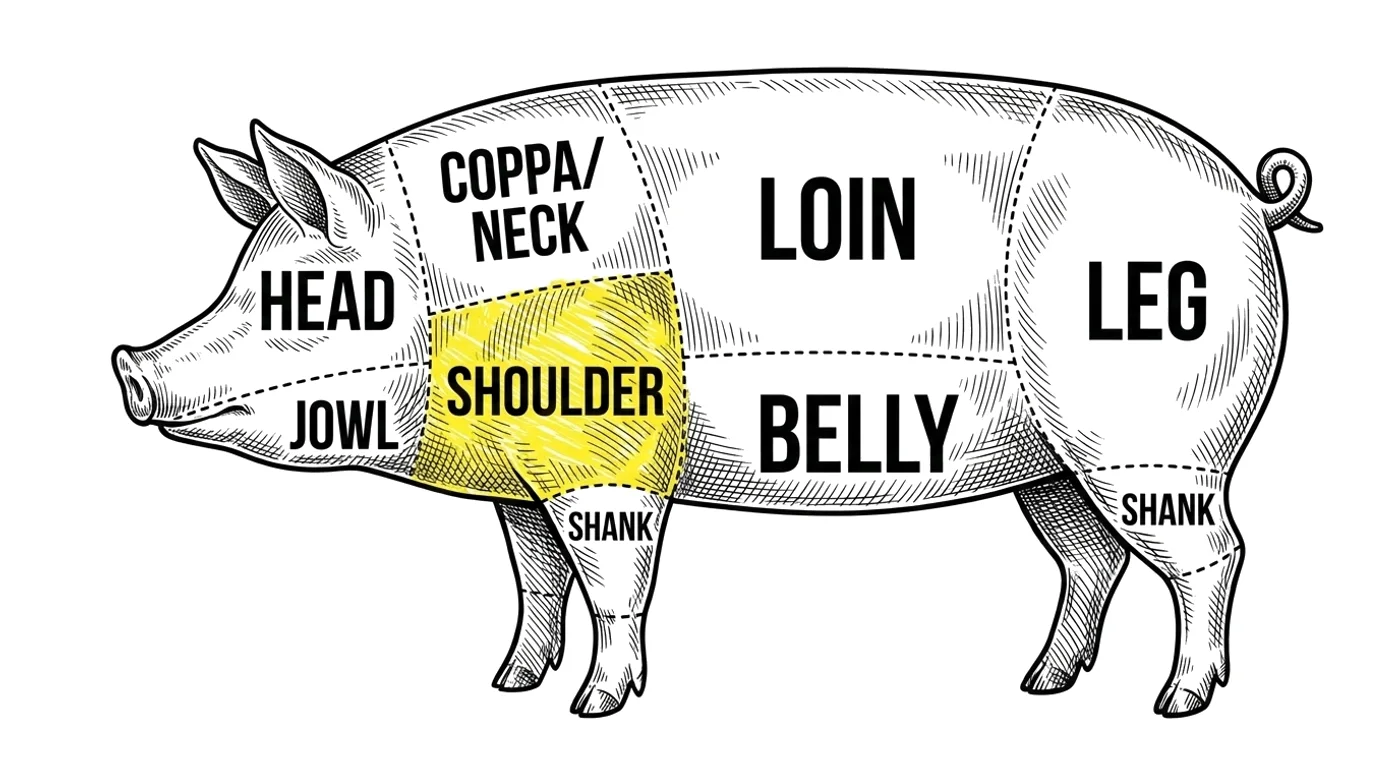
The cut
Identity and terminology
The geographical phrase de Cazorla identifies the local branch, but the batch found no current EU protected registration for the name. It should therefore be presented as a documented regional speciality without a PDO or PGI badge. The controlling family remains Morcilla Blanca because blood is absent; Cazorla's bread, garlic, parsley and saffron justify a separate article and recipe rather than an invisible note under the generic form.
Composition and characteristics
The cut face is ivory to light yellow, flecked with green parsley and, where enough saffron is used, a warm golden cast. Finely ground pork and fat bind with soaked bread, egg and cream into a tender but sliceable filling. Cinnamon, clove and nutmeg supply traditional sweet spice, while garlic and saffron prevent the profile from becoming dessert-like.
Production and process
Dry bread is soaked with controlled water and squeezed so hydration is reproducible. Chilled meat and fat are ground separately; eggs, cream, saffron infusion, garlic, parsley and spices are whisked before mixing. The casing is filled moderately because bread and egg expand. Poaching below boiling sets the link without rupture, after which controlled chilling protects the ready-to-eat product.
History and regional forms
Jaén food writing records morcilla blanca as a speciality of the province and its mountain districts, often noting egg and nuts in local versions. The Cazorla formula reflects that Sierra pantry: pork from household slaughter, preserved bread, eggs, mountain herbs and saffron. Historical recognition supports regional identity, but recipes varied by village and household, so one modern formula should not be promoted as the only authentic expression.
Use, storage and related products
Eat cold, warm in water, fry or grill until the casing colours lightly. Bread and egg make the interior fragile, so hard boiling and aggressive turning can split the links. Refrigerate promptly and declare wheat, egg and milk. Keep it distinct from black morcilla, from cured-dried Morcilla Blanca de Jaén and from the smoother generic cream-and-onion branch documented separately.
Recipe and cure
This is not a finished recipe. It is a window into how this meat is traditionally cured. Before you follow any process, run it through one of our curing calculators so the salt, cure and timings are right and safe for your own batch.
Make this — the measured Curesmith version →“Make this” opens the same cure as a measured recipe, scaled to your batch.
- Meat
- Pork shoulder
- Cut
- Pork shoulder
- Salt (%)
- 2.3
- Curing salt
- None
- Fermented
- No
- Starter or mould
- None; this product is not fermented
- Smoked
- No
- Maturation
- Refrigerate at 0–4°C; use within 4 days or freeze promptly
- Basis
- per 1,000 g pork shoulder
- Style
- Andalusian blood-free cooked pork-and-bread sausage
Ingredients
- Pork shoulder100% · 1000 g
- Pork back fat or belly60% · 600 g
- Dry wheat bread, crust removed25% · 400 g
- Fine salt2.3% · 36 g
- Ground white pepper0.38% · 6 g
- Ground cinnamon0.13% · 2 g
- Ground cloves0.06% · 1 g
- Ground nutmeg0.13% · 2 g
- Whole egg, beaten12.5% · 200 g
- Double cream7.5% · 120 g
- Fresh garlic, crushed0.44% · 7 g
- Fresh flat-leaf parsley, chopped2% · 32 g
- Saffron threads0.01% · 0.1 g
- Cold water3.8% · 60 g
Method
- Infuse saffron in the measured water; soak dry bread separately until pliable, then squeeze it thoroughly.
- Chill pork, fat and equipment to 0–2°C, then grind both animal fractions separately through 3 mm.
- Whisk eggs, cream, saffron water, garlic, parsley and spices until even.
- Break up the squeezed bread and mix it with pork, fat and seasoned liquid until homogeneous but not overworked.
- Fill hog casing with moderate pressure and form 15 cm links.
- Poach at 78–80°C until the cold point reaches 71°C.
Safety. Control bread hydration, declare wheat, egg and milk, cook gently to 71°C, chill rapidly and make no unsupported protection claim.